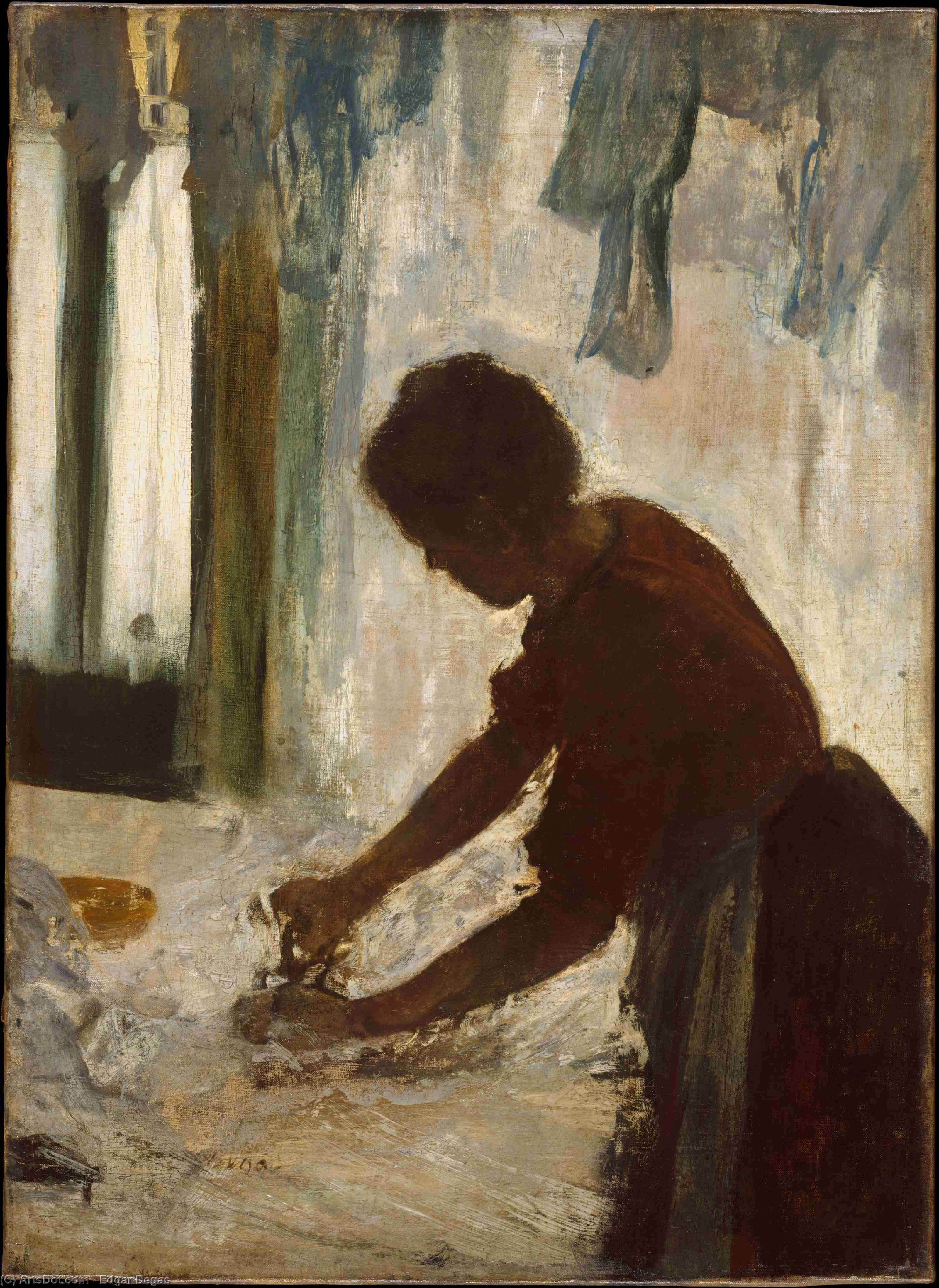
Woman Ironing by Edgar Degas
Edgar Degas, a titan of Impressionism, stands as one of the most astute observers of modern life’s subtleties—a fascination that permeated his artistic endeavors.
Woman Ironing, completed in 1869, embodies this dedication to capturing fleeting moments with remarkable precision and emotional resonance. Housed at the Walker Art Gallery in Liverpool, United Kingdom—a testament to its enduring significance—this oil on canvas painting transcends mere depiction; it invites contemplation about femininity, labor, and the quiet dignity of everyday existence.
The Painting's Composition: A Study in Domestic Tranquility
Degas’ masterful composition centers around a woman diligently ironing clothes before a window bathed in natural light. The careful arrangement—a chair positioned strategically at the bottom left corner and a cat nestled comfortably near the lower right side—creates depth and visual interest, guiding the viewer's gaze across the canvas. More than just an aesthetic choice, these elements contribute to the painting’s narrative quality, hinting at a scene of domestic life unfolding with quiet grace. The woman herself is positioned centrally, her posture conveying focused concentration as she attends to her task—a deliberate gesture that speaks volumes about the artist's intention to portray women not merely as subjects but as active participants in their environment.
Artistic Style and Technique: Impressionism at Its Finest
Woman Ironing exemplifies the core tenets of Impressionism—a movement that revolutionized painting by prioritizing capturing light and atmosphere over meticulous detail. Degas’ technique utilizes oil paint on canvas to achieve a textured surface that enhances the visual experience. The artist's brushstrokes are loose and expressive, conveying movement and immediacy—characteristics that distinguish Impressionist art from its academic predecessors. This deliberate disregard for traditional conventions reflects Degas’ commitment to portraying reality as perceived by the senses, prioritizing emotional impact over idealized representation.
Historical Context and Significance: Challenging Societal Norms
This painting emerged during a period of significant social change in France—a time when Impressionists bravely confronted prevailing societal expectations regarding gender roles and artistic subject matter. Degas’ decision to depict women engaged in labor—specifically ironing—was considered unconventional by many contemporaries, who favored portraying women as passive figures within the domestic sphere. However, Degas refused to conform to these norms, elevating the dignity of ordinary women and demonstrating his belief that art could illuminate aspects of life often overlooked by mainstream culture. The series of Woman Ironing paintings alongside his ballet dancer studies underscores this broader artistic preoccupation—a desire to explore movement and gesture in both performance and daily activity.
Relevance and Availability: Bringing Degas' Vision Home
For discerning art enthusiasts seeking to appreciate the legacy of Impressionism,
Woman Ironing by Edgar Degas is available as a stunning handmade oil painting reproduction at ArtsDot. This allows collectors to immerse themselves in the beauty and intellectual depth of Degas’ original masterpiece—a timeless symbol of artistic innovation and humanist observation. Furthermore,
George Stanfield Walters's contribution to the Walker Art Gallery ensures that this iconic artwork continues to inspire generations of viewers. Explore its captivating details and experience the emotional power of Impressionism firsthand—a testament to Degas’ enduring artistic vision.