A Moment Frozen in Domesticity: Edgar Degas’s “Woman Ironing”
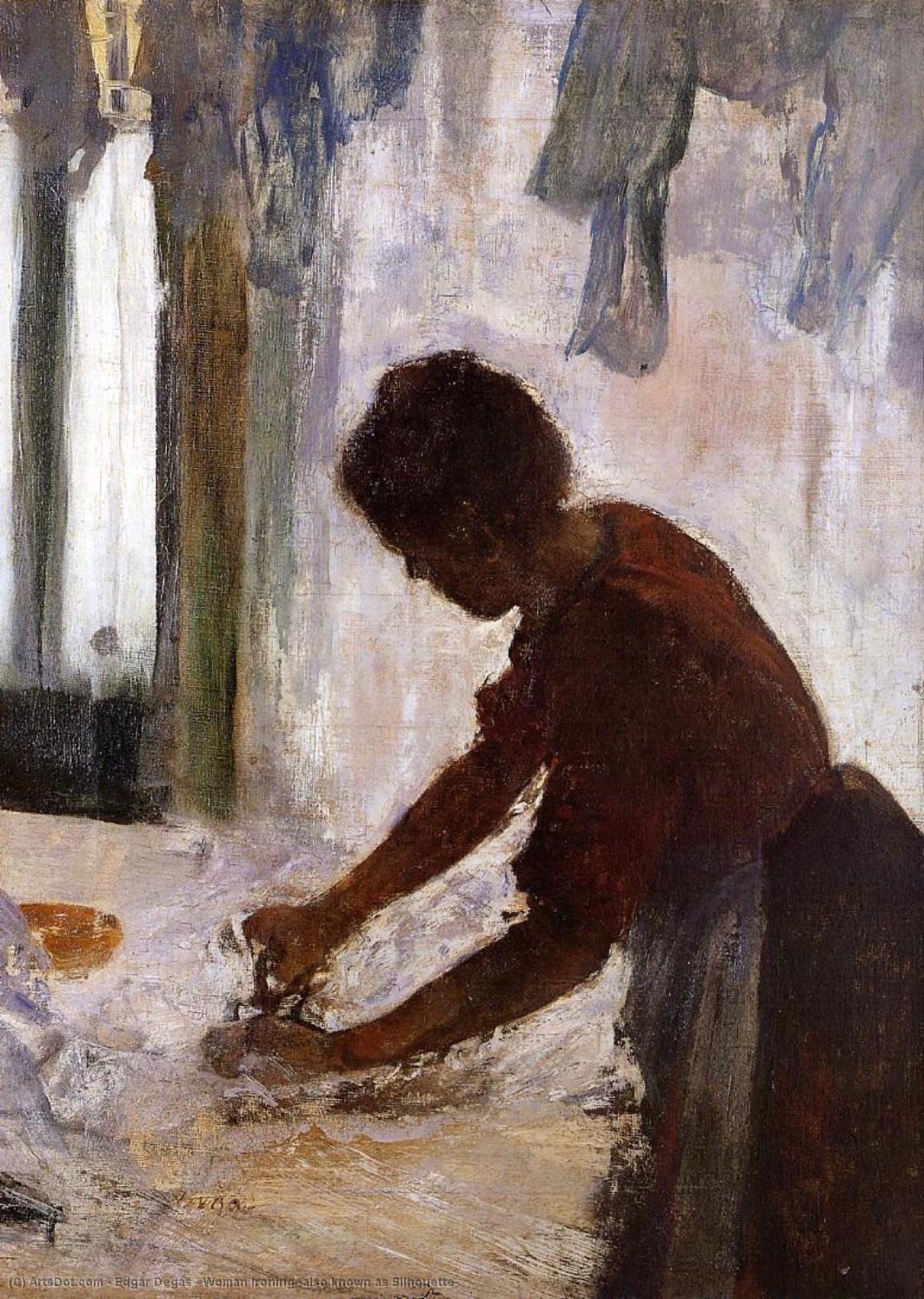
Edgar Degas's "Woman Ironing," often referred to as "Silhouette," is more than just a depiction of a household chore; it’s a profound meditation on the quiet dignity and subtle complexities of everyday life. Painted in 1873, this remarkable work offers a rare glimpse into the private world of a French family, capturing a fleeting moment suspended between labor and contemplation. Degas, famously resistant to being categorized as an Impressionist despite his close association with the movement, instead sought to portray reality with a meticulous realism that belied any superficial prettification. He wasn’t interested in capturing shimmering light or transient effects; he was driven by a desire to observe and record the truth of human experience, particularly within the confines of domestic space.
The Composition: A Study in Restrained Movement
The painting immediately draws the eye to the central figure – a woman absorbed in her task. Her posture is remarkably still, almost sculpted, yet there’s an undeniable tension in her stance and the slight furrow of her brow. Degas masterfully employs a cropped composition, focusing solely on this individual and the immediate surroundings, creating a sense of intimacy and immediacy. The arrangement of objects – the simple wooden dining table, the bowl holding what appears to be fruit, and the two chairs – feels deliberately placed, contributing to a carefully constructed tableau. Notice how Degas utilizes a limited palette of muted browns, greys, and creams; this restrained color scheme enhances the painting’s somber mood and emphasizes the subject's silhouette against the light-filled window. The use of *contre-jour*, or working light from behind the figure, is particularly effective in creating depth and highlighting her form.
- Technique: Degas’s brushstrokes are remarkably loose and expressive, characteristic of his style. He avoids blending colors completely, allowing individual marks to remain visible – a technique that adds texture and dynamism to the scene.
- Compositional Devices: The diagonal lines created by the table and chairs lead the eye towards the woman, anchoring her within the space while simultaneously suggesting a sense of contained movement.
Symbolism and Social Context – A Glimpse into Parisian Life
“Woman Ironing” is deeply rooted in its historical context: late 19th-century Paris, a city undergoing rapid industrialization and social change. The painting speaks to the realities of working-class life, where domestic labor often fell to women. While Degas himself came from a privileged background, he was keenly interested in depicting the lives of ordinary people – particularly women – with honesty and empathy. The presence of the other figures, partially obscured in the background, hints at a larger family dynamic, suggesting a scene of shared domesticity. The bowl on the table could be interpreted as a symbol of sustenance and care, subtly reinforcing the idea of nurturing within the home.
Emotional Resonance: Quiet Strength and Introspective Reflection
Despite its seemingly simple subject matter, “Woman Ironing” possesses a remarkable emotional depth. The woman’s focused expression suggests not just diligence but also a quiet strength and resilience. She is engaged in a repetitive task, yet her posture conveys a sense of dignity and self-possession. The painting invites us to contemplate the unseen burdens carried by women during this era – the constant demands of household management and childcare. More than a portrait of an activity, it’s a portrait of a woman, a mother, a worker, rendered with profound sensitivity and artistic skill. It's a piece that lingers in the mind long after viewing, prompting reflection on themes of labor, family, and the quiet beauty found within ordinary moments.
ArtsDot offers exquisite, hand-painted reproductions of Edgar Degas’s “Woman Ironing,” allowing you to bring this captivating work into your home or office. Our meticulous artisans faithfully recreate Degas's unique style and technique, ensuring a faithful representation of this iconic masterpiece. Explore our collection today and experience the enduring power of this remarkable painting.