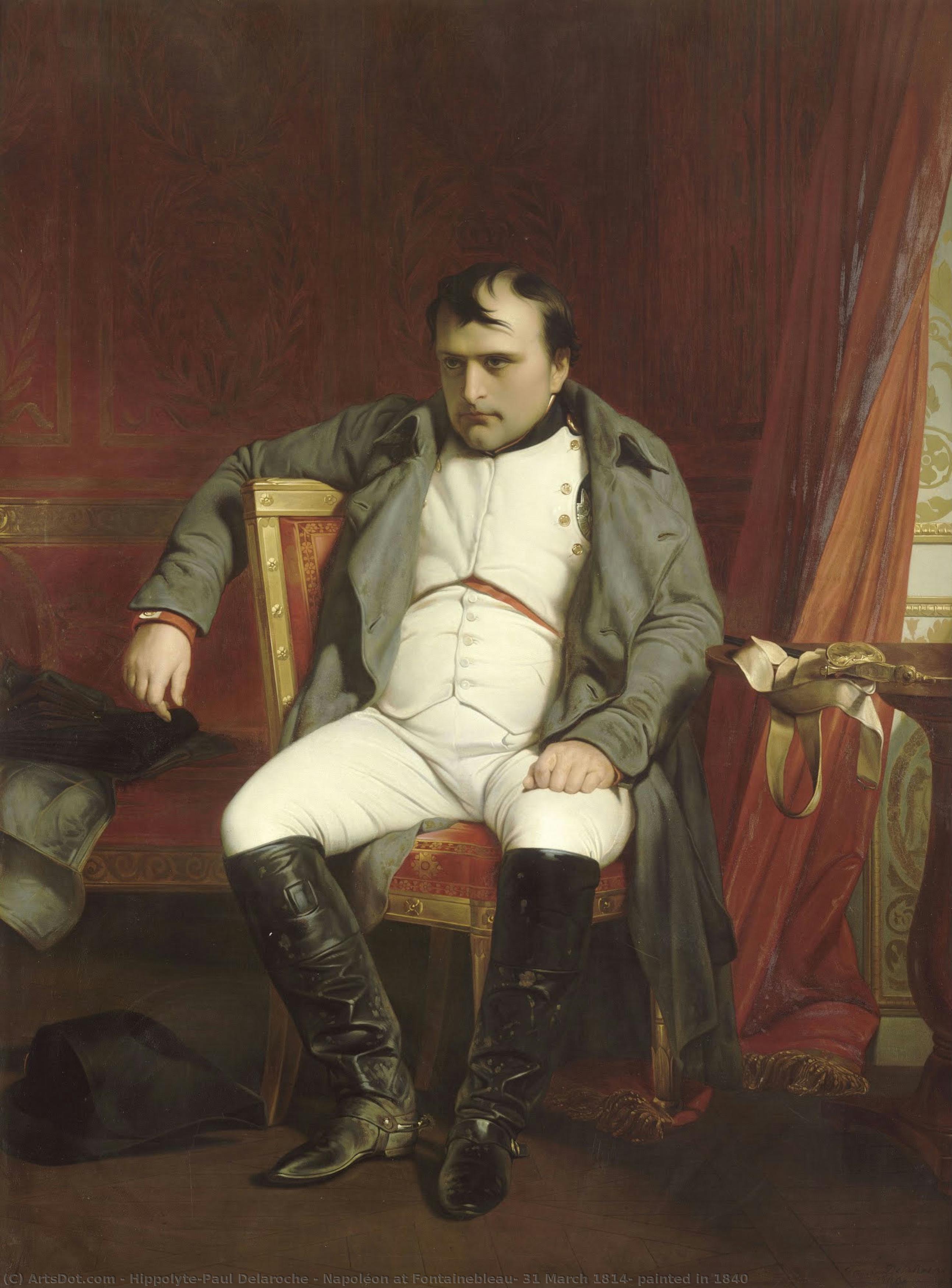
Hippolyte Paul Delaroche’s ‘Napoléon at Fontainebleau,’ painted in 1840, depicts Napoleon seated solemnly in a chair, gazing offstage. Set within a richly furnished room, the painting showcases meticulous detail and emotive storytelling, reflecting Delaroche's signature style.
Napoléon at Fontainebleau: A Portrait of Decline
Hippolyte Paul Delaroche’s “Napoléon at Fontainebleau,” completed in 1840, stands as a poignant emblem of the twilight years of Napoleon Bonaparte’s reign and a masterful demonstration of Romantic artistic principles. Painted shortly after his abdication from the throne in March 1814—a moment that irrevocably altered the course of European history—the canvas captures a scene fraught with melancholy and introspection.
Delaroche, deeply influenced by Antoine-Jean Gros’s dramatic style, employed meticulous realism combined with expressive brushwork to convey not merely visual accuracy but also profound emotional resonance. The composition centers around Napoleon Bonaparte seated in a chair within a sparsely furnished room at Fontainebleau Palace—a location chosen deliberately as the Emperor's final refuge before his exile to Elba.
- Subject Matter: The painting depicts Napoleon alone, seemingly lost in thought, gazing towards an unseen horizon. His posture exudes weariness and resignation, reflecting the crushing weight of defeat.
- Style & Technique: Delaroche’s technique is characterized by painstaking detail—evident in the textures of the fabrics, the subtle nuances of light and shadow, and the meticulous rendering of facial expressions. He skillfully utilizes chiaroscuro – dramatic contrasts between light and dark – to heighten the emotional impact of the scene.
- Historical Context: Fontainebleau Palace served as Napoleon’s headquarters during his final days in France, symbolizing both his grandeur and his vulnerability. The painting captures a moment of profound historical significance—the Emperor's farewell to power and the beginning of his enforced seclusion.
Beyond its formal qualities, “Napoléon at Fontainebleau” resonates with symbolic depth. The empty chair beside Napoleon represents the absence of authority and the loss of dominion. The muted palette contributes to the overall atmosphere of sadness and contemplation—a visual embodiment of disillusionment.
Delaroche’s masterpiece continues to captivate viewers today, offering a powerful meditation on themes of power, decline, and human emotion. It exemplifies the Romantic movement's commitment to portraying dramatic narratives with psychological realism, cementing Delaroche’s legacy as one of the foremost painters of his era.
Further Exploration
To delve deeper into this iconic artwork, consider visiting the Musée de l’Égypte in Paris to examine the original painting alongside related artworks and scholarly resources.
Resources
Artist Biography
Hippolyte Paul Delaroche (1797–1856) was a French Romantic painter who achieved renown for his historical canvases, notably “The Oath of the Horatii” and “Napoleon Abdicating at Fontainebleau.” Trained under Gros, he honed his skills in dramatic composition and meticulous realism—traits that defined his distinctive artistic style.