Honoré Daumier’s Ecce Homo: A Portrait of Suffering and Doubt
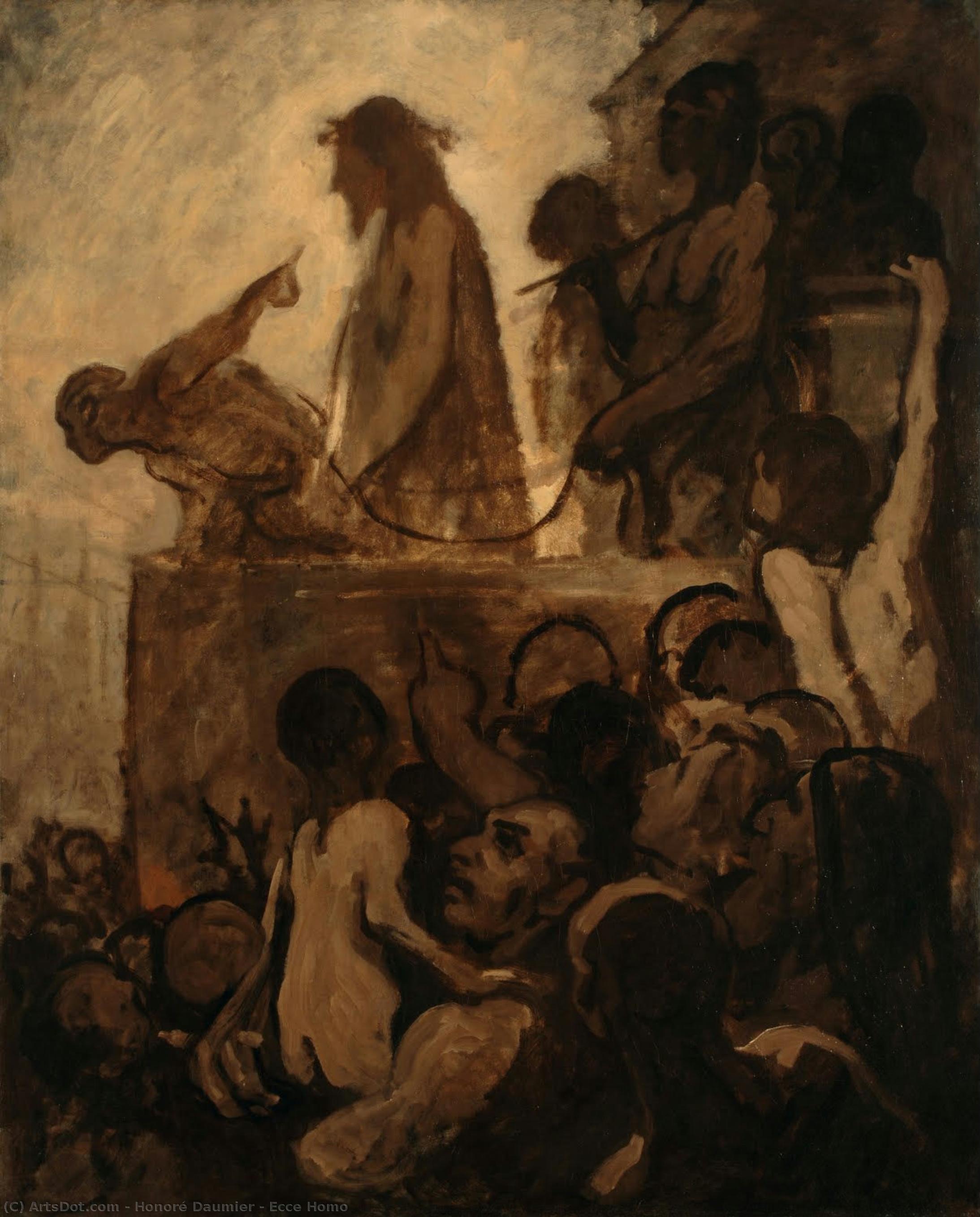
Honoré Daumier’s “Ecce Homo,” completed in 1850, stands as a poignant testament to the artist's unwavering commitment to portraying social realities with unflinching honesty—a characteristic that distinguishes him from many of his contemporaries. More than just a depiction of Jesus Christ on the cross, it embodies Daumier’s profound engagement with the moral dilemmas confronting Victorian society and serves as an enduring symbol of compassion amidst injustice.
- Subject Matter: The painting captures the pivotal moment in Holy Week when Pontius Pilate presents Jesus to the crowd as “Behold the Man,” a gesture intended to provoke contemplation about his divinity versus his culpability. Daumier eschews idealized representations, opting for a stark realism that confronts viewers with the uncomfortable truth of Christ’s suffering.
- Style: Daumier's style is firmly rooted in Realism, yet transcends mere imitation. He employs meticulous draftsmanship—characterized by precise lines and subtle tonal variations—to convey emotion and psychological depth. Unlike Impressionists who prioritize fleeting impressions of light and color, Daumier seeks to capture the essence of human experience through detailed observation.
- Technique: Executed in oil on canvas, “Ecce Homo” demonstrates Daumier’s mastery of chiaroscuro—the dramatic interplay between light and shadow—a technique borrowed from Rubens. This masterful manipulation of tonal values amplifies the emotional impact of the scene, highlighting Jesus's solitary figure against a luminous backdrop while emphasizing the grim expressions of those surrounding him.
- Historical Context: Daumier’s artistic endeavors coincided with the turbulent era of the Second French Empire (1852-1870), marked by political repression and social unrest. His unflinching critique of authority—evident in his caricatures and prints—reflects a broader spirit of defiance against oppressive regimes, aligning him with republican ideals.
- Symbolism: The painting’s symbolism extends beyond the biblical narrative itself. Daumier's deliberate positioning of Jesus—alone on the cross—suggests vulnerability and resilience in the face of adversity. Furthermore, the expressions of the crowd convey skepticism and indifference, mirroring the moral failings of society at large.
Museum Folkwang’s acquisition of “Ecce Homo” underscores its significance as a cornerstone of Daumier's oeuvre and a powerful emblem of compassion. Its enduring appeal lies in its ability to provoke introspection about faith, morality, and the human condition—themes that continue to resonate with audiences today.
Additional Research:
The painting’s influence extends beyond the realm of art history, inspiring subsequent generations of Impressionist and Post-Impressionist painters who embraced Daumier's commitment to portraying social realities with unflinching honesty.