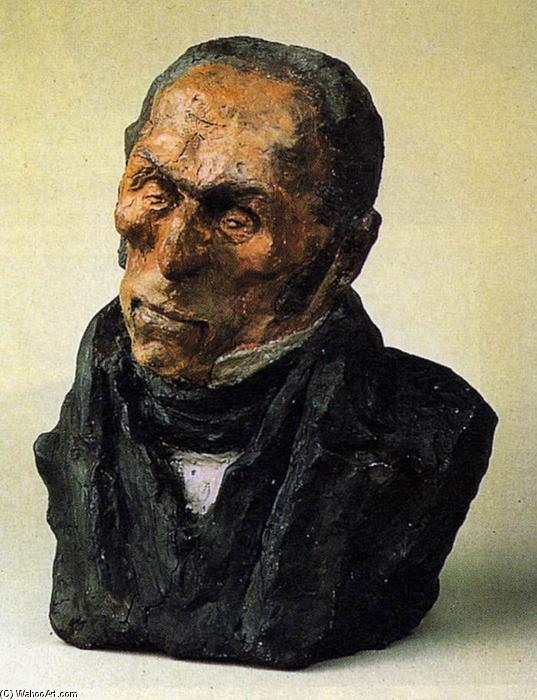
Honoré Daumier's "Guizot or the Bore" (1832) is a biting satirical lithograph lampooning French politician François Guizot. Witness Daumier’s masterful critique of 19th-century society through this iconic artwork.
Discover Honoré Daumier (1808-1879), the French master of realism & satire. Explore his powerful lithographs, paintings & sculptures critiquing 19th-century society and influencing modern art.
Discover the Musée d'Orsay in Paris! Housed in a stunning former railway station, explore an unparalleled collection of Impressionist & Post-Impressionist masterpieces by Monet, Van Gogh & more.
A Stark Portrait of Disillusionment: Honoré Daumier’s “Guizot or the Bore”
Honoré Daumier's "Guizot or the Bore," painted in 1832, isn’t merely a caricature; it’s a meticulously crafted indictment of political complacency and the stifling atmosphere of post-revolutionary France. The image, rendered in stark black and white lithograph, immediately confronts the viewer with a figure that is both recognizable and profoundly unsettling – François Pierre-Guillaume Guizot, a prominent liberal politician whose name became synonymous with tediousness and intellectual stagnation. Daumier doesn’t offer a flattering likeness; instead, he presents a man seemingly carved from granite, his face an impenetrable mask of boredom and self-importance. The details are remarkably precise: the meticulously rendered mustache, the rigid posture, the almost glacial stare directed squarely at the viewer – each element contributes to a portrait of profound detachment. It’s a deliberate choice, reflecting Daumier's lifelong commitment to exposing the hypocrisy and moral failings he observed within French society.
The Context of Critique: Political Satire in 19th-Century France
To fully appreciate “Guizot or the Bore,” one must understand the tumultuous political landscape of 1832. Following the July Revolution, France was grappling with the aftermath of Napoleon’s empire and attempting to establish a stable constitutional monarchy under Louis Philippe. Daumier, a staunch republican democrat, used his art as a weapon against what he perceived as the corruption and inertia of the established order. His satirical cartoons, published in newspapers like *Le Charivari*, were wildly popular, offering sharp critiques of politicians, the aristocracy, and the bourgeoisie. Guizot himself was a key figure in this era, advocating for moderate reforms within the existing system – precisely the kind of cautious approach that Daumier so vehemently opposed. The painting isn’t simply a personal jab; it's a broader commentary on the dangers of prioritizing stability over genuine progress and reform.
Technique and Symbolism: A Masterclass in Lithography
Daumier’s mastery of lithography is evident throughout “Guizot or the Bore.” The medium itself – stone printing – lends a certain coldness and precision to the image, mirroring the character's impassive demeanor. The stark contrasts between light and shadow are expertly manipulated, creating a dramatic effect that draws attention to Guizot’s face and emphasizing his rigid features. Notice how Daumier utilizes hatching and cross-hatching to build up texture and volume, particularly in the man’s clothing and hair. The background is deliberately devoid of detail, further isolating Guizot and reinforcing the sense of detachment. The very act of creating a lithograph – a process that involved transferring an image from a prepared stone onto paper – speaks to Daumier's commitment to directness and clarity in his artistic expression.
Beyond the Portrait: A Reflection on Modernity
“Guizot or the Bore” transcends its immediate subject matter, offering a poignant meditation on the challenges of navigating modernity. The figure’s blank stare suggests an inability to engage with the world around him, a refusal to acknowledge the social and political realities that demand action. Daumier isn't simply criticizing Guizot; he’s critiquing a broader cultural malaise – a tendency towards intellectualism divorced from empathy and social responsibility. The painting resonates powerfully even today, reminding us of the importance of critical thinking, civic engagement, and resisting the allure of complacency. It serves as a timeless warning against allowing self-importance to overshadow genuine concern for the well-being of society. Reproductions of this powerful image continue to provoke thought and discussion, solidifying Daumier’s legacy as one of the most insightful and enduring satirists in art history.