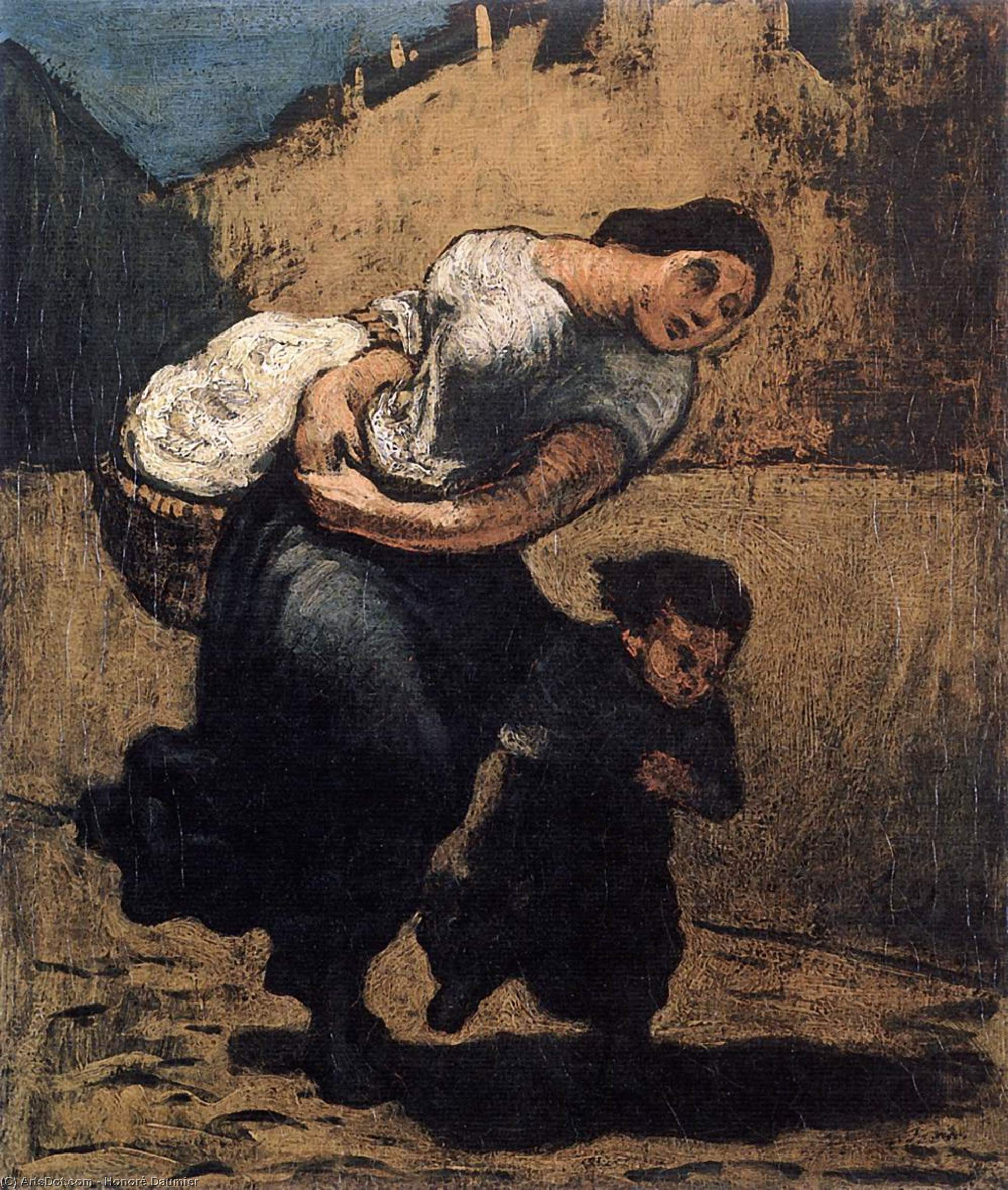
Daumier’s poignant lithograph captures Parisian washerwoman labor under pressure during the Second Empire, showcasing masterful tonal gradation and chiaroscuro to convey quiet dignity amidst hardship—a timeless portrait by Honoré Daumier inviting you to explore this iconic artwork.
Honoré Daumier’s “Load (Washerwoman)” – A Portrait of Parisian Labor Under Pressure
“Load (Washerwoman),” painted in 1853 by Honoré Daumier, stands as a poignant emblem of the Second Empire era—a period defined by rapid industrialization and burgeoning social disparities within Paris. More than just a depiction of domestic labor, this lithograph delves into the psychological complexities of its subject, capturing a moment of quiet dignity amidst hardship.
Subject Matter & Composition: Daumier’s masterful eye focuses on a woman carrying an enormous basket brimming with laundry—a task emblematic of countless working-class women striving to sustain their families. The woman is accompanied by her young daughter, creating a familial tableau that underscores the importance of family life within the urban landscape. Beyond the central figures, subtle details populate the background: passersby hurrying along the street, adding depth and realism to the scene.
Style & Technique: Daumier’s signature style—characterized by meticulous observation combined with expressive draftsmanship—is evident in every stroke of his lithograph. He employs a stark black-and-white palette, prioritizing tonal gradation to convey emotion and texture. The artist skillfully utilizes chiaroscuro – the dramatic interplay between light and shadow – to sculpt the woman’s form and imbue the composition with an aura of solemnity. This technique lends itself perfectly to capturing the physicality of labor and conveying a sense of quiet perseverance.
Historical Context & Social Commentary: Created during Napoleon III's reign, “Load (Washerwoman)” reflects the anxieties surrounding social mobility and economic hardship prevalent in Paris at the time. Daumier’s oeuvre consistently confronted societal injustices, using caricature and satire to expose hypocrisy and challenge prevailing ideologies. This particular artwork serves as a powerful reminder of the everyday struggles faced by ordinary Parisians—women particularly burdened by domestic responsibilities.
Symbolism & Emotional Impact: The basket itself symbolizes not merely laundry but also the weight of responsibility borne by women in maintaining household stability amidst challenging circumstances. Daumier’s portrayal avoids sentimental glorification; instead, he presents a realistic depiction imbued with empathy for his subject. The woman's gaze—direct and unwavering—suggests resilience and dignity – qualities that resonate powerfully across time.
Further Exploration: To appreciate the full significance of “Load (Washerwoman),” consider examining Daumier’s broader artistic output, particularly his lithographs documenting social conditions during the Second Empire. Viewing reproductions alongside scholarly analyses will illuminate the artist's enduring legacy as a chronicler of his era and a champion of human dignity.