Discover Honoré Daumier (1808-1879), the French master of realism & satire. Explore his powerful lithographs, paintings & sculptures critiquing 19th-century society and influencing modern art.
Explore the Bibliothèque nationale de France (BnF) in Paris! Discover centuries of French history & culture through vast collections of books, manuscripts, art, and treasures at Richelieu & François-Mitterrand sites.
A Portrait of Vanity and Reflection – Honoré Daumier's “The Beautiful Narcissus”
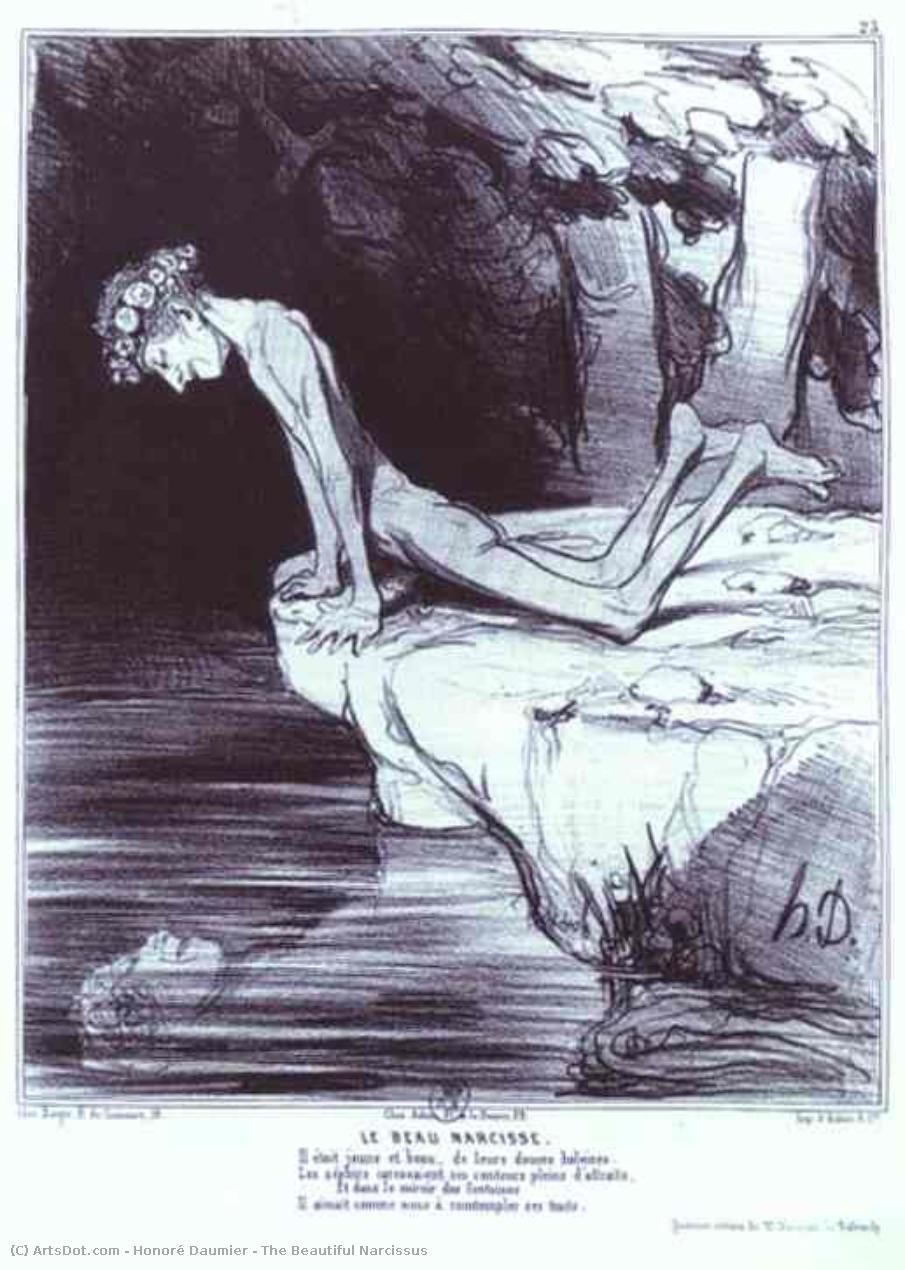
Honoré Daumier’s lithograph, "The Beautiful Narcissus," transcends mere depiction; it embodies the spirit of Realism—a courageous confrontation with societal realities tempered by profound artistic sensitivity. Created in 1842 during a period marked by social unrest and political critique in France, this artwork serves as a poignant meditation on human obsession with self-perception and its inevitable consequences.
Composition and Technique: Mastering Line and Texture
Daumier’s masterful command of lithographic technique is immediately apparent. The central figure—Narcissus—reclines upon a jagged outcrop overlooking the turbulent waters below, establishing a dynamic diagonal that draws the viewer's eye upwards towards his mesmerizing reflection. Loose, gestural strokes characterize the landscape, conveying movement and immediacy – a deliberate departure from academic conventions favored at the time. Critically important is Daumier’s use of hatching and cross-hatching; these meticulous lines build up tonal values with remarkable precision, simulating the rough texture of rock formations and the shimmering surface of the water. Energetic, rapid lines delineate Narcissus' body and clothing, capturing a fleeting moment of contemplation.
Color Palette and Emotional Resonance
Despite its subject matter—a figure consumed by narcissistic desire—the lithograph’s color palette is strikingly restrained. Predominantly grayscale, the tonal range subtly underscores the melancholic mood evoked by the image. The absence of vibrant hues amplifies the psychological depth of Daumier's portrayal, forcing us to confront the inner turmoil symbolized by Narcissus’ unwavering gaze.
Symbolism and Context: Mythological Critique
"The Beautiful Narcissus" isn’t simply a visual representation of Greek mythology; it’s a carefully crafted commentary on human vanity. Narcissus' preoccupation with his own reflection embodies the destructive allure of self-absorption—a theme that resonates powerfully within Daumier’s broader artistic project. As a staunch advocate for social justice and a vocal critic of bourgeois complacency, Daumier utilized caricature to expose hypocrisy and challenge established norms. This lithograph stands as testament to his unwavering commitment to portraying life authentically, capturing both its beauty and its inherent contradictions.
A Legacy of Impressionistic Influence
Daumier’s stylistic choices—particularly his expressive line work and loose brushwork—anticipate the burgeoning Impressionist movement. While firmly rooted in Realism, “The Beautiful Narcissus” possesses an undeniable dynamism that foreshadows the revolutionary aesthetic innovations to come. It remains a compelling example of how art can serve as both a mirror reflecting society’s anxieties and a catalyst for artistic transformation.