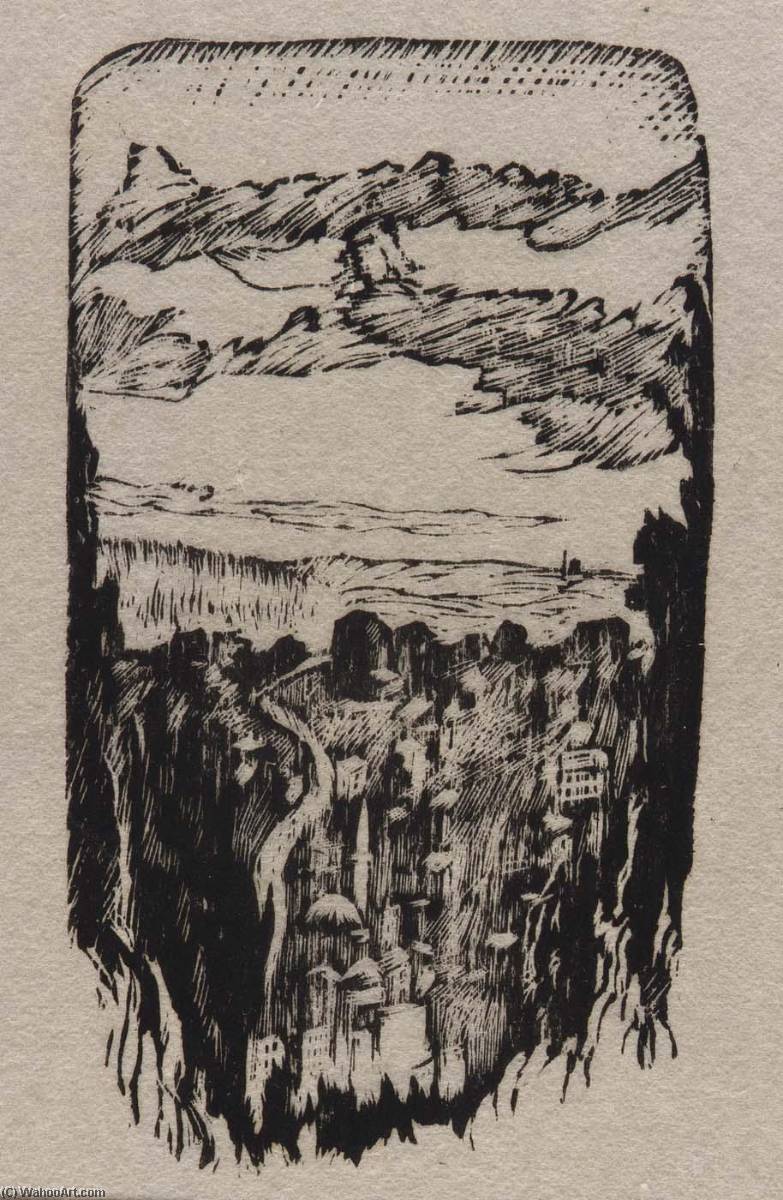
The
Cliff City is a remarkable woodcut on paper created by the American artist
Howard Cook in 1926. This piece is a testament to the artist's exceptional skill and technique, showcasing his ability to evoke emotions through simple yet powerful compositions. The artwork measures 5 1/8 x 3 inches and is currently housed at the
Smithsonian American Art Museum.
Artist Background
Howard Cook was a prominent figure in the American art scene, known for his wood engravings and murals. He spent much of the 1920s in Europe and returned to live in Taos, New Mexico. Cook was an avid draftsman before he finished school in his native Springfield, Massachusetts. Following graduation, he won a one-year scholarship to the progressive
Art Students League of New York.
Style and Technique
The
Cliff City is a prime example of Cook's unique style, which was influenced by expressionistic and abstract movements. The woodcut features a cityscape with mountains in the background, a large body of water, and several boats. The composition creates a sense of scale and perspective, making it an impressive piece of artwork. You can find more information about
Howard Cook and his works on
https://ArtsDot.com and
Wikipedia.
- Woodcut on paper: The artwork is a woodcut on paper, showcasing Cook's mastery of this technique.
- Cityscape: The cityscape featured in the artwork is a testament to Cook's ability to capture the essence of urban life.
- Influences: Cook's style was influenced by expressionistic and abstract movements, making his work unique and captivating.
Handmade oil paintings reproductions of
Cliff City can be found on
https://ArtsDot.com, allowing art enthusiasts to own a piece of history.
The
Smithsonian American Art Museum is home to many notable works, including the
Sun and Desolation by
Howard Cook, which can be found on
https://ArtsDot.com.