Hugo van der Goes' 'Calvary Triptych,' created in 1468, showcases Christ crucified alongside Moses blessing the Israelites and Aaron presenting the serpent to the people – a testament to Early Netherlandish artistry and religious narrative.
A Moment of Profound Compassion: Hugo van der Goes’ Calvary Triptych (Detail)
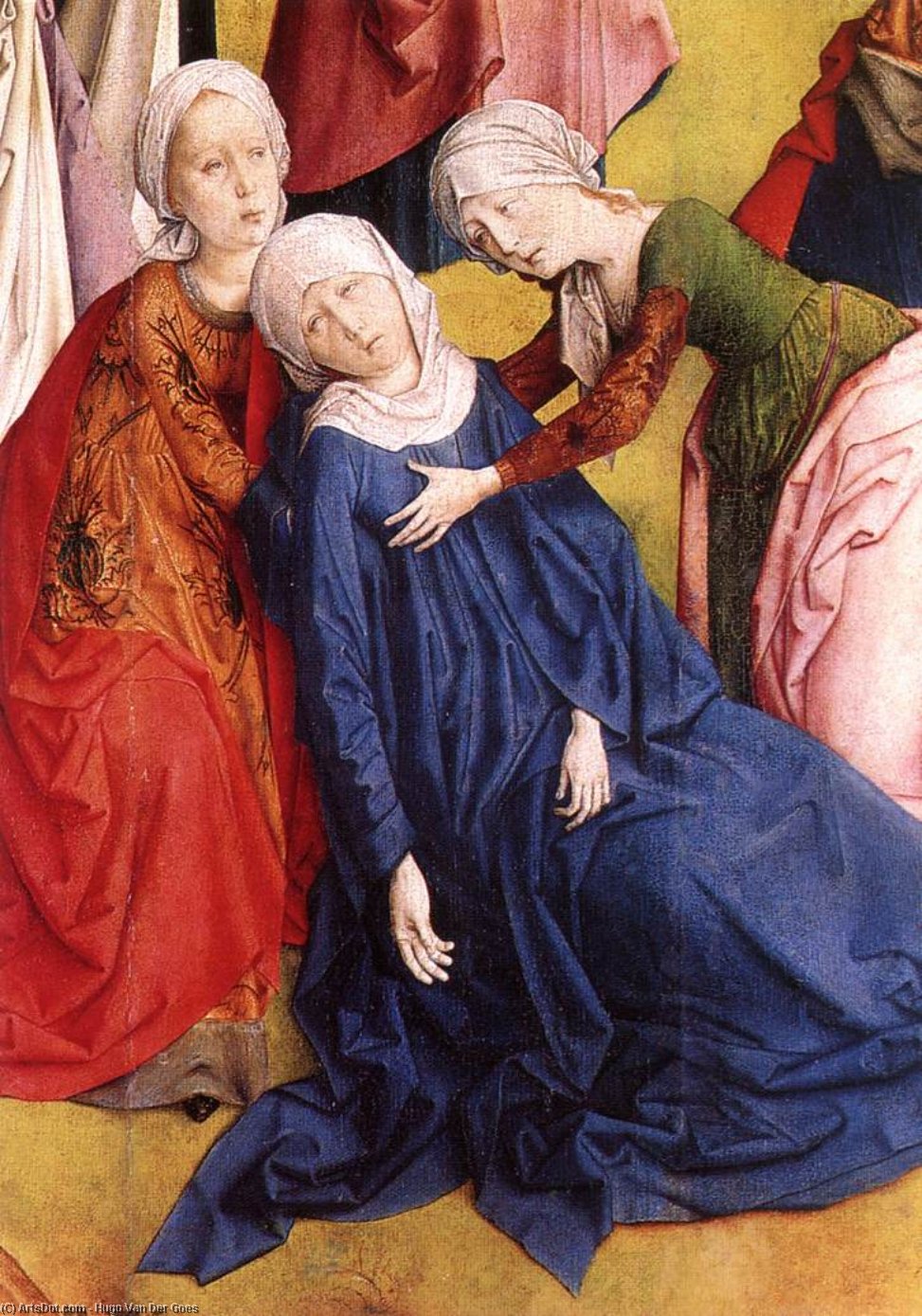
This exquisite detail from Hugo van der Goes' "Calvary Triptych," painted in 1465, offers a poignant glimpse into the artist’s revolutionary approach to depicting human emotion and religious narrative. The scene, centered around Mary Magdalene’s vigil at the foot of the cross, transcends mere representation; it is an embodiment of profound compassion and psychological realism – hallmarks that firmly established van der Goes as a pioneer of Flemish painting and a key figure in the transition from Gothic to Renaissance art.
- Subject Matter: The image captures a pivotal moment within the Passion narrative, focusing on Mary Magdalene’s devoted presence. This wasn't simply a depiction of grief; it was an exploration of human vulnerability, faith, and unwavering loyalty.
- Style & Technique: Van der Goes employed his signature style – characterized by intense realism, dramatic lighting, and a remarkable attention to anatomical detail. Notice the meticulous rendering of textures – the folds of fabric, the smoothness of skin – all contributing to an unprecedented sense of physicality within the painting. The use of oil paint, though still relatively new at this time, allowed for subtle gradations in tone and color, enhancing the dramatic effect.
Historical Context: A Renaissance Awakening
Painted during a period of significant artistic and intellectual ferment, van der Goes’ work reflects the burgeoning interest in naturalism and human emotion that was beginning to sweep across Europe. While influenced by earlier Flemish traditions, he deliberately moved beyond the stylized conventions of his predecessors, embracing a more direct and emotionally charged approach. The triptych itself – a common format for religious paintings at the time – allowed van der Goes to explore multiple facets of this complex narrative, inviting viewers to contemplate the suffering of Christ and the devotion of those who remained faithful.
- The Ghent School: Van der Goes was part of the influential Ghent school of painters, known for its realism and attention to detail. However, he pushed these qualities to a new level, injecting a deeply personal and emotionally resonant quality into his work.
- Religious Iconography: The scene draws upon established religious iconography – Mary Magdalene as a witness to Christ’s suffering – but van der Goes imbued it with a fresh sense of urgency and emotional intensity.
Symbolism & Emotional Impact
The composition is deliberately powerful, drawing the viewer's eye directly to the central figure of Mary Magdalene. Her posture, with her head resting on another woman’s lap, speaks volumes about comfort, support, and unwavering devotion. The inclusion of the handbag – a seemingly mundane detail – subtly underscores the practical concerns alongside the spiritual ones, grounding the scene in a relatable human context. The overall atmosphere is one of quiet contemplation and profound empathy, inviting viewers to connect with the emotional core of the biblical narrative.
- Color Palette: The muted tones of brown, ochre, and red – typical of Flemish painting – contribute to the solemn mood and emphasize the scene’s gravity.
- Psychological Realism: Van der Goes' ability to convey psychological depth is particularly striking in Mary Magdalene’s expression—a mixture of sorrow, compassion, and perhaps even a hint of fear.
A Masterpiece Recreated
ArtsDot offers meticulously crafted hand-painted reproductions of Hugo van der Goes’ “Calvary Triptych (Detail),” capturing the essence of this seminal work in stunning fidelity. Each reproduction is created by skilled artisans, ensuring that every brushstroke and nuance of color are faithfully reproduced. Whether adorning a grand salon or adding a touch of contemplative beauty to a smaller space, this artwork offers an unparalleled opportunity to experience the profound emotional impact and artistic genius of one of the Renaissance’s most important figures.