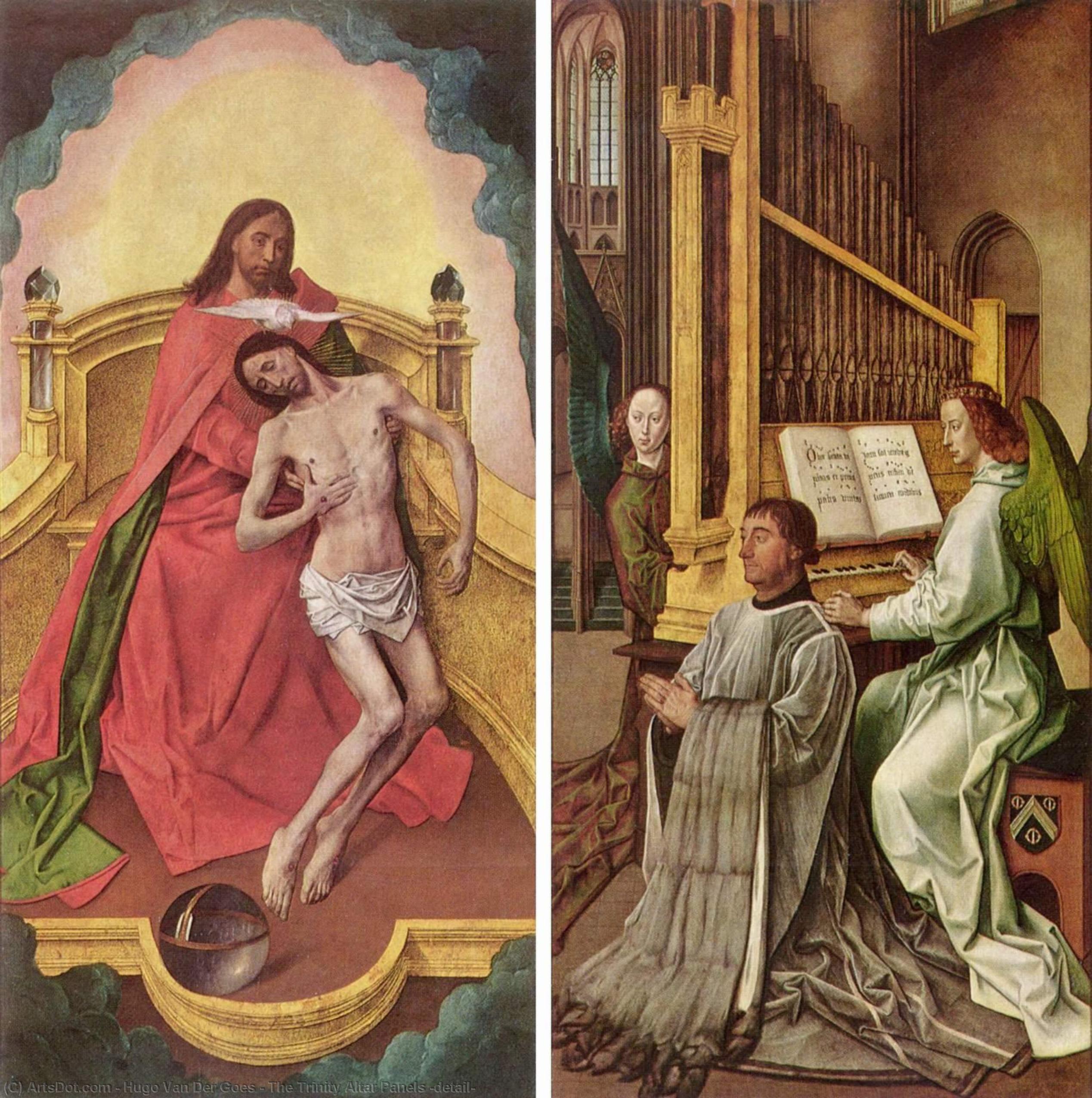
A Vision of Divine Drama: Exploring The Trinity Altar Panels
To stand before a detail from The Trinity Altar Panels is to step directly into the charged atmosphere of the late Gothic period, where the sacred and the intensely human converged upon the canvas. This work by Hugo van der Goes, dating to 1478, is not merely a depiction of religious narrative; it is a profound meditation on sacrifice, resurrection, and eternal life. The sheer drama captured in these panels—the solemnity of the crucifixion juxtaposed with the ethereal ascent after death—speaks volumes about the spiritual fervor of its time. One senses the weight of history pressing down, yet simultaneously lifted by divine grace.
Mastery of Flemish Realism and Technique
Hugo van der Goes stands as a towering figure in the Northern Renaissance, a pioneer whose brushwork imbued Flemish painting with an unprecedented level of realism. Observe the meticulous detail: the folds of drapery seem weighted with earthly gravity, while the skin tones possess a luminous quality that suggests life breathed into pigment. The technique employed here showcases a mastery over oil paint, allowing for subtle gradations of shadow and light—a hallmark of the period's finest craftsmanship. Notice the inclusion of the pipe organ in the background; this architectural element grounds the divine spectacle within a recognizable, tangible space, enhancing the immersive quality that makes these panels so compelling to view today.
Symbolism Woven into Sacred Narrative
The iconography presented is rich with theological weight. The dual scenes—the suffering on the cross alongside the glorious lifting by angels—create a powerful visual dialectic between death and triumph. Symbolically, the presence of the two visible books, one near the top right and another at the bottom left, anchors the narrative in scripture and established doctrine. These texts serve as silent witnesses to the events unfolding, inviting the viewer not just to look, but to contemplate the very words that underpin Christian belief. The figures themselves—Jesus, Mary Magdalene, John the Baptist—are rendered with palpable emotion, allowing us a direct conduit into their devotion and grief.
Emotional Resonance for the Modern Collector
For the contemporary collector or designer seeking art that transcends mere decoration, this piece offers unparalleled emotional depth. It is an object of contemplation. Reproducing such a work allows one to bring home not just paint on wood, but a palpable sense of devotion and historical grandeur. The intensity of Van der Goes’s vision—the blend of intense realism with sublime spirituality—ensures that the artwork commands attention while simultaneously inviting quiet introspection. It is a piece designed to elevate any space, transforming it into a sanctuary echoing the profound narratives of faith.