A Masterpiece of Theatrical Elegance
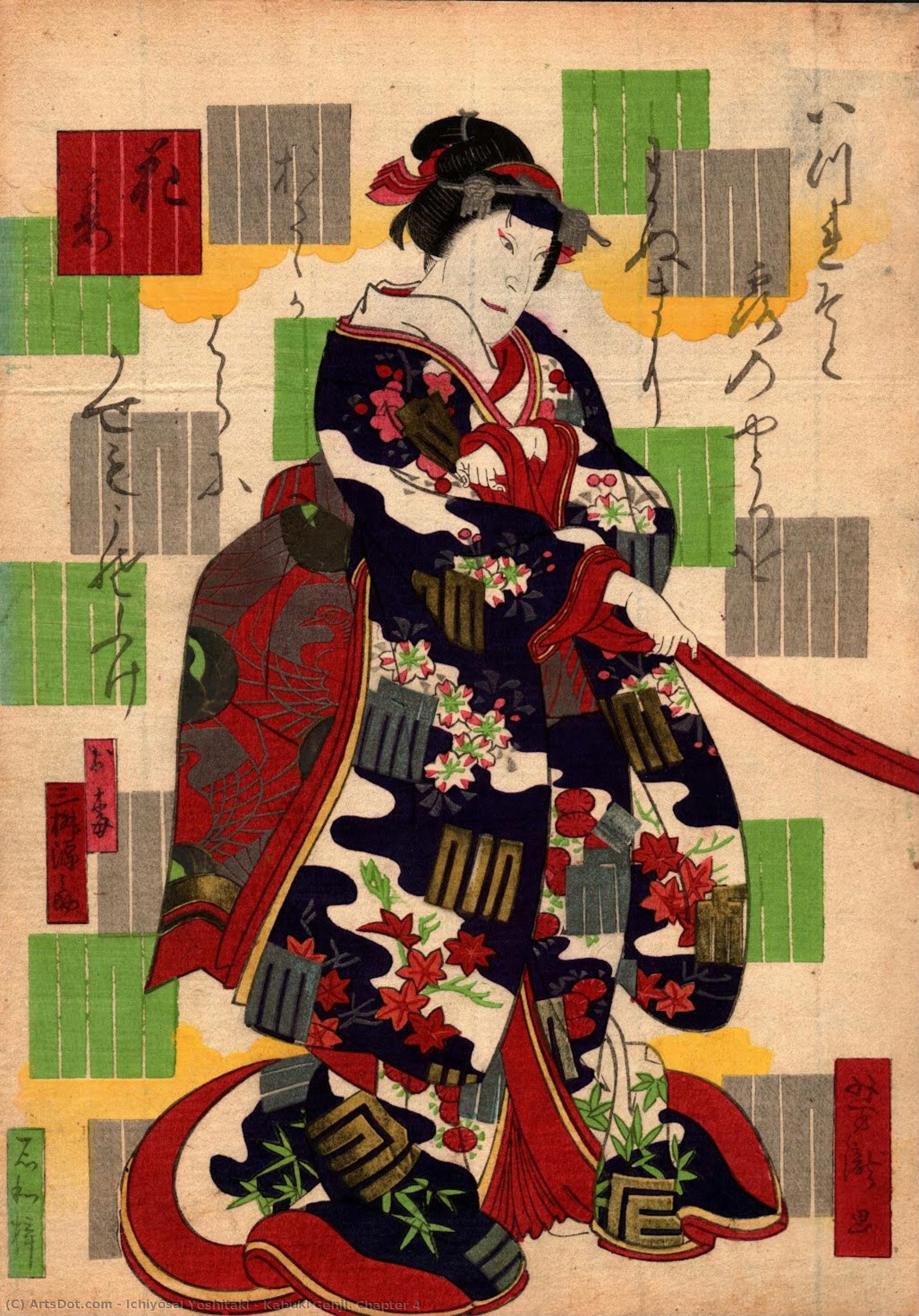
In the delicate dance between literature and performance, Kabuki Genji. Chapter 4 emerges as a breathtaking testament to the artistry of Ichiyōsai Yoshitaki. This exquisite ukiyo-e woodblock print serves as a bridge between two of Japan's most cherished cultural pillars: the epic prose of Murasaki Shikibu’s Genji Monogatari and the electrifying spectacle of Kabuki theater. Within this single composition, we witness a profound synthesis of storytelling, where the rhythmic patterns of the background echo the structural elegance of the novel's fourth chapter. The print captures a moment of intense, quiet drama, presenting a figure draped in a vibrant red kimono adorned with delicate white floral motifs, their hands pressed together in a gesture of prayer or deep reverence that resonates with a sense of timeless devotion.
The visual language of this work is deeply rooted in the yakusha-e tradition, specifically the Kamigata style which flourished in the Osaka region. Unlike many contemporary prints that idealized their subjects, Yoshitaki was celebrated for his commitment to realism. In this piece, one can observe the meticulous attention to the subject's physical presence—the subtle nuances of the facial expression and the intricate layering of the textile. The background is not merely a void but a symbolic landscape; the repetition of the Genji emblems (Genji-mon) creates a mesmerizing geometric texture that anchors the figure within the literary universe of the Heian period, transforming a portrait of an actor into a profound meditation on identity and heritage.
Technique and Visual Harmony
The technical mastery displayed in this 1860 print is nothing short of extraordinary. The artist utilizes the woodblock medium to create a striking contrast between the bold, saturated reds of the garment and the soft, luminous skin tones of the performer. Each line is deliberate, guiding the viewer's eye from the flowing curves of the hair to the rhythmic placement of the yellow squares in the background, which add a modern, almost avant-garde structural element to the classical subject matter. This interplay of color and geometry creates a balanced composition that feels both ancient and strikingly contemporary.
For the discerning collector or interior designer, this artwork offers more than just historical value; it provides a focal point of immense character. The print’s ability to evoke emotion—ranging from the solemnity of the prayerful gesture to the vibrant energy of the Kabuki stage—makes it a versatile masterpiece for any curated space. Whether placed in a gallery setting or used to anchor a sophisticated residential interior, Kabuki Genji. Chapter 4 invites contemplation, offering a window into a vanished world of splendor, ritual, and unparalleled artistic devotion.