A Moment of Noble Grace: Isidore Pils’s “Horse Caparisoned”
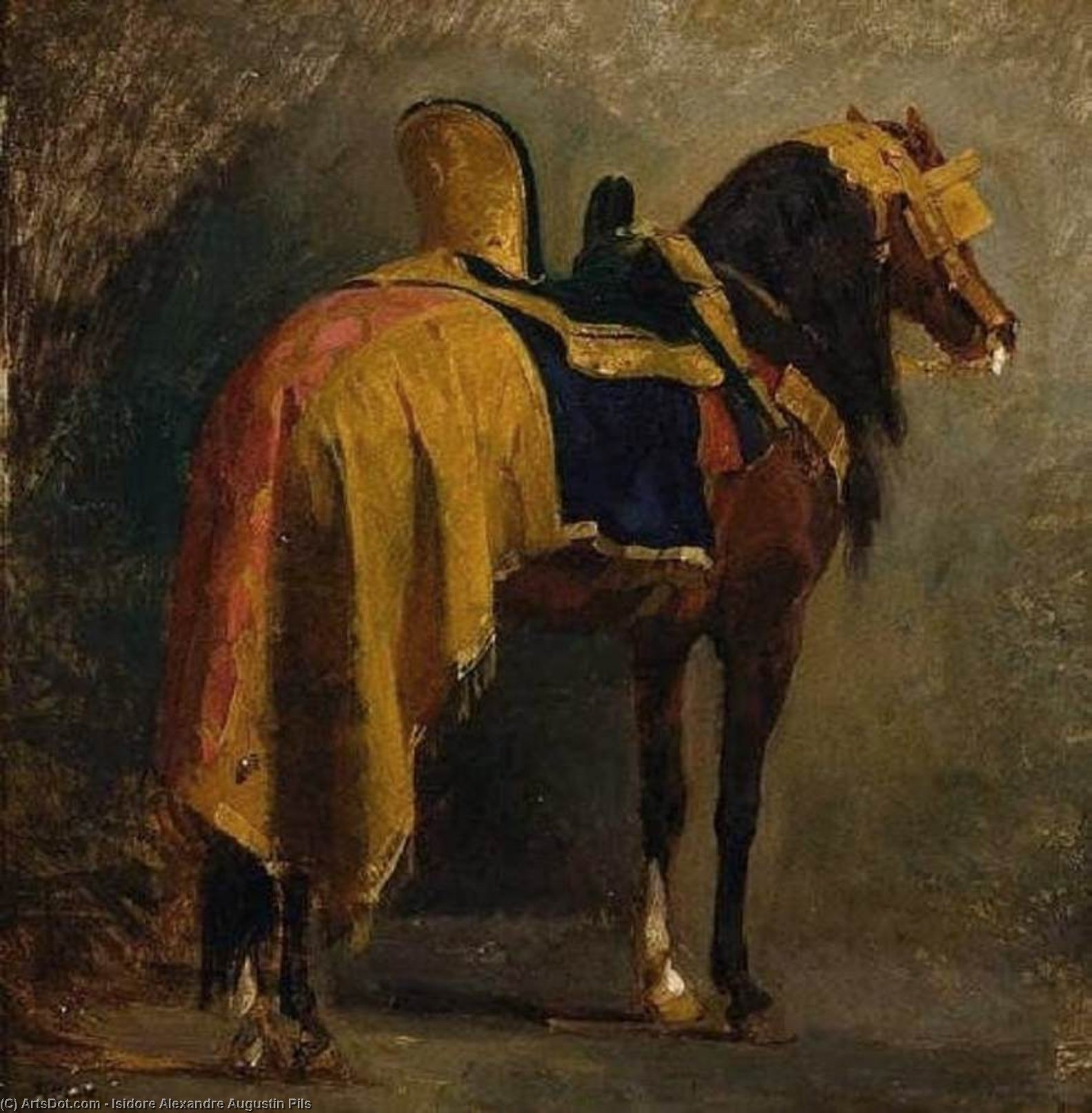
Isidore Alexandre Augustin Pils's "Horse Caparisoned," painted in 1860, is more than a simple portrait; it’s a carefully constructed tableau brimming with historical resonance and evocative symbolism. This oil-on-canvas work, measuring a modest 64 x 63 cm, captures a pivotal scene – a riderless horse, draped in rich fabrics, following a funeral procession. Pils, a prominent figure within the French academic art world, masterfully blends Romanticism’s emphasis on emotion and grandeur with a keen awareness of contemporary military and societal values.
The painting immediately draws the eye to the magnificent horse itself – a powerful creature rendered with meticulous detail, its musculature taut beneath the flowing folds of a vibrant yellow blanket. This isn't merely decorative; the caparison speaks volumes about status and respect. The rider, partially obscured by the horse’s form, is clad in a striking blue and gold outfit, suggesting nobility or perhaps even military rank – a subtle nod to the era’s fascination with heroic figures and national pride. Pils’s brushwork is remarkably controlled, creating a sense of both movement and stillness; the horse appears poised, ready to continue its solemn journey, while the overall composition exudes an aura of quiet dignity.
The Weight of History: Contextualizing the Scene
To fully appreciate “Horse Caparisoned,” it’s crucial to understand the historical context in which it was created. The mid-19th century witnessed a surge in nationalistic fervor across Europe, fueled by military victories and a desire for stability following decades of upheaval. Pils, deeply influenced by this climate, frequently depicted scenes of war and heroism – subjects that resonated powerfully with the public imagination. The painting’s subject matter directly reflects this trend; the riderless horse is a traditional symbol of mourning and respect, particularly within military circles, signifying the loss of a distinguished officer or soldier.
Furthermore, the inclusion of the riderless horse harkens back to ancient Roman traditions, where similar processions were used to honor fallen heroes. This connection imbues the painting with layers of historical significance, elevating it beyond a simple portrait and transforming it into a meditation on mortality, duty, and remembrance. The choice of a horse as the vehicle for mourning is particularly poignant – representing strength, loyalty, and the enduring spirit of those who have served their nation.
Technique and Artistic Style: A Masterful Blend
Pils’s artistic style is firmly rooted in the academic tradition, yet he demonstrates a remarkable sensitivity to light and color. He employs a rich palette – dominated by warm yellows, deep blues, and shimmering golds – to create a visually arresting image. The use of chiaroscuro (the contrast between light and dark) adds depth and drama, highlighting the horse’s form and emphasizing the solemnity of the occasion. His brushstrokes are generally smooth and blended, contributing to the painting's polished appearance, but he also incorporates subtle textural variations to suggest the weight of the blanket and the texture of the horse’s coat.
Notably, Pils was a student of John Singleton Copley, whose influence is evident in the artist’s meticulous attention to detail and his ability to capture the likenesses of his subjects. However, Pils distinguishes himself through his own unique vision – a willingness to infuse historical scenes with emotional intensity and a sophisticated understanding of symbolism.
Symbolism and Emotional Resonance: A Legacy of Remembrance
Beyond its historical context and artistic merits, “Horse Caparisoned” possesses a profound emotional resonance. The image evokes feelings of sadness, respect, and perhaps even a touch of melancholy. The riderless horse embodies the loss of leadership, the sacrifice of duty, and the enduring power of remembrance. It’s a poignant reminder of the human cost of war and the importance of honoring those who have served their country.
Reproductions of this captivating artwork offer a valuable opportunity to bring its timeless beauty and profound symbolism into any setting. Whether adorning a formal study or a more casual living space, “Horse Caparisoned” serves as a powerful testament to the enduring legacy of Isidore Pils and his masterful ability to capture the essence of human experience.