The Ethereal Dance of Ink and Light
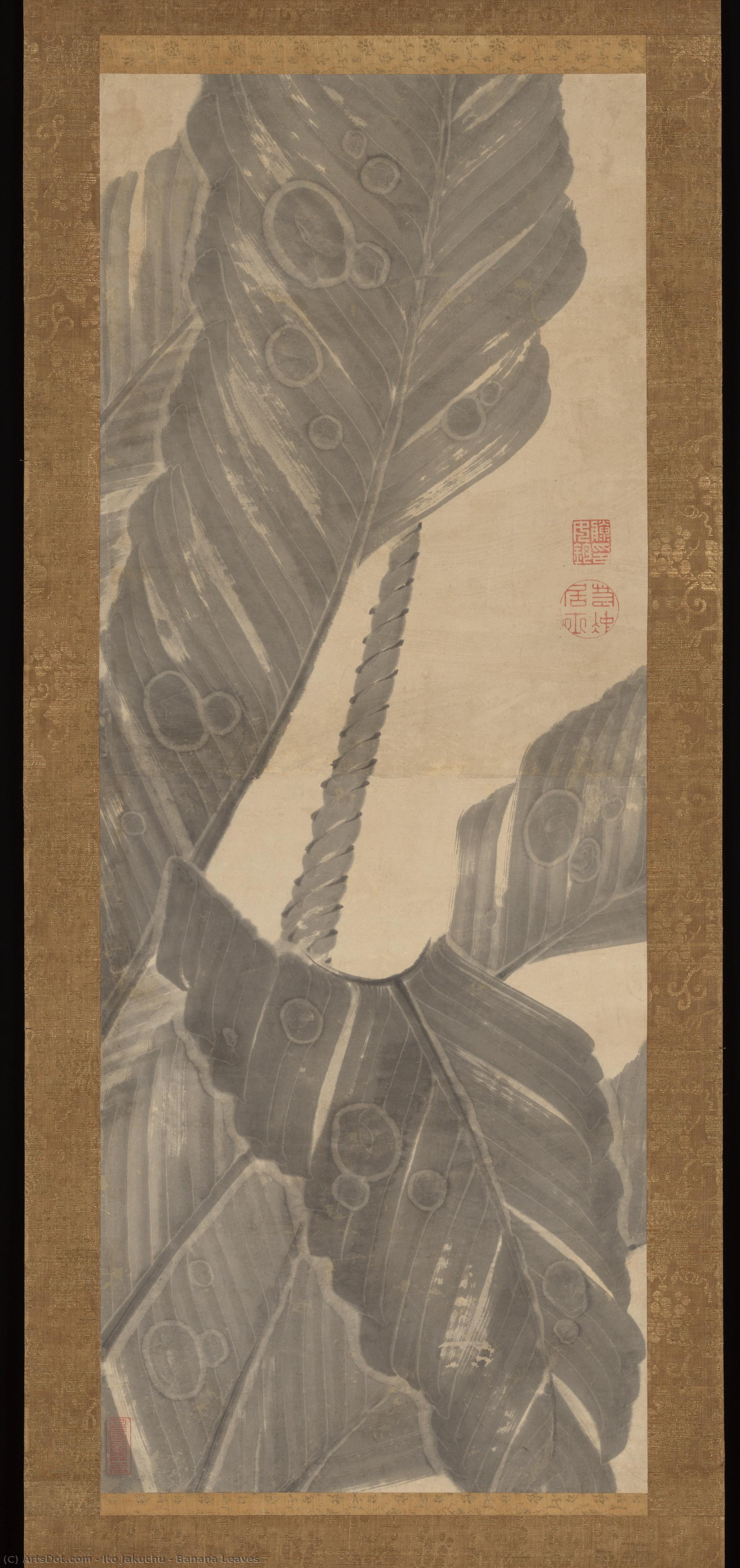
In the quiet mastery of Itō Jakuchū, the boundaries between the natural world and the spiritual realm dissolve into a breathtaking display of botanical precision. His work, Banana Leaves, serves as a profound testament to the artist's ability to transform simple organic forms into a complex, rhythmic composition. The painting captures the lush, overlapping silhouettes of banana leaves with a graphic boldness that feels remarkably modern, yet it is deeply rooted in the traditions of the Edo period. As the eye wanders across the pale gray ink and the delicate interplay of light, one is struck by a sense of serene movement, as if a gentle Kyoto breeze has just swept through the foliage, momentarily freezing a moment of botanical grace.
The technical brilliance of this piece lies in the sujime-gaki technique, or "white-line drawing," a method that requires extraordinary discipline and foresight. To achieve such an effect, Jakuchū applied moist brushstrokes to the absorbent gasenshi paper with surgical precision, leaving narrow, unpainted gaps between the ink washes. These microscopic slivers of untouched paper create the illusion of luminous white veins and edges, giving the leaves a structural vitality that seems to glow from within. This meticulous approach allows the artist to render the heavy, succulent texture of the leaves while maintaining an airy, weightless quality that prevents the composition from feeling dense or stagnant.
A Legacy of Eccentricity and Devotion
To understand the soul of this artwork, one must look toward the life of the man behind the brush. Itō Jakuchū was celebrated as one of the Three Eccentrics of the Edo period, a title that reflects his departure from the rigid, academic styles of his era in favor of a more visceral, imaginative realism. Born into a prosperous merchant family in Kyoto, Jakuch_hū’s perspective was uniquely shaped by the vibrant commercial energy of the Nishiki market and his deep-seated Zen Buddhist convictions. This duality—the observant eye of a man familiar with the tangible world and the contemplative spirit of a devotee—is what gives Banana Leaves its profound emotional resonance.
The presence of Jakuchū’s personal seals on the work offers a glimpse into his spiritual identity. The round seal, reading “Lay Buddhist devotee Jakuchū,” serves as a humble reminder of the artist's devotion, suggesting that every stroke was an act of mindfulness. Furthermore, the poignant inscription Senga zeppitsu—meaning “a thousand paintings, each one [created as if it were] my last one”—imbues the work with a sense of urgent beauty. For the collector or interior designer, this piece is more than a mere botanical study; it is an invitation to contemplate the fleeting nature of life and the enduring power of focused intention.
An Inspiration for the Modern Interior
For those seeking to curate a space of sophistication and tranquility, Banana Leaves offers unparalleled versatility. The muted palette of grays and soft whites allows it to integrate seamlessly into contemporary minimalist settings, while its bold, graphic structure provides a striking focal point in more traditional or maximalist environments. The artwork possesses a rare ability to command attention through subtlety rather than noise, making it an ideal choice for high-end residential galleries, serene study areas, or luxury hospitality design.
Owning a high-quality reproduction of this masterpiece allows the timeless elegance of Jakuchū’s vision to inhabit your personal space. It brings with it the historical weight of 18th-century Japan and the quiet, rhythmic energy of the natural world. Whether placed in a sunlit lounge or a contemplative corner, the painting acts as a window into a lost era of artistic experimentation, offering a continuous source of inspiration and a profound sense of peace to all who behold it.