A Glimpse into Russian Soul: Ivan Shishkin’s “Edge of the Forest (9)”
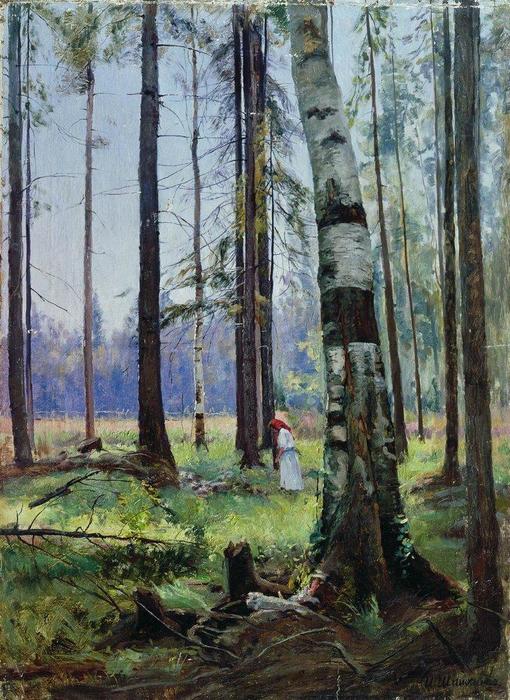
Ivan Shishkin, a master of Russian landscape painting, frequently explored the profound connection between humanity and nature. “Edge of the Forest (9)” exemplifies this preoccupation, presenting a serene scene of a woman poised at the threshold between open woodland and dense forest depths. While details regarding its precise date and size remain elusive, the artwork’s style firmly places it within Shishkin's mature period – characterized by meticulous realism and an almost reverent depiction of the Russian countryside. The warm light suggests either sunrise or sunset, bathing the trees in a golden glow and creating a tranquil atmosphere. This isn’t merely a representation *of* nature; it’s an evocation *of* its spirit.
Technical Brilliance & Artistic Movement
Shishkin was renowned for his unparalleled ability to render textures – the rough bark of trees, the delicate play of light on leaves, and the soft folds of fabric. Though the medium isn’t specified, it's likely oil on canvas, a technique Shishkin expertly employed to achieve remarkable depth and detail. His work is deeply rooted in the Peredvizhniki (Wanderers) movement, which rejected academic artifice in favor of portraying Russian life and landscapes with honesty and emotional resonance.
This commitment to realism wasn’t simply about accurate depiction; it was a deliberate attempt to connect with viewers on an emotional level, fostering a sense of national identity and appreciation for the beauty of their homeland. The composition, while seemingly simple, is carefully balanced – the figure provides scale and a focal point, drawing the eye into the expansive forest beyond.
Symbolism & Emotional Resonance
The lone woman in white stands as a compelling symbol within the landscape. Her attire suggests purity and perhaps contemplation. Is she entering the forest seeking solace? Or is she pausing at its edge, reflecting on life’s journey? The bench nearby invites viewers to imagine themselves sharing this moment of quietude.
Shishkin often imbued his landscapes with subtle narratives, allowing viewers to project their own emotions and experiences onto the scene. The forest itself can be interpreted as a metaphor for the unknown, the subconscious, or the vastness of life’s possibilities. The overall effect is one of peaceful introspection – a moment suspended in time where nature's beauty offers respite from the complexities of the world.
A Timeless Appeal for Modern Interiors
“Edge of the Forest (9)” possesses a timeless quality that makes it exceptionally well-suited for a variety of interior design schemes. Its muted color palette and natural subject matter lend themselves beautifully to both traditional and contemporary spaces.
- In a living room, it could serve as a calming focal point, promoting relaxation and conversation.
- A bedroom would benefit from its serene atmosphere, fostering a sense of tranquility.
- Even in an office setting, the artwork’s connection to nature can inspire creativity and reduce stress.
The painting's enduring appeal lies in its ability to transport viewers to a place of peace and beauty – a reminder of the restorative power of the natural world. Its subtle narrative invites ongoing contemplation, making it not just a decorative element but a source of lasting inspiration.