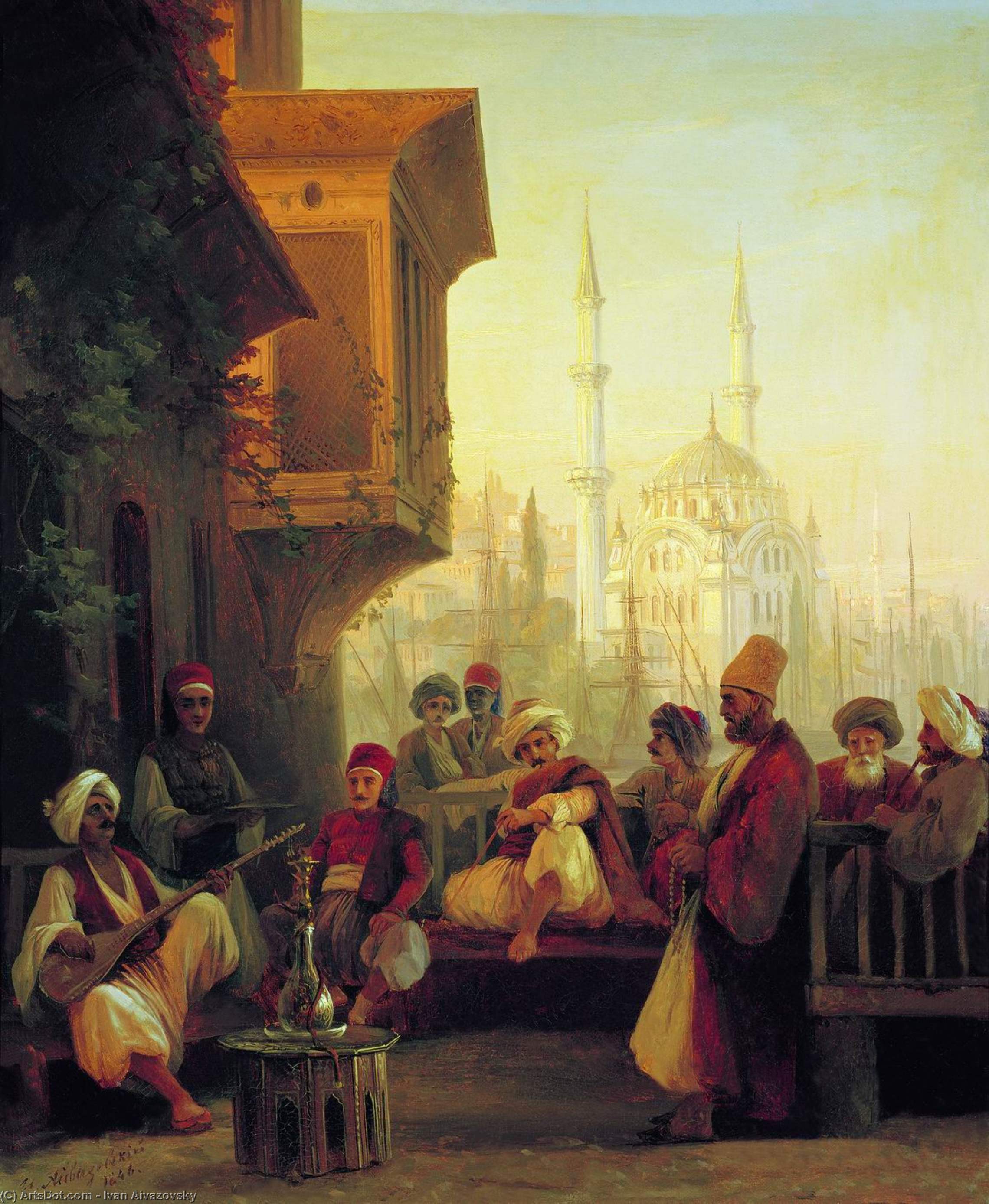
Experience the beauty of 'Oriental Scene' by Ivan Aivazovsky! This 1846 oil painting captures a vibrant Middle Eastern gathering, showcasing Romanticism’s emotional depth and masterful detail.
Romantic Sensibility: Embodies the Romantic movement’s emphasis on emotion, imagination, and the sublime power of nature.
Overview of "Oriental Scene" by Ivan Aivazovsky
This captivating painting, titled “Oriental Scene,” is a remarkable work by the renowned Russian Romantic artist Ivan Aivazovsky, created in 1846. It portrays a vibrant gathering of people set against the backdrop of Middle Eastern architecture, likely depicting a scene from Istanbul or another city within that region. The artwork exemplifies the Romantic style, characterized by its emphasis on emotion, imagination, and dramatic visual elements. It offers a glimpse into a historical moment, capturing the essence of daily life in a culturally rich urban setting.
Painting Details & Technique
The painting measures 45 x 37 cm and is executed using oil paints on canvas. Aivazovsky’s masterful technique shines through in his meticulous attention to detail. At least thirteen individuals are depicted, some standing while others relax on benches or other surfaces, each rendered with distinct character. The artist skillfully employs chiaroscuro – the dramatic use of light and shadow – to create depth and volume within the scene. The composition is carefully balanced, drawing the viewer's eye through the arrangement of figures and architectural elements. Aivazovsky’s signature style involves a nuanced application of brushstrokes, creating a sense of texture in the fabrics, stonework, and surrounding environment. The color palette leans towards muted earth tones, punctuated by subtle hints of blue and green, contributing to the painting's overall warmth and intimacy.
Artistic Style & Historical Context
Ivan Aivazovsky (1817-1900) was a celebrated master of marine art, though his talent extended beyond seascapes. "Oriental Scene" reflects the broader artistic trends of the 19th century, particularly Orientalism – a style that romanticized and often idealized depictions of Middle Eastern cultures. This movement was fueled by increased European interest in and exploration of the region. Aivazovsky’s ability to capture light and atmosphere was unparalleled; he used these elements not just for visual beauty but also to evoke specific moods and emotions. The painting's creation in 1846 places it within a period of significant political and social change, reflecting both the grandeur of the Russian Empire and its engagement with other cultures.
Symbolism & Emotional Impact
Beyond its aesthetic appeal, "Oriental Scene" carries symbolic weight. The gathering of people suggests themes of community, leisure, and cultural exchange. The architecture—the building with a large dome and the receding cityscape featuring minarets—grounds the scene in a specific geographical and historical context. The soft, diffused lighting creates a sense of tranquility and nostalgia, inviting viewers to contemplate a bygone era. Aivazovsky’s work evokes feelings of warmth, curiosity, and perhaps even a touch of melancholy, reflecting the Romantic movement's fascination with emotion and the sublime. The painting serves as a window into a different world, prompting reflection on cultural diversity and the shared human experience.
Legacy & Reproductions
Ivan Aivazovsky left behind an impressive legacy, creating approximately 6,000 paintings throughout his career. "Oriental Scene" stands as a testament to his skill and artistry. Today, high-quality handmade oil painting reproductions of this artwork are available, allowing art enthusiasts and collectors to appreciate its beauty in their own homes or spaces. These reproductions faithfully recreate the original's details and color palette, offering an accessible way to experience Aivazovsky’s vision.