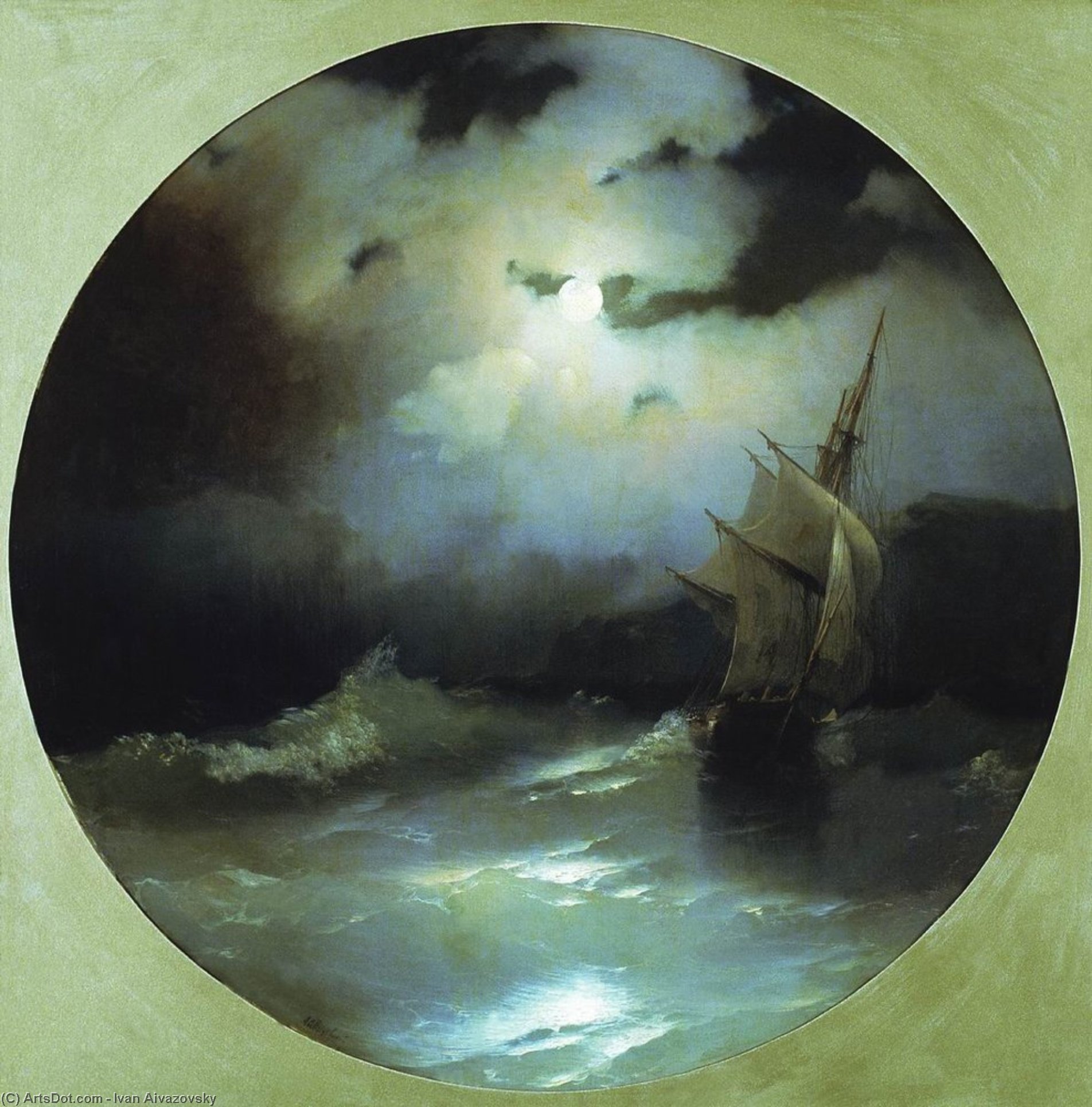
Experience Aivazovsky’s breathtaking ‘Sea on a moonlit night,’ a Romantic seascape capturing a sailboat's journey under the Black Sea’s luminous glow, showcasing the master’s dramatic style and evoking timeless maritime beauty – discover your perfect reproduction.
A Night's Embrace: Aivazovsky’s ‘Sea on a Moonlit Night’
Ivan Konstantinovich Aivazovsky’s “Sea on a Moonlit Night,” painted in 1858, is more than just a depiction of a seascape; it’s an immersive experience, a testament to the artist's profound and almost spiritual connection with the Black Sea. Born in Feodosia, Russia, in 1817, Aivazovsky dedicated his life to capturing the ocean’s volatile beauty – its serene majesty juxtaposed with its terrifying power. This particular work exemplifies his mastery of *marine painting*, a genre he essentially defined, and offers a glimpse into the Romantic sensibilities that shaped 19th-century art.
- Subject Matter: The scene unfolds with dramatic intensity – a large sailboat bravely navigating the churning waves under the watchful eye of a full moon. The composition immediately draws the viewer into the heart of the storm, emphasizing both the vulnerability and the exhilaration of human endeavor against the forces of nature.
- Style & Technique: Aivazovsky’s technique is characterized by its loose, expressive brushwork, achieved through layers of thinly applied oil paint – a method known as *alla prima*. This approach allows for an incredible sense of movement and light, particularly evident in the shimmering reflections on the water's surface and the dramatic play of moonlight. The artist skillfully employs atmospheric perspective, creating a believable depth that pulls the viewer into the scene.
Romanticism and the Sea: A Cultural Context
“Sea on a Moonlit Night” is firmly rooted in the Romantic movement, which prioritized emotion, imagination, and the sublime over strict classical ideals. The Romantic fascination with nature – particularly its untamed aspects – found its perfect expression in Aivazovsky’s work. The painting reflects the era's growing interest in maritime exploration and adventure, fueled by technological advancements like steamships and a renewed sense of national pride within Russia. Furthermore, the depiction of a lone ship battling the elements speaks to themes of human courage, resilience, and the inherent drama of existence – core tenets of Romantic thought.
Symbolism of Light and Darkness
The moon itself is a crucial element of the painting’s symbolism. It represents not only illumination but also mystery, danger, and the subconscious. The contrast between the bright moonlight and the dark, turbulent waters creates a powerful visual tension, mirroring the internal conflicts and uncertainties that often preoccupied Romantic artists. The sailboat, sailing into the unknown, can be interpreted as a metaphor for human ambition and the pursuit of dreams – endeavors inevitably fraught with risk and uncertainty.
Emotional Impact & Legacy
"Sea on a Moonlit Night" continues to resonate with viewers today due to its raw emotional power. Aivazovsky’s ability to evoke a sense of awe, fear, and beauty simultaneously is remarkable. His work profoundly influenced generations of marine artists, establishing him as one of the most celebrated painters in Russian history. A reproduction of this iconic piece offers an opportunity to bring this dramatic seascape into your home, serving as a constant reminder of the ocean’s enduring allure and Aivazovsky's unparalleled skill in capturing its soul.