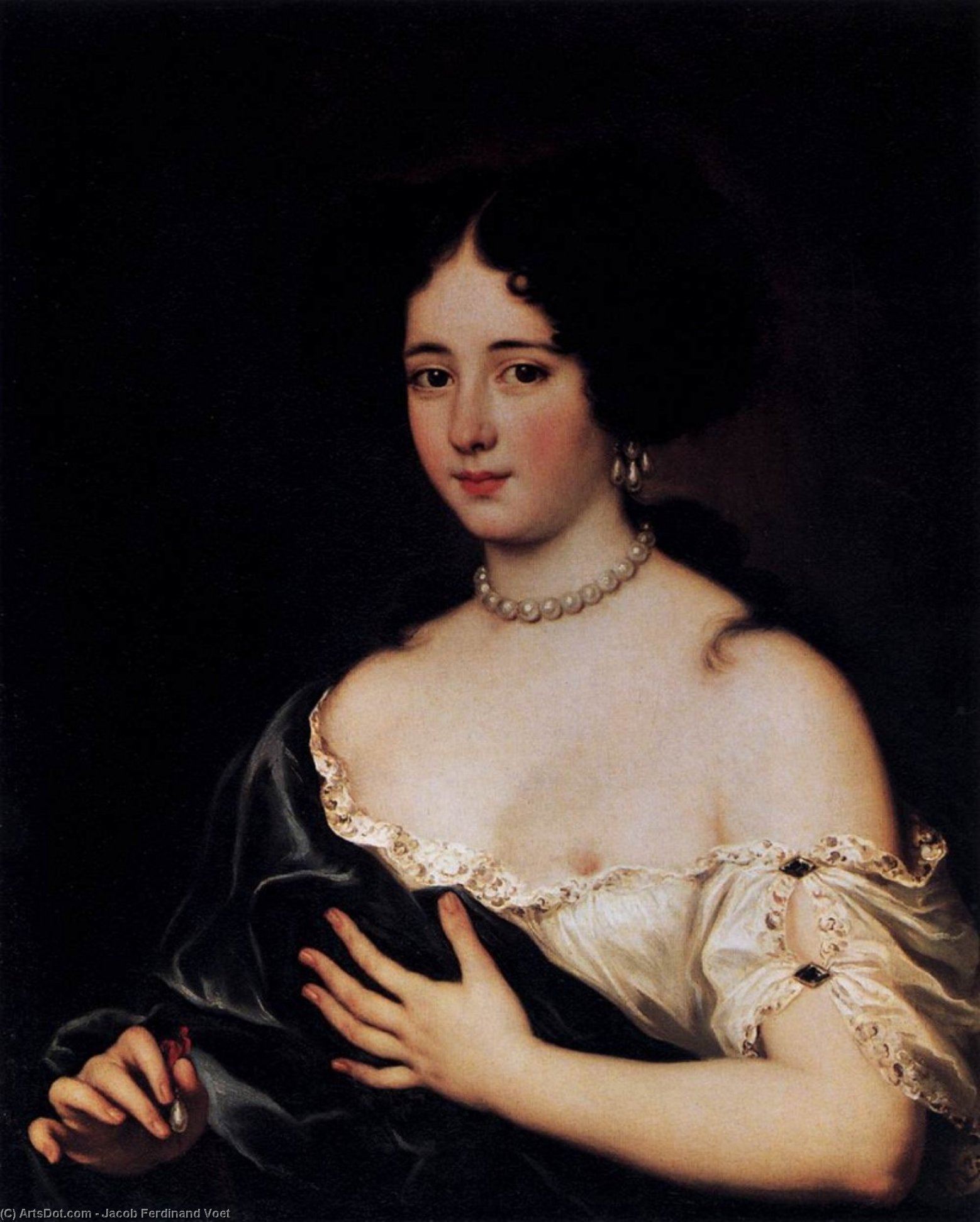
Born in Antwerp around 1639, Jacob Ferdinand Voet honed his skills in Antwerp before establishing himself as a leading portrait painter in Rome during the High Baroque. He gained renown for his portraits of European nobility and fostered connections within the Bentvueghels artistic community.
Jacob Ferdinand Voet (1639-1700) was a leading Flemish Baroque portrait painter renowned for his elegant depictions of European aristocracy in Rome & Paris. Known for striking portraits, refined detail, and captivating eyes, he captured the glamour o
Explore Berlin's history & art at the Staatliche Museen! Discover Nefertiti, ancient artifacts, masterpieces across 17 museums on Museum Island & beyond.
A Portrait Steeped in Glamour and Mystery: Jacob Ferdinand Voet’s Maria Mancini as Cleopatra
Jacob Ferdinand Voet (1639 – 26 September 1700) stands as a beacon of Baroque elegance, an artist whose canvases whisper tales of opulent courts and refined sensibilities. Born in Antwerp, his artistic journey spanned Italy and France, cementing his reputation as one of the era’s foremost portrait painters—a master craftsman who captured not merely likenesses but also the very essence of his subjects' personalities. While biographical details remain elusive – a frustrating hallmark of documenting artists during this period – Voet’s prolific output speaks volumes about his talent and unwavering dedication to artistic excellence. His canvases are instantly recognizable for their meticulous detail, luminous color palettes, and an uncanny ability to convey emotion through subtle expressions and gestures.
- The Subject: Maria Mancini (1655 – 1735), Duchess of Sonnino, was a figure of considerable renown during her lifetime—a woman whose beauty and social standing captivated the imaginations of artists and intellectuals alike. Voet’s portrait depicts her as Cleopatra VII Philopator, Queen of Egypt, transforming her into an icon of regal power and alluring mystique.
- Style: Voet's style embodies the quintessential Baroque aesthetic—characterized by dramatic chiaroscuro (the interplay of light and shadow), idealized forms, and a penchant for conveying psychological depth. He skillfully employs these techniques to elevate his subject beyond mere representation, imbuing her image with an aura of grandeur and sophistication.
- Technique: Voet’s mastery lay in his meticulous application of oil paint on canvas—a medium that allowed him to achieve unparalleled luminosity and textural richness. His brushstrokes are delicately blended, creating surfaces that shimmer with subtle variations in tone and color, reflecting the artist's profound understanding of optics and pigment manipulation.
- Historical Context: Painted in 1663-72 during Voet’s Roman residency, this portrait reflects the artistic fervor of the period—a time when Rome served as a crucible for innovation and patronage. The artwork aligns with broader trends in Baroque portraiture, which sought to portray individuals as embodiments of virtue and intellect, mirroring the humanist ideals prevalent at the time.
- Symbolism: Cleopatra’s pose—holding her chest—is laden with symbolic significance, representing both vulnerability and regal dignity. Voet skillfully utilizes this gesture to convey Maria Mancini's inner strength alongside her outward beauty, creating a portrait that transcends mere visual depiction.
Provenance: The painting resides at Staatliche Museen Berlin, where it continues to inspire admiration for its artistic merit and historical importance. Its inclusion in the Gemäldegalerie’s collection underscores Voet's enduring legacy as a pivotal figure in Baroque art history.
Further Exploration: For more information on Jacob Ferdinand Voet and his oeuvre, consult resources such as the Prussian Cultural Heritage Foundation (
) and the Web Gallery of Art (), where you can view high-resolution reproductions of Voet’s paintings alongside scholarly analyses—a testament to his enduring influence on artistic tradition.
Resources: