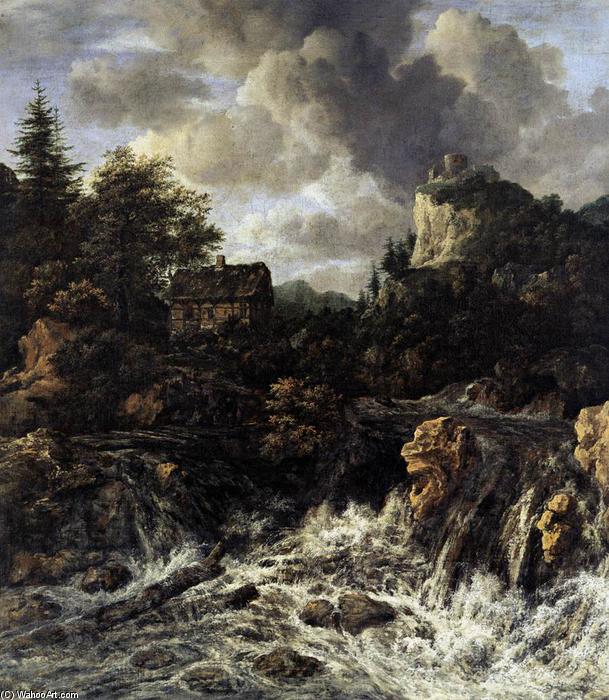
Jacob Isaacszzoon van Ruysdael’s "The Waterfall," painted in 1665, captures the dramatic Dutch Golden Age landscape style with a powerful waterfall and distant village. Admire this stunning oil on canvas reproduction and bring a piece of art history into your home.
A Masterpiece of Dutch Serenity: "The Waterfall" by Jacob Isaackszoon van Ruysdael
Jacob Isaackszoon van Ruysdael’s “The Waterfall,” painted in 1665, is more than just a depiction of a natural scene; it's a profound meditation on tranquility and observation – hallmarks of the Dutch Golden Age. Measuring an impressive 100 x 87 cm, this artwork transports the viewer to a moment of serene contemplation, capturing the essence of a landscape that was rapidly becoming central to Dutch artistic expression. Housed within the Staatliche Museen in Kassel, Germany, “The Waterfall” represents a pivotal work by a man who fundamentally shaped the definition of landscape painting and remains a cornerstone of Dutch art history.
Technical Brilliance: The Art of Atmospheric Depth
- Oil on Canvas: Executed with meticulous detail in oil on canvas, Ruysdael’s technique is immediately arresting. He demonstrates an unparalleled command of light and shadow, skillfully rendering the cascading water with a dynamic sense of movement.
- Reflections and Illusion: The shimmering reflections across the wet rocks are not merely decorative; they're a masterful illusion of depth, drawing the viewer into the heart of the scene. This technique was revolutionary for its time, pushing the boundaries of what was possible in oil painting.
- Layered Brushstrokes: Noticeable upon close inspection, the layering of brushstrokes contributes to the painting’s textural richness – from the rough texture of the cliff face to the delicate foliage surrounding the waterfall. This deliberate approach adds a remarkable sense of realism and tactile quality.
- Atmospheric Perspective: Ruysdael's use of atmospheric perspective—the subtle blurring of distant elements—is particularly noteworthy, creating a believable sense of space and distance that was groundbreaking for its time.
A Window into 17th-Century Dutch Life
“The Waterfall” transcends the purely aesthetic; it’s a snapshot of 17th-century Dutch life, offering a glimpse into rural existence and the values of the era. The small village nestled amongst the hills speaks to the importance of agriculture and community, while the church steeple rising above the rooftops underscores the profound influence of faith. This detail elevates the painting beyond a simple landscape, transforming it into a narrative window onto a bygone world.
Symbolism and Emotional Impact
The composition itself is carefully balanced, guiding the eye through the scene from the foreground waterfall to the distant village, reinforcing the painting’s inherent harmony. The overcast sky hints at a sense of quiet contemplation, while the sheer power of the falling water evokes both awe and a feeling of vulnerability. Ruysdael's ability to capture such nuanced emotions within a landscape is a testament to his artistic genius. The artwork continues to resonate with viewers today, offering a moment of respite and reminding us of the enduring beauty of nature.
Provenance and Significance
Created in 1665, “The Waterfall” stands as a prime example of Ruysdael’s artistic evolution. Initially known for his depictions of Dutch countryside scenes, he later incorporated elements of German influence after his travels, broadening his stylistic range. This painting exemplifies his mastery and secures its place as a foundational work within the history of landscape art, offering a tangible connection to the vibrant cultural landscape of the Dutch Golden Age.