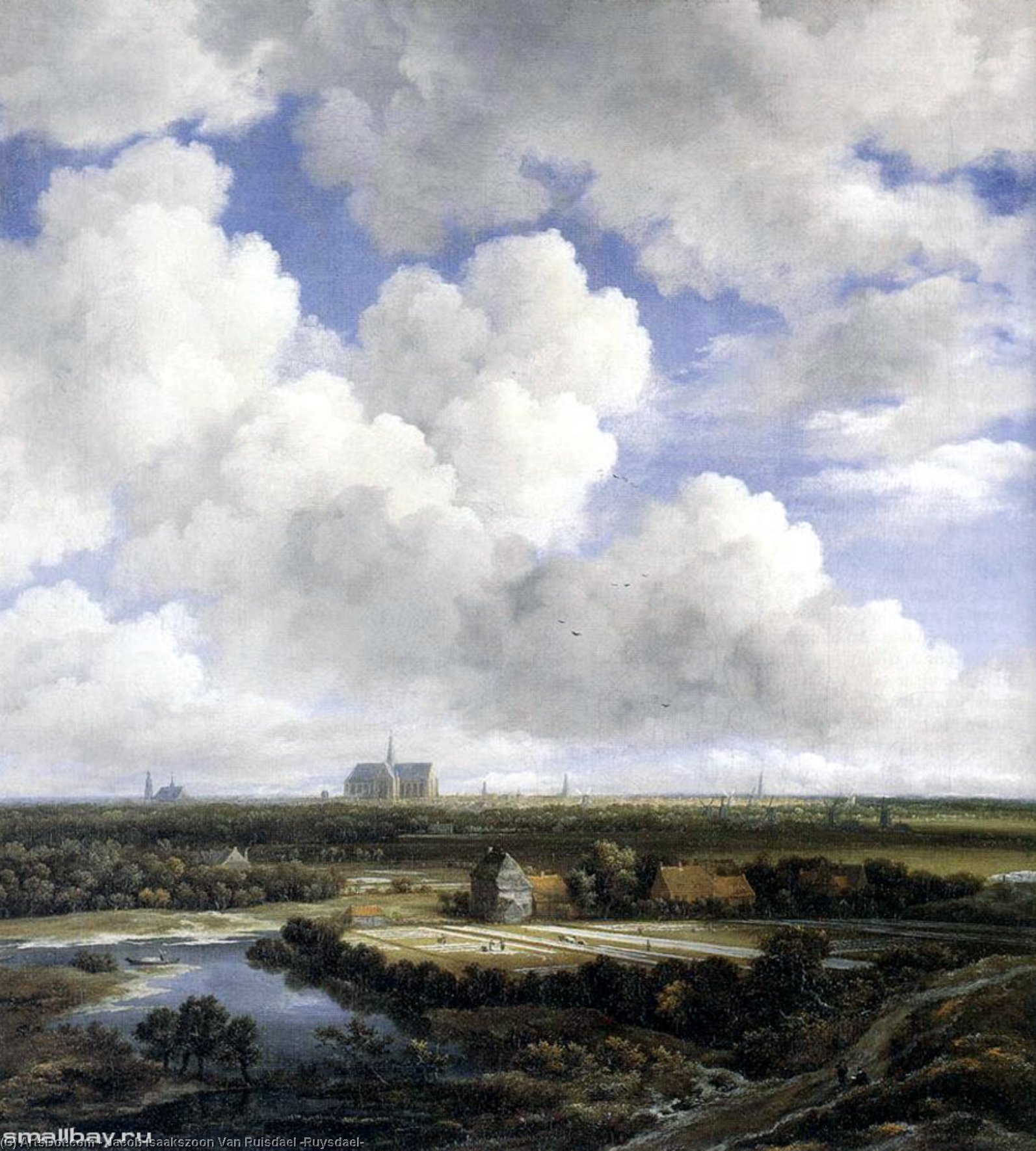
Discover Jacob van Ruisdael’s ‘View of Haarlem’. A stunning Dutch Golden Age landscape painting showcasing city & nature. Hand-painted reproductions available.
Jacob van Ruisdael (1628-1682) was the most important Dutch Golden Age landscape painter. Explore his prolific work: dramatic skies, serene countryside scenes, cityscapes & waterfalls. Influenced English Romantics & beyond.
Explore the Kunsthaus Zürich's diverse collection spanning centuries! From Monet to Giacometti & modern masterpieces, experience Swiss and international art in a stunning architectural setting.
A Panoramic Vision of Haarlem’s Soul
Jacob Isaakszoon van Ruisdael's “View of Haarlem with Bleaching Grounds” transcends mere landscape painting; it embodies the very essence of Dutch Golden Age artistry and captures a pivotal moment in Haarlem’s history. Executed around 1670-1675, this monumental oil on canvas – measuring 62 x 55 cm – resides within the Kunsthaus Zürich, offering visitors an unparalleled glimpse into Ruisdael's masterful vision.
The Scene Unfolds: Haarlem and Its Industry
The painting presents a breathtaking panorama of Haarlem, meticulously rendered against a backdrop of dramatic atmospheric perspective. Dominating the upper portion is a vast expanse of sky ablaze with billowing clouds – a hallmark of Ruisdael’s signature style – conveying both grandeur and an underlying sense of unsettled tranquility. Below this turbulent heavens lies the cityscape itself: the imposing Church of St. Bravo rises proudly from the rooftops, anchoring the composition while simultaneously emphasizing the urban core. However, it is the bleaching grounds that truly captivate the eye. These areas were vital to Haarlem’s linen industry, where sunlight was harnessed to bleach textiles—a practice depicted with remarkable accuracy and detail. Ruisdael doesn't simply portray a place; he conveys its activity and importance.
Masterful Technique: Light, Shadow, and Depth
Ruisdael’s genius lies in his unparalleled ability to manipulate light and shadow, creating an illusion of depth that draws the viewer into the scene. The artist employs layering techniques—a painstaking process characteristic of the Golden Age—to build up textures and hues with subtle gradations. Notice how the diffused daylight illuminates the bleached linen stacks and casts delicate shadows across the riverbank, highlighting the contours of the landscape. This masterful use of chiaroscuro elevates the painting beyond a mere depiction of scenery; it evokes emotion and invites contemplation. The artist’s meticulous attention to detail—from the individual branches of trees to the ripples on the water—demonstrates an unwavering commitment to realism and observation.
Symbolism Within Nature: Reflecting Dutch Identity
Beyond its aesthetic beauty, “View of Haarlem” carries symbolic weight. The expansive sky represents not only meteorological conditions but also spiritual aspiration – a common theme in Dutch art during this period. Furthermore, the bleaching grounds symbolize Haarlem’s economic prosperity and connection to the natural world. Ruisdael's depiction reinforces the prevailing cultural values of his time: industriousness, piety, and appreciation for the sublime beauty of the countryside. It speaks to a broader narrative about the Netherlands as a nation striving for excellence in art and commerce.
Bringing Ruisdael’s Legacy Home
At ArtsDot, we understand the desire to experience the transformative power of original artwork. That's why we offer exquisitely crafted hand-painted reproductions of “View of Haarlem with Bleaching Grounds,” meticulously recreating every nuance of Ruisdael’s masterpiece. Invest in a timeless piece of art history and adorn your home or office with this breathtaking landscape—a testament to Dutch artistic brilliance and enduring beauty.