A Moment Captured in Time: The Intimacy of Jordaens
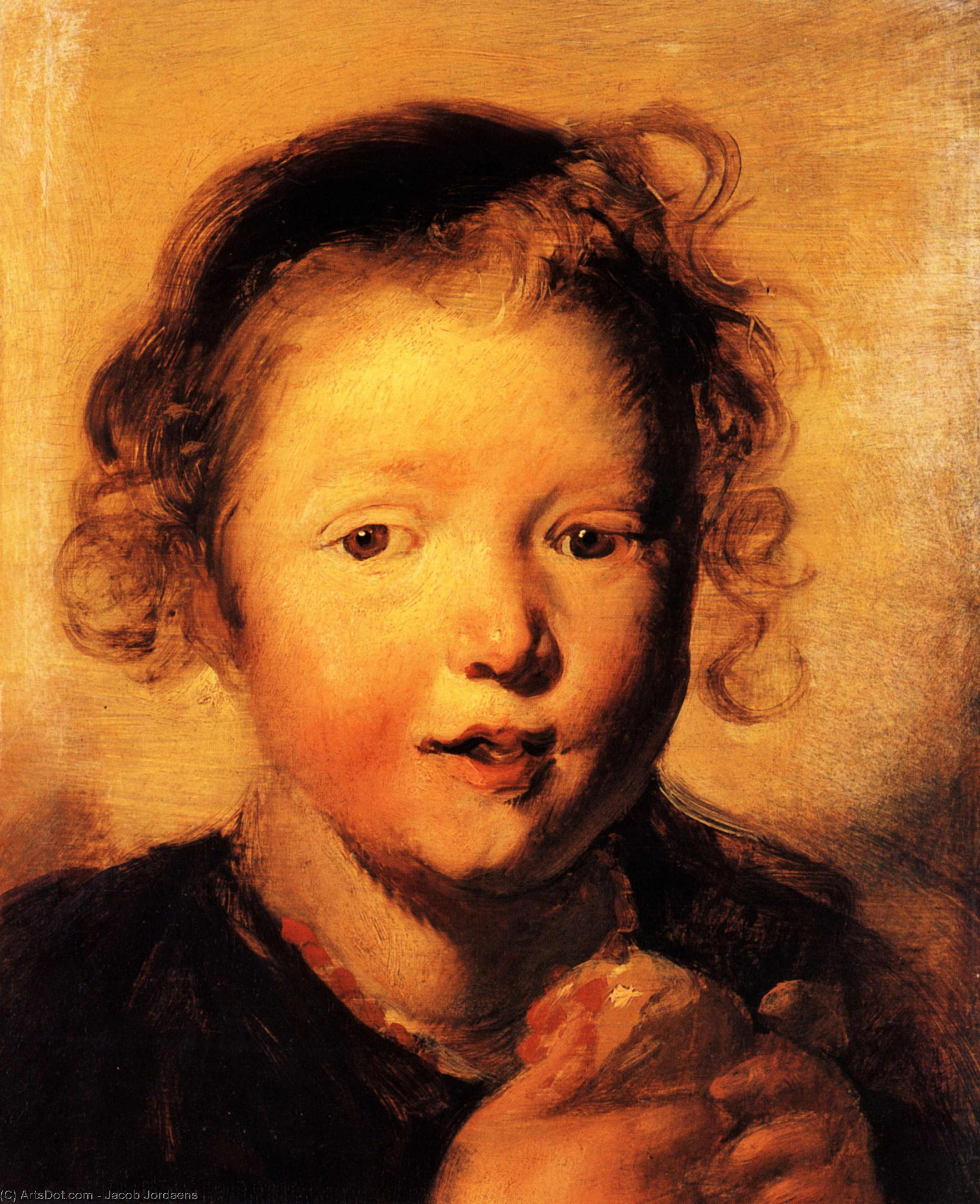
In the quiet, luminous depths of Jacob Jordaens’ 1620 masterpiece, Child's head, we are invited into a private, tender encounter that transcends the centuries. This exquisite oil on panel serves as a profound testament to the Flemish Baroque tradition, capturing not just a likeness, but a fleeting moment of innocent curiosity. The young subject, framed by a soft crown of curls and a charmingly rustic hat, gazes directly at the viewer with an expression that is both soulful and searching. There is an undeniable magnetic pull in those eyes, a sense of connection that bridges the gap between the seventeenth-century Antwerp studio and the modern collector’s eye. As the light dances across the child's features, one feels the warmth of a life being lived, rendered with a masterful touch that celebrates the beauty found in the simplest of human forms.
The technical brilliance of Jordaens is on full display within this intimate 36 x 29 cm composition. Eschewing the grand, sweeping allegories often associated with his contemporary Peter Paul Rubens, Jordaens utilizes a robust and earthy technique to ground his subject in reality. The application of oil paint is deliberate and rich, creating a tactile quality that makes the texture of the child's hair and the heavy fabric of the hat feel almost tangible. His mastery of chiaroscuro—the dramatic interplay between light and shadow—lends a sculptural weight to the small portrait, pulling the face forward from the darker, more nebulous background. This technique does more than create depth; it imbues the work with a psychological intensity, making the child's presence feel remarkably immediate and alive.
For the discerning art lover or interior designer, this piece offers much more than mere decoration; it provides an emotional anchor for a room. The painting embodies the "Life’s Abundance" that Jordaens was so famous for portraying, yet it does so through a lens of quietude rather than boisterous revelry. Its historical significance as a product of the Antwerp school brings a layer of academic prestige to any collection, while its soft, warm palette and soulful subject matter make it incredibly versatile. Whether placed in a sun-drenched morning room or a moody, library-style study, a high-quality reproduction of this work acts as a window into the past, offering a sense of timelessness and a gentle reminder of the enduring power of human innocence.