The
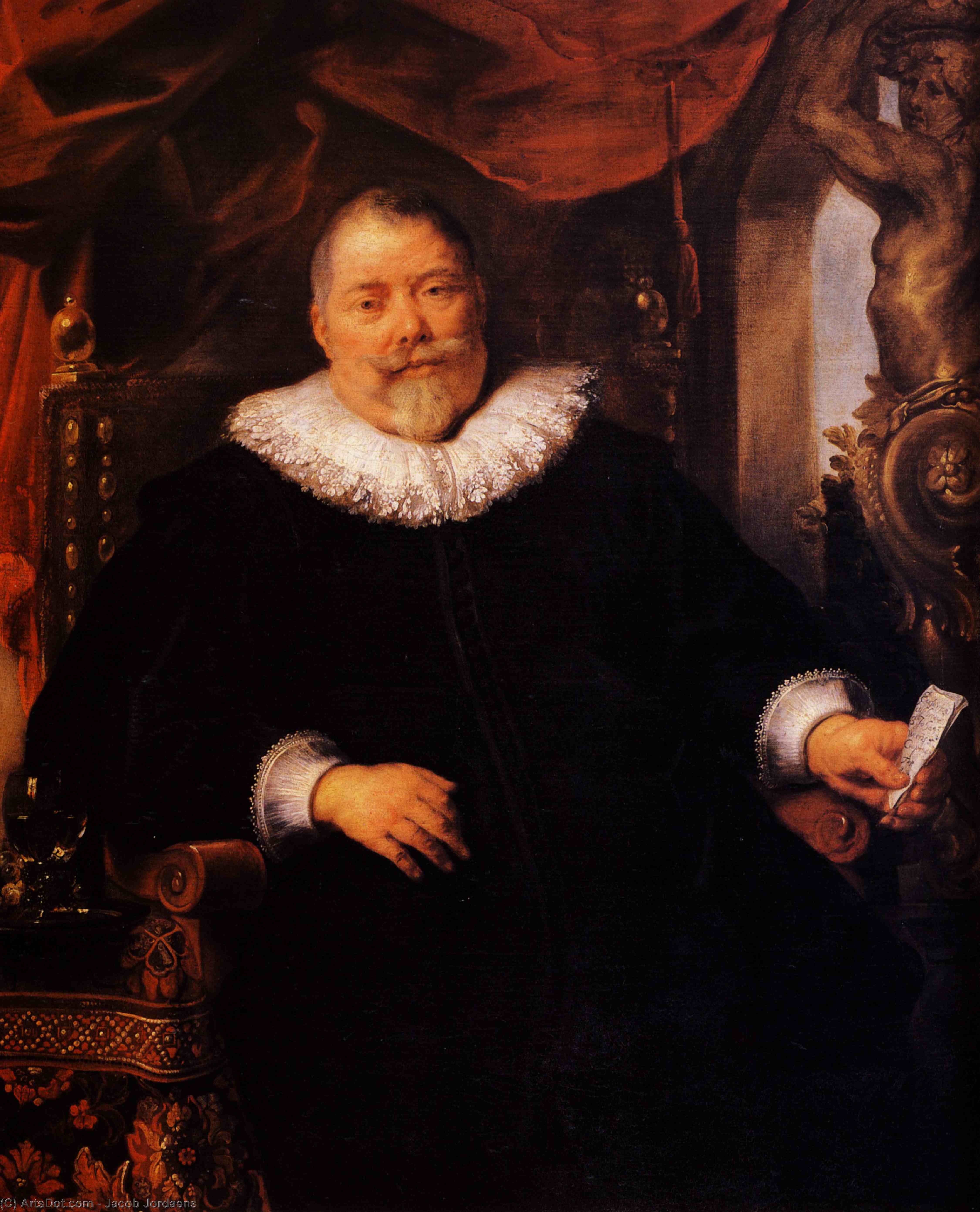
Portrait of Johan Wierts is a stunning oil painting created by the renowned Flemish artist
Jacob Jordaens in 1635. This
Baroque masterpiece is a testament to Jordaens' exceptional skill and artistry, showcasing his ability to capture the essence of his subjects with remarkable precision and detail.
The Painting's Composition and Style
The painting features Johan Wierts, a wealthy and influential individual, seated in a lavish chair, adorned with intricate carvings and opulent fabrics. His attire, complete with a
red cravat and a
wig, reflects his high social status, while his expression exudes a sense of gravity and wisdom. The background of the painting includes a
curtain and a
statue, adding depth and visual interest to the composition.
Artistic Significance and Historical Context
The
Portrait of Johan Wierts is not only a remarkable example of Jordaens' artistic prowess but also a window into the social and cultural landscape of 17th-century Flanders. The painting is characterized by Jordaens' masterful use of
chiaroscuro, a technique that utilizes strong contrasts between light and dark to create a sense of volume and depth.
Handmade oil painting reproductions of the
Portrait of Johan Wierts are available at
https://ArtsDot.com, allowing art enthusiasts to own a piece of history and appreciate the beauty of Jordaens' work up close.
The
Wallraf-Richartz Museum in Cologne, Germany, is home to the original
Portrait of Johan Wierts, where it remains one of the museum's most prized possessions.