A Dramatic Encounter in the Flemish Baroque
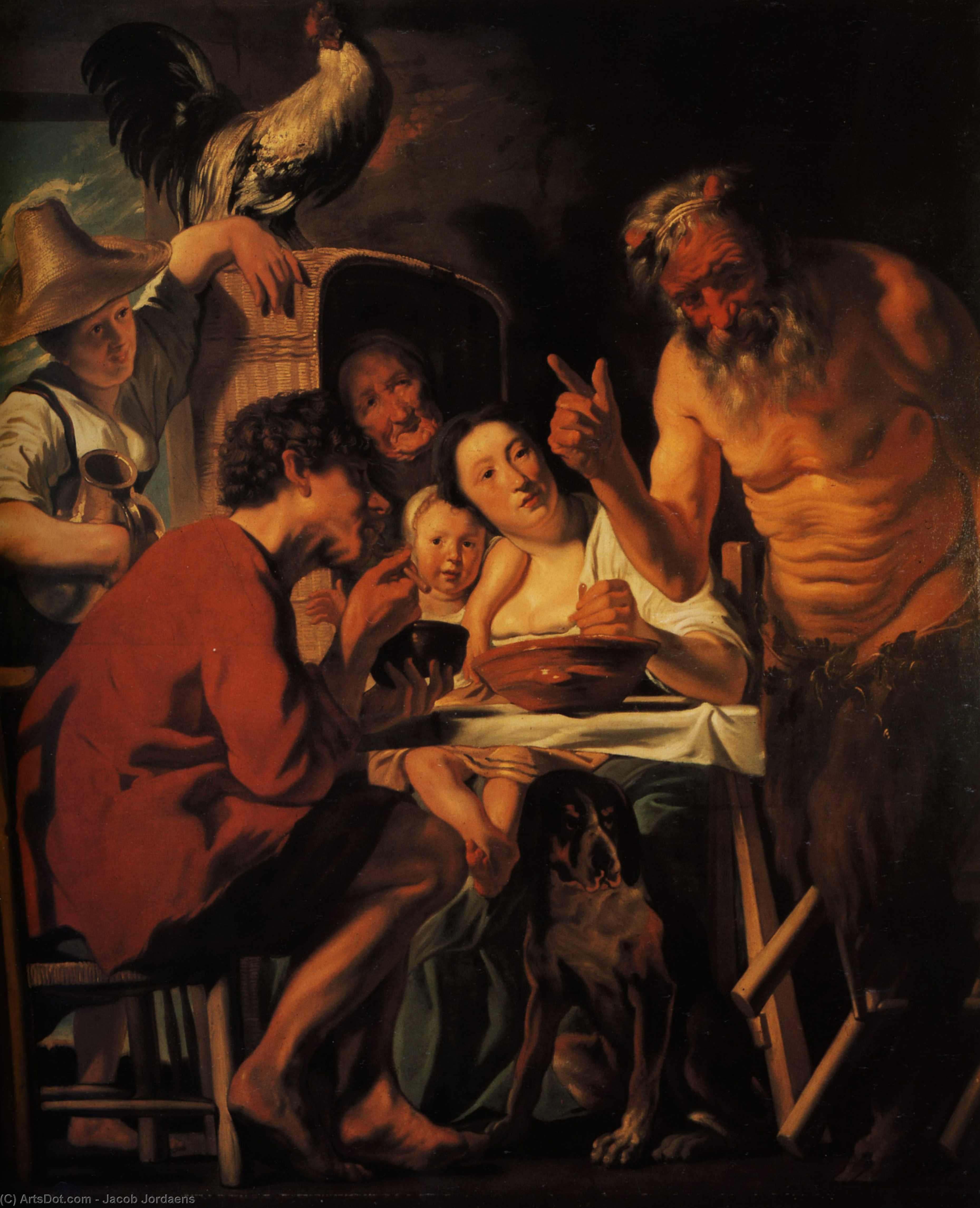
In the heart of a rustic, shadow-drenched interior, Jacob Jordaens captures a moment of profound tension and narrative intensity in his 1621 masterpiece, Satyr and Peasant. This painting serves as a breathtaking window into the Flemish Baroque era, where the boundaries between the mundane and the mythological often blurred. The composition is masterfully tightly packed, pulling the viewer into an intimate circle of figures clustered around a weathered table. A muscular, bearded figure dominates the right side of the canvas, his emphatic gestures suggesting a moment of revelation or perhaps a prophetic warning. Beside him, an elderly woman watches with a gaze of quiet concern, her presence grounding the scene in a sense of domestic reality even as the atmosphere teasingly touches upon the supernatural.
The emotional weight of the piece is carried through Jordaens' unparalleled use of chiaroscuro. The stark contrast between deep, velvety shadows and piercing highlights creates a theatrical stage, illuminating the textures of rough-hewn fabrics, the weathered skin of the elders, and the glint of light on a basket of grain. This dramatic lighting does more than just define form; it directs the eye with surgical precision, guiding us from the commanding presence of the central man to the innocent face of a child, and finally to the watchful eyes of a rooster perched in the upper corner. The technique is meticulous, showcasing the artist's ability to render the tactile world—the coarseness of linen, the smoothness of flesh, and the organic curves of the figures—with a vitality that feels almost palpable.
Symbolism and the Spirit of the Age
Beyond its visual splendor, Satyr and Peasant is rich with symbolic layers that invite deep contemplation. The inclusion of the rooster, often a herald of dawn and new beginnings, provides a subtle counterpoint to the heavy, almost ominous atmosphere of the room. It suggests a transition, perhaps the breaking of a long night or the arrival of an inevitable fate. The child, standing near the bounty of the harvest, represents a purity and innocence that stands in stark contrast to the rugged, powerful figures surrounding him. This juxtaposition of the eternal and the ephemeral is a hallmark of Jordaens' style, reflecting the complex social and spiritual landscape of 17th-century Antwerp.
For the discerning collector or interior designer, this artwork offers much more than mere decoration; it provides a focal point of historical depth and emotional resonance. The painting’s ability to evoke mystery, tension, and even a sense of impending doom makes it an extraordinary piece for spaces designed to inspire thought and conversation. Whether placed in a grand library or a sophisticated contemporary living space, a high-quality reproduction of this work brings with it the robust, earthy energy of the Flemish Masters. It is a celebration of life’s abundance and its inherent drama, making it a timeless addition to any curated collection of fine art.