A Moment Captured in Dutch Domesticity
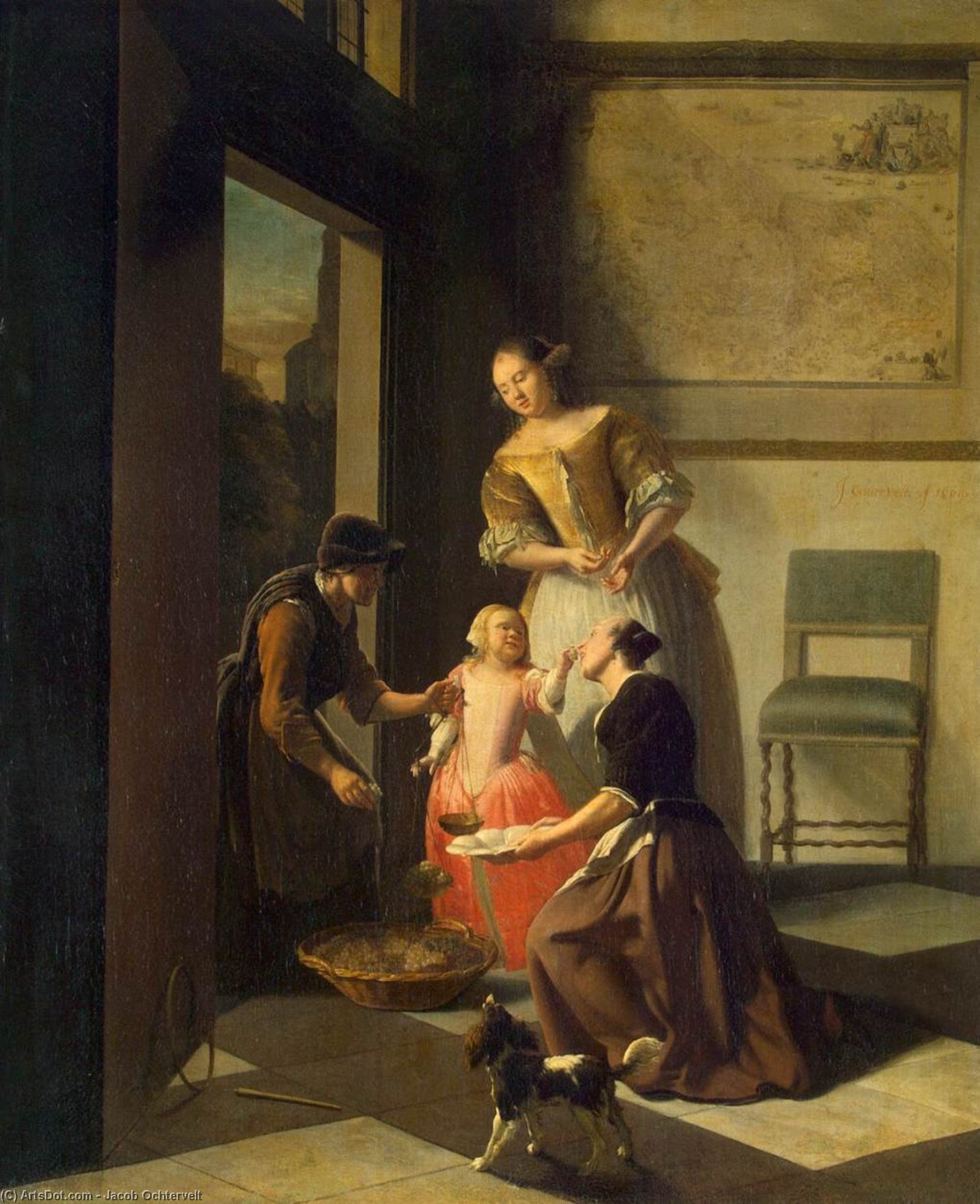
Jacob Ochtervelt’s Buying Grapes, painted in 1669, invites us into an intimate tableau of 17th-century Dutch life. This is not merely a depiction of commerce or family interaction; it is a carefully composed meditation on care, observation, and the quiet rhythms of domestic existence. The scene unfolds with remarkable naturalism: a woman tenderly cradles a child, while another figure watches over them from nearby. The setting, suggested by the presence of a window and simple furnishings, grounds the viewer immediately within the comfortable, yet observed, sphere of the prosperous middle class.
Mastery in Genre Painting and Technique
Ochtervelt, working during the height of the Dutch Golden Age, possessed an exquisite gift for genre scenes. His technique allows light to fall with palpable grace across the figures and objects alike. Notice the subtle interplay between the soft textures of the clothing, the smooth skin of the child, and the rich tones of the surrounding environment. The inclusion of details—the watchful dogs near the foreground, the humble bowl on the ground, even the distant bird in the upper right corner—are hallmarks of his meticulous observation. These elements are not decorative filler; they anchor the narrative, lending depth and a sense of lived reality to the canvas.
Symbolism of Connection and Observation
The composition itself speaks volumes about human connection. The central bond between mother and child is rendered with palpable affection, suggesting themes of nurturing and continuity. Meanwhile, the presence of the observing figure adds a layer of narrative complexity; she acts as both participant and silent witness. In Dutch art of this period, such domestic groupings often carried undertones regarding social roles and familial duty. The grapes themselves, perhaps central to the title, carry traditional symbolism—representing bounty, harvest, or even fleeting pleasures—all woven into the fabric of a seemingly simple afternoon.
Bringing the Atmosphere Home
For those who appreciate the quiet drama and sophisticated charm of Dutch Baroque art, Buying Grapes offers an unparalleled opportunity to infuse a space with historical resonance. Owning a reproduction of this work is acquiring more than just decoration; it is curating an atmosphere—one steeped in gentle affection and masterful artistry. The soft palette and the narrative depth ensure that whether placed above a console table or within a gallery setting, the painting commands attention through its sheer emotional sincerity. It invites contemplation, making every glance feel like a rediscovered moment of grace.