A Baroque Symphony of Myth and Mastery
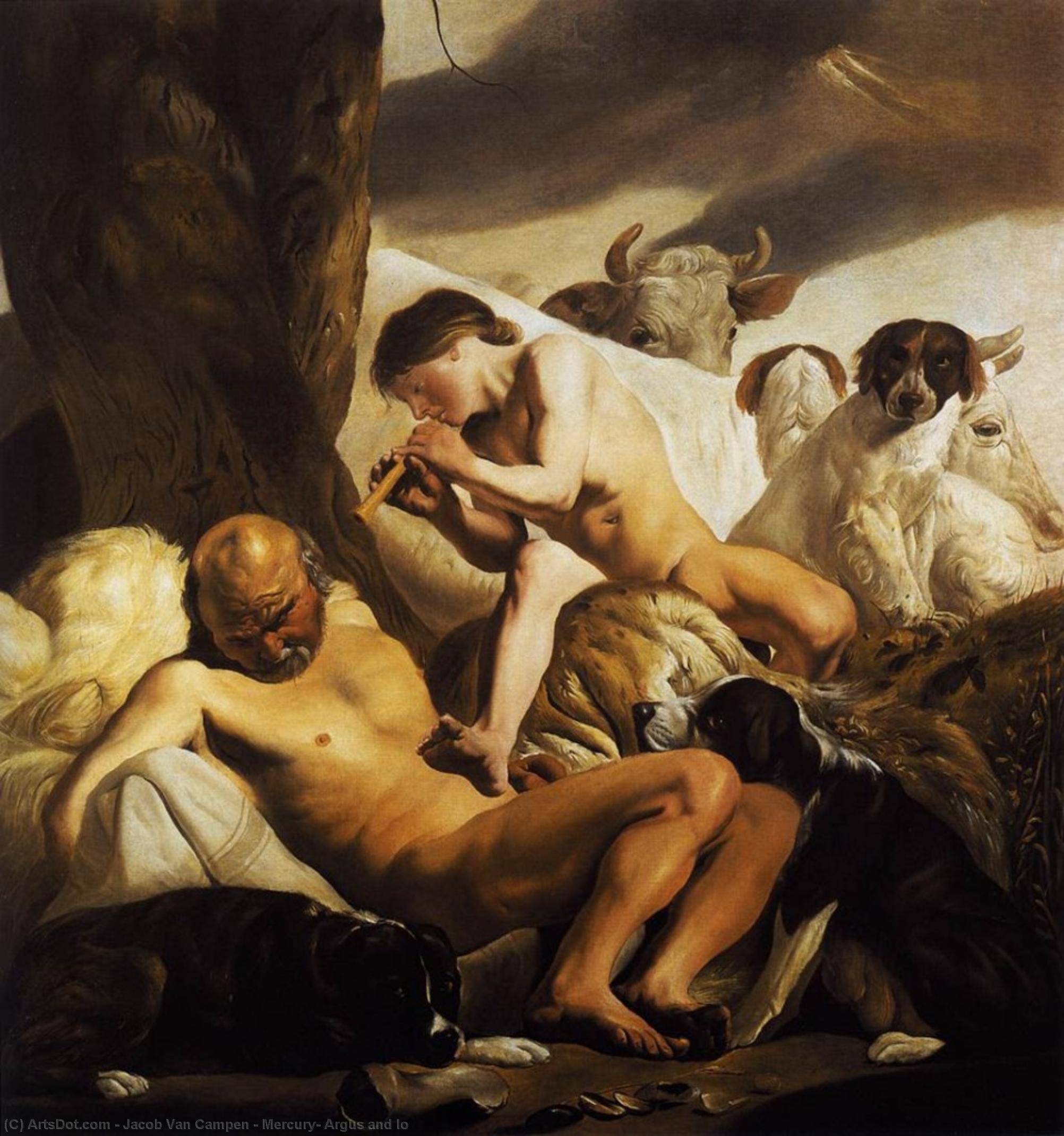
In the heart of the Dutch Golden Age, amidst the burgeoning artistic fervor of Haarlem, Jacob van Campen breathed life into a scene of divine tension and mythological drama. His 1630 masterpiece, Mercury, Argus and Io, is far more than a mere depiction of ancient legend; it is an immersive experience that captures the very essence of the Baroque period. The canvas unfolds a narrative steeped in the complexities of Greek mythology, presenting a tableau where the boundaries between the divine and the mortal blur under a turbulent, stormy sky. As the viewer gaz禽s upon this monumental work, they are drawn into a world of deception and vigilance, where the watchful eyes of Argus and the cunning interventions of Mercury create a palpable sense of impending fate.
The painting centers on the harrowing plight of Io, the wife of Jupiter, who finds herself caught in a celestial pursuit. Van Campen masterfully orchestrates a composition where figures are intertwined with the raw elements of nature—livestock, dogs, and rugged terrain—creating a dynamic energy that feels almost cinematic. The central focus rests upon a nude figure playing a flute, a melodic element intended to soothe or perhaps distract, surrounded by the heavy presence of a large bull and the watchful, weary forms of the shepherds. This arrangement does not merely tell a story; it creates a theatrical stage where every muscle tension and every animal contour contributes to an atmosphere of profound emotional weight.
The Artistry of Light, Texture, and Shadow
To behold this work is to witness the pinnacle of Baroque realism. Van Campen’s technical command over oil on canvas allows for a breathtakingly tactile experience. One can almost feel the coarse, woolly fleece of the sheep and the rugged, weathered hide of the bulls, contrasted sharply against the smooth, luminous skin of the human figures. This meticulous attention to texture is a hallmark of his style, demonstrating an unparalleled ability to render the physical world with both accuracy and poetic grace. The artist utilizes chiaroscuro—the dramatic interplay of light and shadow—to guide the eye through the composition, pulling key figures out of the deep, moody shadows of the Dutch landscape.
The color palette is intentionally rich and somber, dominated by deep blues, earthy browns, and midnight tones that suggest an approaching storm. This darkness serves as the perfect foil for the ethereal light that illuminates the central actors, lending the scene a sense of divine intervention. Through his use of layered glazes and textured brushwork, Van Campen achieves a depth that transcends the flat surface of the canvas, offering a sense of atmospheric perspective that makes the rugged landscape feel vast and imposing. For the collector or designer, this mastery of light provides a focal point of immense character, capable of anchoring a room with its sophisticated and moody elegance.
Symbolism and the Legacy of the Golden Age
Beyond its visual splendor, Mercury, Argus and Io is a profound meditation on the human condition. The inclusion of the flute serves as a powerful symbol of communication, magic, and the power of art to provide solace amidst chaos. Meanwhile, the presence of the dogs and livestock grounds the mythological drama in a primal, earthly reality, reminding the viewer of the vulnerability of all living things when faced with the whims of the gods. The painting reflects the intellectual climate of the 17th-century Netherlands, where classical erudition met a new, bold way of seeing the world.
As an architectural and painterly pioneer, Van Campen brought a sense of structural precision to his mythological subjects, a trait that would later define his legendary architectural contributions. This painting stands as a testament to that unique duality: the ability to balance classical order with Baroque passion. For those seeking to adorn a space with a piece of history, this reproduction offers more than just decoration; it offers a window into an era of unparalleled creativity, inviting a sense of timeless drama and intellectual depth into any curated collection or refined interior.