The Illusion of Reality: A Study in Still Life
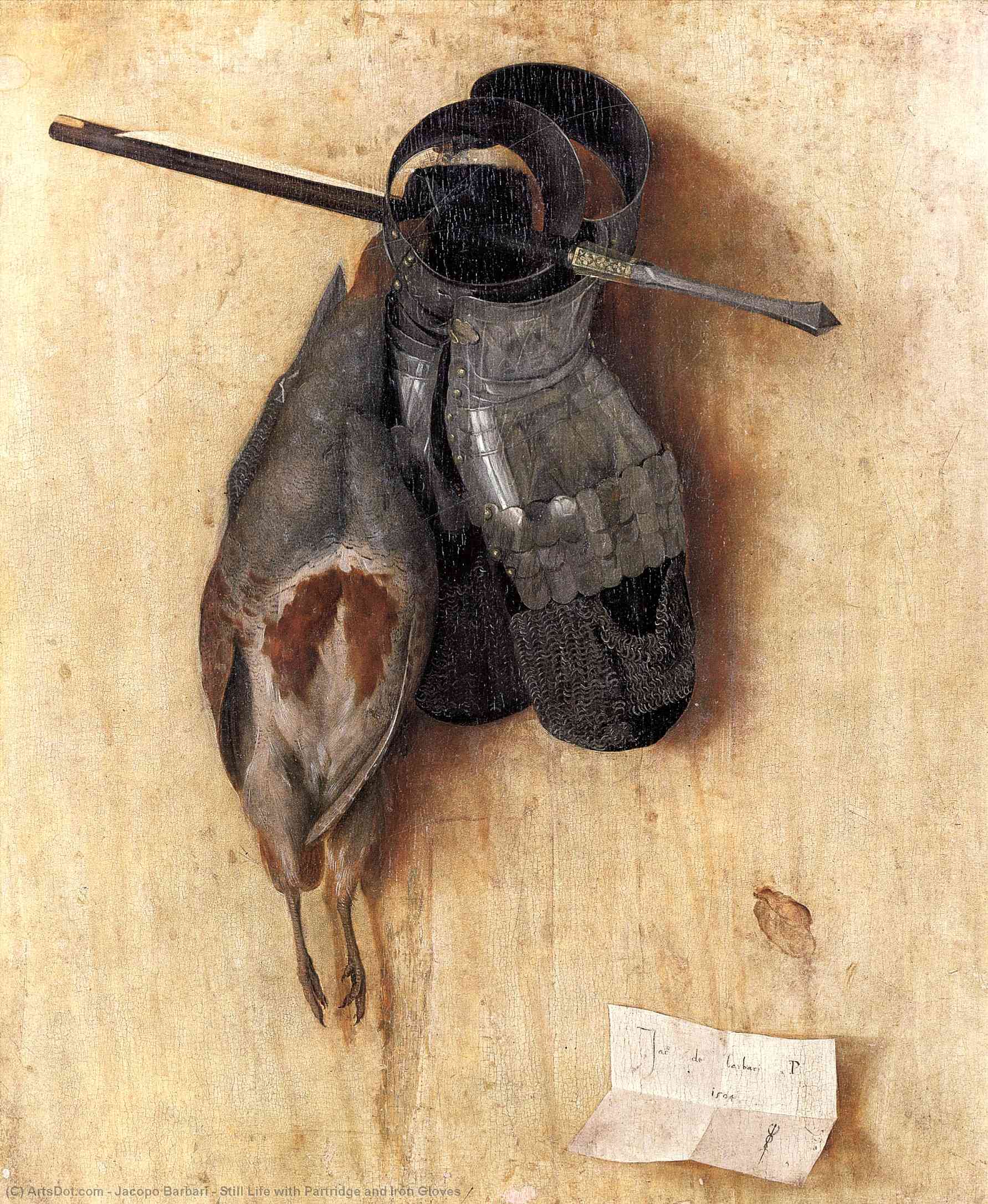
To gaze upon this remarkable still life with Partridge and Iron Gloves is to step directly into the meticulous, almost obsessive world of Renaissance craftsmanship. It is not merely a depiction of objects; it is a carefully constructed meditation on presence, absence, and the very nature of perception. The composition draws the eye immediately to the central arrangement—the lifeless bird hanging suspended, its head bowed in an eternal repose. Flanking this poignant centerpiece are the pair of black leather gloves, stacked with quiet dignity, all anchored beneath the stark geometry of a hanging iron bar. Against the pristine white expanse that serves as both backdrop and compositional foil, every texture, from the soft curve of the feathers to the cold gleam of the metal, is rendered with breathtaking verisimilitude.
Mastery in Trompe l'oeil Technique
The hand of Jacopo Barbari, the Venetian pioneer whose genius lay in fooling the eye, is unmistakable here. This piece exemplifies his mastery of trompe l'oeil—the art of visual deception. Barbari did not simply paint objects; he engineered illusions. The way the light catches the leather grain of the gloves suggests a tangible reality, inviting the viewer to reach out and touch them. Similarly, the hanging bird seems weighted by gravity, its stillness palpable. This technical brilliance elevates the work beyond mere genre painting; it becomes a profound exercise in optical illusion, showcasing an understanding of material science as much as artistic skill.
Symbolism Woven into Everyday Objects
In the rich tapestry of Renaissance still life, no object is accidental. The inclusion of the dead partridge often speaks to themes of transience and the fleeting nature of earthly beauty—a memento mori whispered across centuries. The gloves, perhaps suggesting a discarded role or a moment paused in time, add an element of human narrative mystery. And the iron bar? It introduces a note of industrial permanence against the organic decay suggested by the bird. Together, these elements create a subtle dialogue between life and death, luxury and utility, inviting deep contemplation from the collector who appreciates art that rewards prolonged study.
A Touch of Venetian Renaissance Elegance
Dating to 1504, this work captures the vibrant intellectual ferment of early sixteenth-century Venice. While Barbari’s career was marked by his revolutionary printmaking, works like this still life demonstrate his ability to translate that sharp, detailed observation into a monumental painted format. For the modern connoisseur or designer seeking an authentic piece of historical gravitas, owning a reproduction of this work is acquiring more than just decoration; it is curating a conversation piece steeped in Renaissance intellectualism and unparalleled technical finesse. It promises to anchor any space with a sophisticated air of studied antiquity.