A Venetian Masterpiece: Unveiling Jacopo Bellini’s Madonna and Child
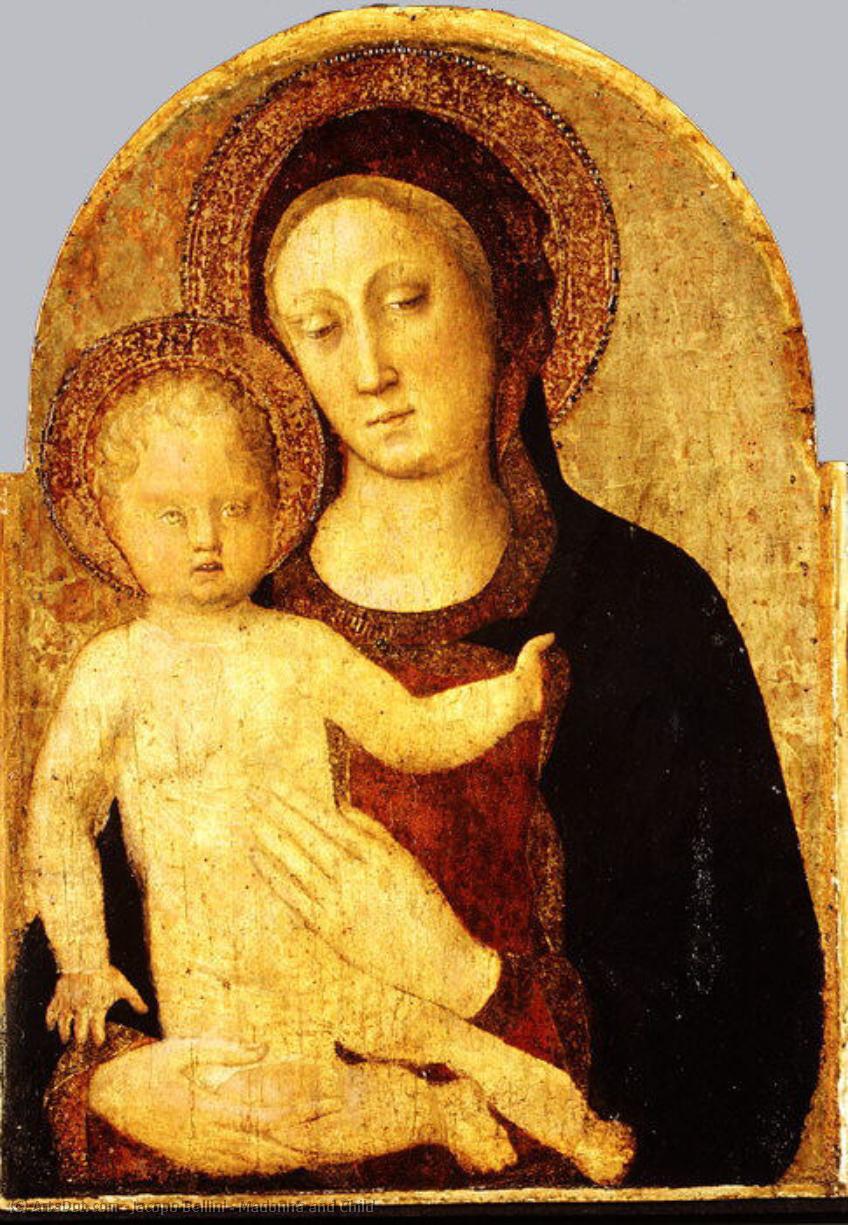
The year is roughly 1450, and within the bustling heart of Venice, a young artist named Jacopo Bellini was quietly revolutionizing the very fabric of painting. His “Madonna and Child,” now residing in the Uffizi Gallery, isn't merely a depiction of the Virgin Mary cradling her infant son; it’s a window into the burgeoning Renaissance spirit, a testament to Bellini’s innovative approach to perspective, color, and emotional resonance. This work stands as one of his most significant achievements, showcasing a masterful blend of Gothic tradition and nascent humanist ideals – a pivotal moment in Venetian art history.
Bellini's style during this period was characterized by a deliberate departure from the rigid formality of earlier Gothic painting. He embraced a more naturalistic approach, evident in the gentle curves of Mary’s robes, the soft modeling of her face, and the delicate features of the Christ Child. Crucially, he began to experiment with linear perspective – a technique previously rare in Venetian art – subtly introducing depth and spatial awareness into the composition. This wasn't a cold, mathematical exercise; rather, it served to enhance the emotional impact of the scene, drawing the viewer’s eye towards the central figures and creating a sense of intimacy.
The Language of Symbolism
Beyond its technical brilliance, the “Madonna and Child” is rich in symbolic meaning. The composition itself is carefully constructed to convey a profound message of divine grace and maternal love. Mary's pose – seated on a simple cloth chair – suggests humility and devotion, while her serene expression embodies a quiet strength and wisdom. The Christ Child, reaching out towards his mother with a gesture of blessing, symbolizes the promise of salvation and the fulfillment of prophecy. Note the small fruit in his hand; this is a potent symbol of new life and abundance, echoing the story of Adam and Eve.
Further enriching the scene are subtle details that speak volumes. The arched parapet visible in the background – a feature borrowed from Flemish painting – creates an illusion of depth and suggests a connection between the earthly realm and the divine. The presence of two angels, flanking the composition, reinforces the sacred nature of the event and underscores Mary’s role as the “Mother of God.” Even the muted color palette—primarily blues, greens, and golds—contributes to the overall atmosphere of tranquility and reverence.
A Legacy Forged in Venice
Jacopo Bellini's influence extended far beyond his own lifetime. His innovative techniques and artistic sensibilities profoundly impacted his sons, Gentile and Giovanni Bellini, who would continue to develop and refine his legacy. Gentile, known for his monumental frescoes, adopted a more decorative style, while Giovanni pushed the boundaries of color and atmospheric perspective even further, establishing himself as one of Venice’s greatest painters. The “Madonna and Child” serves as a crucial link in this artistic lineage, demonstrating Bellini's pioneering role in shaping the Venetian Renaissance.
Considered alongside works by his contemporaries – including Masolino da Panicale and Antonio Vivarini – Bellini’s masterpiece represents a pivotal moment in Venetian art. It is a painting that invites contemplation, revealing not only the artist’s technical skill but also his profound understanding of human emotion and spiritual significance. Today, its beauty continues to captivate viewers, reminding us of the enduring power of art to transcend time and connect us to the deepest aspects of the human experience.