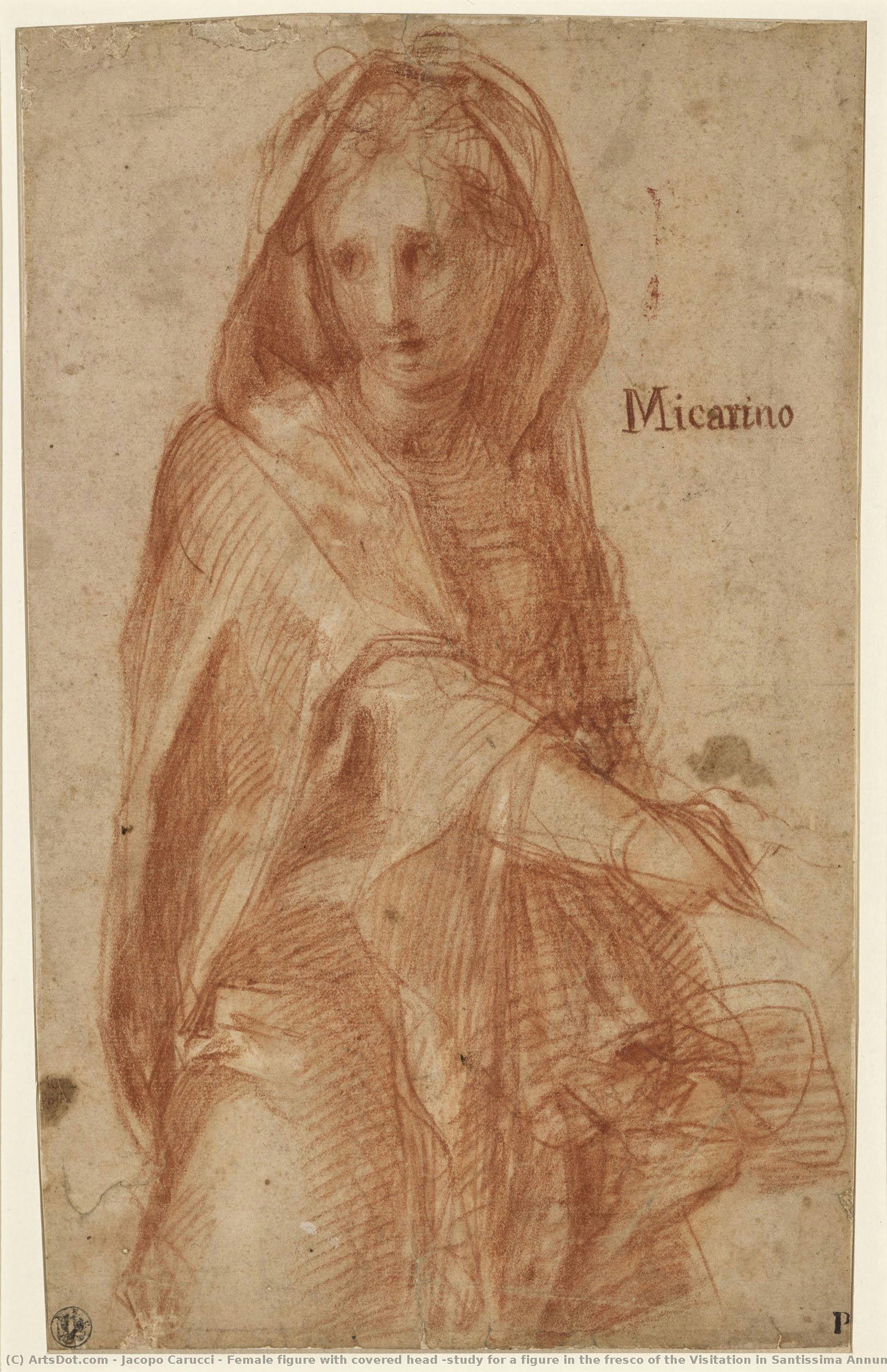
Explore Pontormo's masterpiece – ‘Female Figure with Covered Head’ (study for Visitation fresco). Admire its enigmatic pose & masterful detail at the Kupferstichkabinett, Berlin.
Discover Jacopo Pontormo (1494-1557), a pivotal Italian Mannerist painter. Explore his emotive figures, vibrant colors, and innovative compositions—a bridge between Renaissance & Baroque art. View reproductions at ArtsDot.
Explore the Kupferstichkabinett's stunning collection of prints & drawings spanning centuries! Discover masterpieces by Dürer, Rembrandt & more in Berlin’s vibrant art museum.
Female Figure with Covered Head (Study for a Figure in the Fresco of the Visitation in Santissima Annunziata) – A Renaissance Echoes Baroque Emotion
The artwork, “Female Figure with Covered Head (Study for a Figure in the Fresco of the Visitation in Santissima Annunziata),” transcends mere visual representation; it embodies a pivotal moment in artistic evolution—the delicate transition from the serene idealism of High Renaissance Florence to the dramatic fervor characteristic of the Baroque era. Painted by Jacopo Pontormo around 1520, this intimate sheet offers a glimpse into the artist’s creative process and foreshadows the stylistic innovations that would define his later masterpieces. It's housed at the Kupferstichkabinett in Berlin, Germany, where its understated beauty continues to captivate viewers.
A Synthesis of Mannerist Vision
Pontormo’s oeuvre stands apart from many contemporaries who diligently pursued classical ideals of proportion and harmony. Instead, he embraced a distinctly Mannerist aesthetic—a rebellion against established conventions that prioritized emotional expression over meticulous realism. This study exemplifies Pontormo's signature style: figures positioned in unsettling poses between standing and kneeling, conveying an aura of melancholy and contemplation. The artist’s deliberate distortion of perspective – subtly flattening the background – creates an illusionistic space that defies conventional spatial logic, mirroring a growing preoccupation with psychological depth within the artistic landscape of his time.
The Visitation Fresco: Inspiration and Influence
The genesis of this artwork lies in Pontormo's ambitious undertaking to decorate the forecourt of Santissima Annunziata church in Florence – specifically, the monumental fresco depicting the Visitation of Mary Magdalene and Elizabeth. Vasari famously lauded Pontormo’s contribution to this mural, describing it as “a work that convinced all artists of his perfection.” The fresco itself is a masterful demonstration of Mannerist technique, prioritizing expressive gesture and emotional resonance over anatomical accuracy. Pontormo meticulously studied Michelangelo's David, absorbing the sculptor’s revolutionary approach to portraying human form—a move that profoundly impacted Pontormo’s artistic sensibilities.
Symbolism and Emotional Resonance
The veiled head of the central figure speaks volumes about the artwork’s symbolic significance. Traditionally interpreted as representing humility and piety – qualities deeply valued within Renaissance spirituality – the veil simultaneously evokes a sense of vulnerability and introspection. Pontormo skillfully employs chiaroscuro—the dramatic interplay of light and shadow—to heighten emotional impact, emphasizing the contours of the figure's body and creating an atmosphere of profound solemnity. The muted palette contributes to this contemplative mood, reinforcing the artwork’s overarching theme of spiritual contemplation.
Technical Mastery: Giclée Printing – Preserving Pontormo’s Legacy
Today, reproductions of “Female Figure with Covered Head” are available through platforms like Artvee and Amazon, allowing art enthusiasts worldwide to experience Pontormo's artistic vision firsthand. Utilizing giclée printing technology—a method renowned for its exceptional color fidelity and archival stability—these prints ensure that the artwork’s original vibrancy and detail endure for generations to come. The meticulous craftsmanship involved in creating these reproductions honors Pontormo’s legacy as a trailblazing artist who dared to challenge artistic norms and forge his own path toward expressive innovation.