A Testament to Compassion: Jacopo Dal Ponte’s “The Good Samaritan”
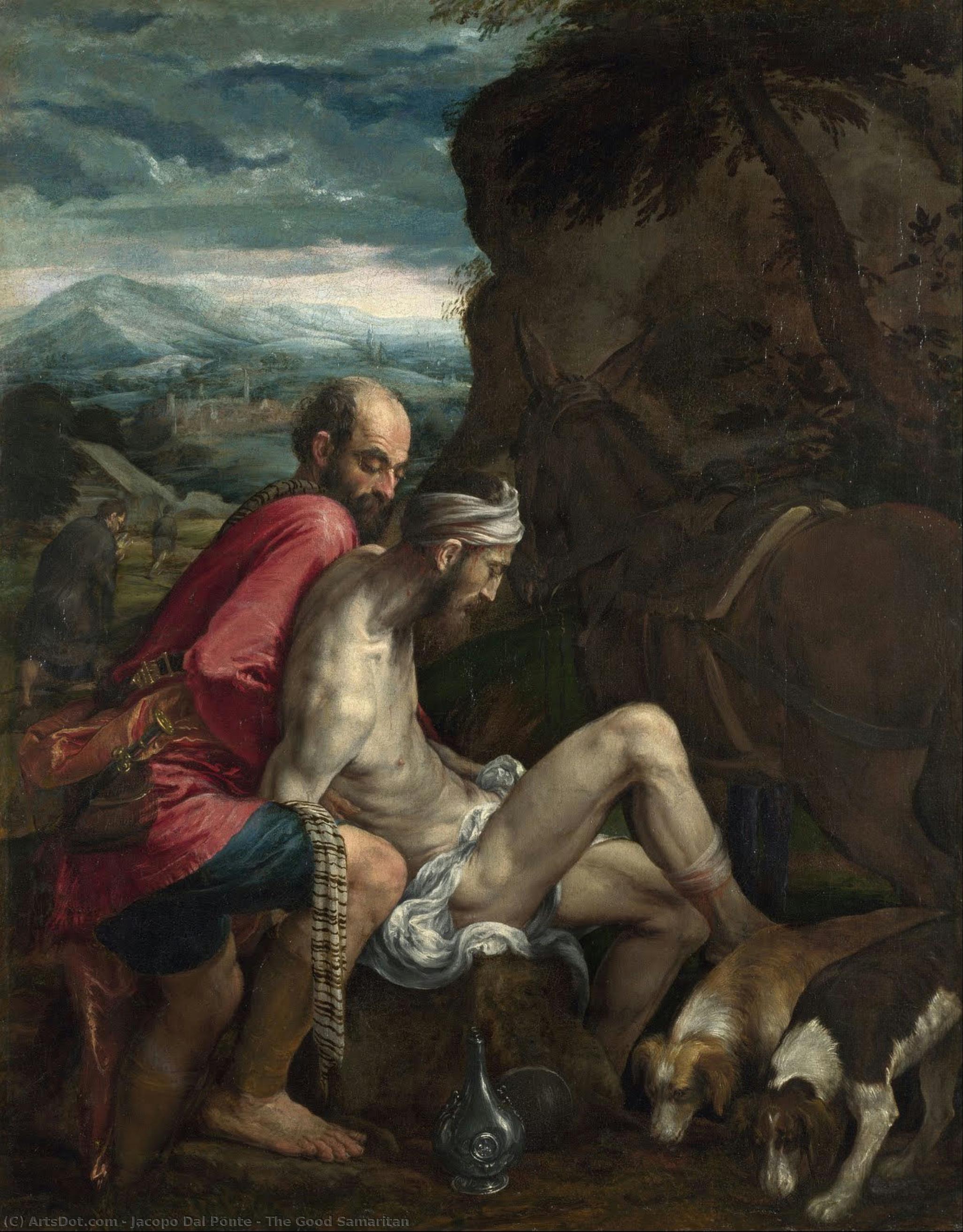
“The Good Samaritan,” painted in 1562 by the Venetian master Jacopo Dal Ponte, is more than just a depiction of a biblical parable; it's a profound meditation on humanity, mercy, and the enduring power of empathy. This arresting work, now meticulously reproduced as a hand-painted artwork for ArtsDot.com, invites viewers into a scene brimming with quiet drama and emotional resonance. Dal Ponte’s skill lies not merely in his technical proficiency – the meticulous rendering of fabrics, the subtle play of light on stone – but in his ability to imbue ordinary figures with extraordinary depth.
The painting unfolds against a stark, rocky landscape, reminiscent of the rugged terrain surrounding Venice. A lone traveler, stripped bare and gravely wounded, lies prone at the roadside, a poignant symbol of vulnerability and suffering. Beside him kneels another man, offering not just assistance but a tangible act of care – tending to his wounds with unwavering attention. The composition is carefully balanced; the injured man occupies the lower left quadrant, drawing our eye immediately to his plight, while the Samaritan’s figure dominates the right, radiating an aura of compassion and resolute action. Three other individuals are present: one standing slightly off-center, another near the center, and a third positioned on the right side, adding layers of witness to this pivotal moment.
A Renaissance Master at Work – Technique and Style
Dal Ponte was a key figure in the Venetian School, renowned for its rich color palettes and dramatic use of light. “The Good Samaritan” exemplifies these characteristics brilliantly. The artist employs *sfumato*, a technique perfected by Leonardo da Vinci, to soften edges and create an atmospheric haze, lending the scene a sense of realism and immediacy. Notice how the shadows are not simply dark voids but subtly rendered with layers of color, suggesting depth and texture. The use of warm tones – ochre, umber, and crimson – contrasts sharply with the cool blues and grays of the background, further emphasizing the figures and drawing our attention to their plight. The horse behind the Samaritan is a deliberate addition, symbolizing strength, protection, and perhaps even divine intervention—a subtle nod to the spiritual dimension of the story.
Historical Context: Faith, Charity, and Venetian Society
Painted in 1562, during the height of the Renaissance, “The Good Samaritan” reflects both the era’s artistic ideals and its prevailing social concerns. The parable itself was a central theme in Christian teachings, emphasizing the importance of charity and compassion towards one's fellow human beings – particularly those in need. Venice at this time was a wealthy and powerful city-state, but beneath the veneer of prosperity lay significant social inequalities. The painting can be interpreted as a subtle commentary on these disparities, urging viewers to consider their own responsibilities to the less fortunate. Dal Ponte’s work aligns with the humanist values of the Renaissance, which championed reason, human potential, and the pursuit of knowledge – but also recognized the importance of ethical conduct and social justice.
Symbolism and Emotional Resonance
Beyond its narrative content, “The Good Samaritan” is rich in symbolism. The wounded traveler represents humanity’s fallen state, stripped bare of dignity and exposed to suffering. The Samaritan embodies selfless love and unwavering commitment to another's well-being. The act of tending to the injured man signifies a profound connection—a recognition of shared humanity. The scene evokes a powerful emotional response – a sense of empathy, compassion, and hope. It’s a reminder that even in the darkest of times, acts of kindness can transform lives and offer solace to those who are most vulnerable. The reproduction captures this essence perfectly, allowing viewers to experience the painting's enduring power and beauty.
A Timeless Masterpiece – Perfect for Your Space
Whether displayed as a statement piece in a grand salon or a thoughtful addition to a smaller room, Jacopo Dal Ponte’s “The Good Samaritan” is an investment in art that speaks to the heart. Its rich colors, masterful technique, and profound message will undoubtedly captivate viewers for generations to come. The meticulously crafted reproduction by ArtsDot.com ensures that every detail of this iconic painting is faithfully preserved, offering a stunning and authentic representation of a true Renaissance masterpiece.