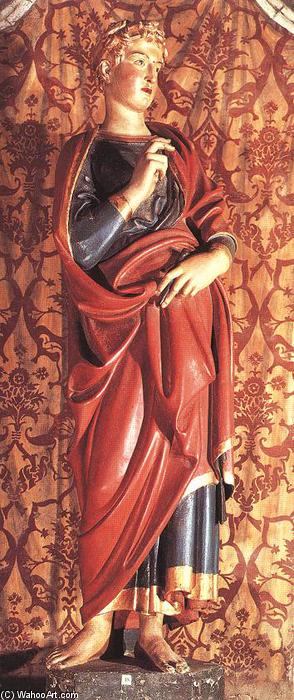
Jacopo della Quercia’s Angel of the Annunciation: A Synthesis of Gothic Legacy and Renaissance Innovation
The Angel of the Annunciation by Jacopo della Quercia, completed in 1421 for the Collegiata (San Gimignano Cathedral) in Tuscany, stands as a remarkable testament to the transformative period bridging the Gothic and Renaissance artistic movements. More than just a depiction of biblical narrative, it embodies a sophisticated fusion of stylistic influences that reflects the intellectual fervor and aesthetic aspirations of its time—a moment where tradition wrestled with burgeoning humanist ideals.
- Subject Matter: The painting portrays the iconic Annunciation scene – Gabriel informing Mary about her divine conception by God’s Holy Spirit. This theme resonated deeply within medieval Christian iconography, emphasizing humility, grace, and divine intervention.
- Style & Technique: Della Quercia skillfully employs a style rooted in the International Gothic tradition, characterized by elongated figures, delicate drapery folds, and luminous coloration. However, he deftly incorporates elements of Renaissance naturalism, notably evident in the subtle modeling of Gabriel’s face and torso—a conscious departure from the stylized representations prevalent earlier in the century.
- Material & Medium: Executed in polychromed wood – a medium favored by Florentine sculptors during this era – Della Quercia utilized tempera paint over gesso, ensuring durability and enhancing the vibrancy of the colors. The meticulous application of gilding further elevates the artwork’s grandeur and symbolizes divine splendor.
Historical Context: San Gimignano and the Florentine Renaissance
San Gimignano itself was a city undergoing significant change during Della Quercia's lifetime, experiencing a revival fueled by papal patronage and burgeoning mercantile activity. This context profoundly shaped artistic production—artists sought to elevate their craft through emulation of classical ideals while simultaneously honoring established religious traditions. The Collegiata’s commission underscored the importance of faith and piety within Florentine society.
Symbolism & Composition: A Dialogue Between Tradition and Innovation
The composition is deliberately balanced, drawing the viewer's gaze to Gabriel—a figure positioned centrally—who dominates the scene with his commanding presence. Della Quercia’s masterful use of light and shadow contributes to a sense of ethereal beauty, highlighting Gabriel’s facial features and conveying an aura of solemn dignity. The Virgin Mary’s posture is equally deliberate; she leans slightly towards Gabriel, suggesting a receptive openness and embodying feminine humility—a characteristic upheld by the Gothic tradition.
Emotional Impact & Legacy
The Angel of the Annunciation transcends mere visual representation; it communicates profound spiritual contemplation. Della Quercia’s ability to synthesize Gothic elegance with Renaissance naturalism resulted in a masterpiece that continues to inspire admiration for its artistic sophistication and enduring symbolic power. It serves as an exemplar of Florentine art during the formative years of the Renaissance, cementing Jacopo della Quercia's place as one of the era’s foremost sculptors and painters.
Further Exploration
For a deeper understanding of Della Quercia’s oeuvre and the broader artistic landscape of San Gimignano during the 15th century, consult resources such as:
Angel of the Annunciation by QUERCIA, Jacopo della and Martino di Bartolommeo di Biagio. Also consider visiting Museo del Duomo in Ferrara to see a remarkable collaborative space showcasing Renaissance art.