The Sculptor's Solitude: Jacopo Sansovino’s St John the Baptist
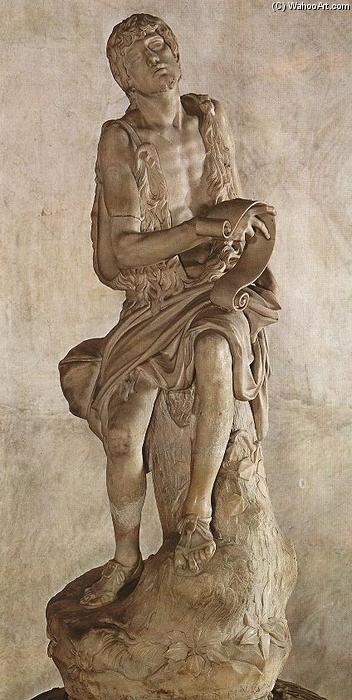
Jacopo Sansovino’s “St John the Baptist,” crafted in 1554, is more than a depiction of a biblical figure; it’s a profound meditation on faith, isolation, and the quiet dignity of contemplation. Standing before this marble sculpture is akin to stepping into a timeless tableau – a moment frozen in Renaissance Venice, where classical ideals intertwined with Venetian spirituality. The work immediately draws the eye with its remarkably realistic portrayal of a young man, seated upon a rugged, almost primordial rock formation. This isn’t a heroic saint; rather, it's a figure imbued with a palpable sense of melancholy and introspection, his gaze directed towards an unseen horizon.
Sansovino, a Florentine sculptor who later established himself in Venice, was deeply influenced by the classical traditions of antiquity. This influence is evident in every carefully rendered detail – the flowing drapery that clings loosely to the figure’s body, revealing glimpses of sculpted musculature beneath; the precise modeling of the face, capturing both youthful vulnerability and a hint of worldly wisdom; and the overall sense of balanced composition. Yet, he doesn't simply replicate classical forms; instead, he imbues them with a distinctly Venetian sensibility, evident in the subtle textures of the marble and the evocative lighting that casts dramatic shadows across the figure’s face.
A Symphony of Marble: Technique and Craftsmanship
The sculpture is executed in flawless Carrara marble, a material prized for its purity, translucence, and ability to capture intricate detail. Sansovino's mastery of carving is breathtaking; observe the way he renders the folds of the garment, each crease and ripple meticulously sculpted to create an illusion of movement and volume. The surface of the marble itself is remarkably smooth in places, polished to a lustrous sheen that reflects light and enhances the sculpture’s three-dimensionality. The artist's understanding of anatomy is equally impressive – the figure’s posture conveys both strength and vulnerability, suggesting a deep connection to the natural world.
Beyond technical skill, there’s an undeniable sense of artistry in the way Sansovino uses light and shadow. The sculpture appears to be bathed in a soft, diffused glow, highlighting the contours of the figure and creating a subtle sense of depth. This masterful manipulation of light not only enhances the sculpture's visual appeal but also contributes to its emotional impact – it evokes a feeling of quiet contemplation and spiritual yearning.
Echoes of Antiquity: Symbolism and Context
The choice of St John the Baptist as the subject is significant. John, the herald of Christ, embodies themes of repentance, baptism, and divine judgment. His solitary pose reflects his role as a prophet, separated from the world and dedicated to a higher purpose. The rocky outcrop upon which he sits symbolizes both his connection to the earth and his isolation from earthly concerns. Furthermore, the sculpture’s classical style—drawing heavily on Roman ideals of beauty and proportion—reflects the Renaissance fascination with antiquity and its belief in the inherent goodness of human form.
Created during a period of intense artistic and cultural ferment in Venice, “St John the Baptist” is a testament to the city’s role as a center for innovation and creativity. Sansovino's work stands alongside masterpieces by Titian, Tintoretto, and Veronese, contributing to the rich tapestry of Venetian art history. The sculpture’s enduring appeal lies not only in its technical brilliance but also in its ability to resonate with viewers on an emotional level – it invites us to contemplate our own place in the world and to seek meaning beyond the confines of everyday life.
Bringing the Masterpiece Home: Reproductions and Inspiration
A high-quality reproduction of “St John the Baptist” can bring a touch of Renaissance elegance and contemplative serenity to any interior space. Whether displayed in a living room, study, or gallery, this iconic sculpture will serve as a constant reminder of the beauty, grace, and spiritual depth of the Italian Renaissance. Consider framing it within a classic wooden frame to further enhance its timeless appeal.