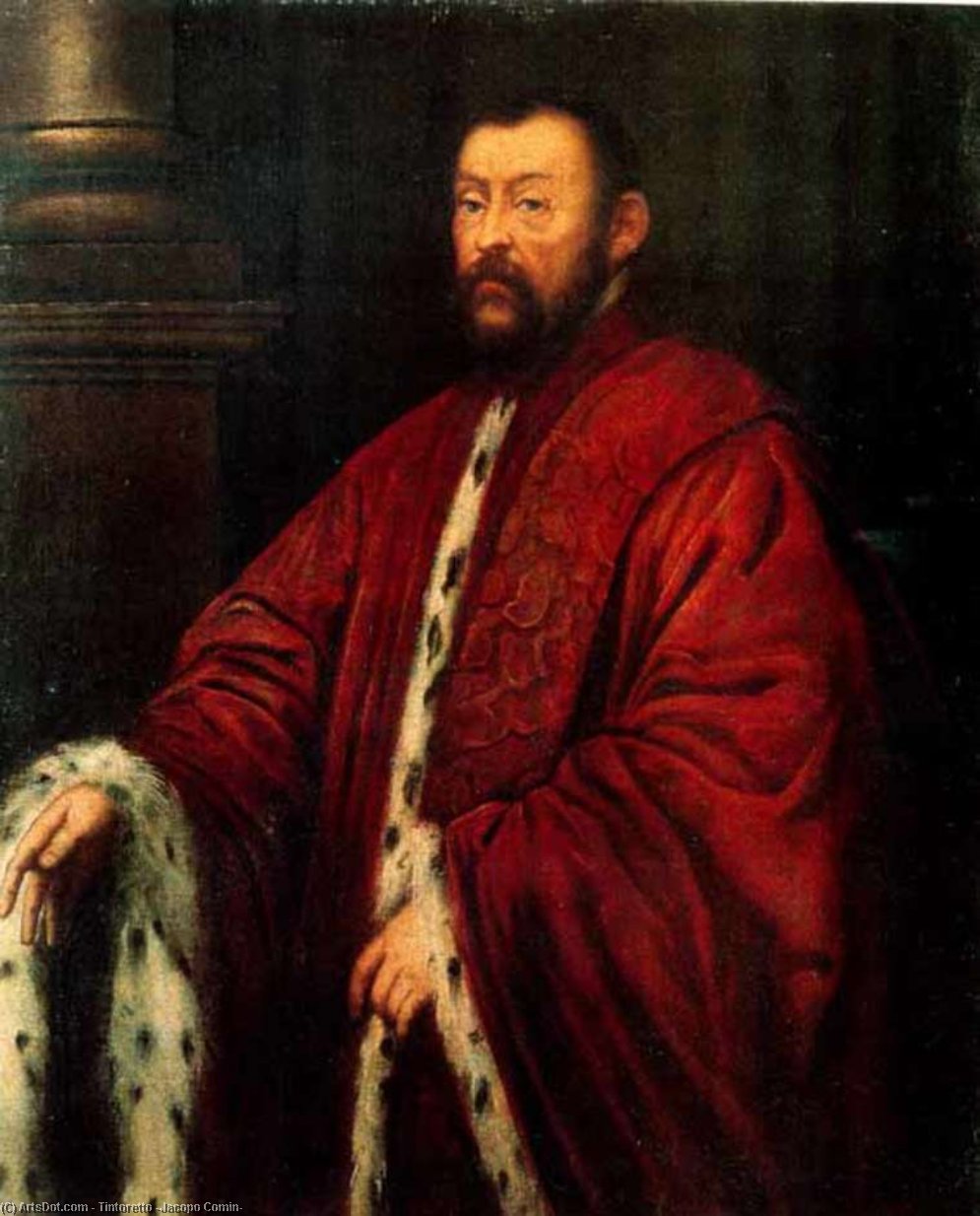
A Portrait of Power and Drama: Marcantonio Barbaro by Jacopo Tintoretto
Jacopo Tintoretto’s “Marcantonio Barbaro” is not merely a portrait; it's a carefully constructed drama rendered in oil on canvas, a testament to the Venetian master’s unparalleled command of light, color, and psychological depth. Painted during the tumultuous transition from the High Renaissance to the Baroque period – roughly between 1562 and 1568 – this work embodies the era’s fascination with grandeur, power, and the complexities of human character. The subject, Marcantonio Barbaro himself, a prominent Venetian lawyer and politician, is presented not as a simple likeness but as an embodiment of his status and influence.
- The Figure: Barbaro’s pose exudes authority and self-assurance. He stands with a measured confidence, his gaze directed slightly off-canvas, inviting the viewer to engage in a silent dialogue. The meticulously rendered beard and mustache – hallmarks of Venetian portraiture at the time – contribute to an impression of age, wisdom, and perhaps even a touch of aristocratic arrogance.
- Color and Light: Tintoretto’s signature use of dramatic chiaroscuro is immediately apparent. Deep shadows pool around Barbaro's form, emphasizing his musculature and creating a sense of three-dimensionality that transcends the limitations of the two-dimensional canvas. The vibrant red robe, meticulously detailed with gold trim, acts as a focal point, drawing the eye and symbolizing wealth, power, and legal authority – key attributes associated with a prominent lawyer in Renaissance Venice.
- Compositional Dynamics: The background wall serves not merely as a backdrop but actively contributes to the painting’s dynamism. Its textured surface and subtle variations in color create a sense of depth and movement, further enhancing the overall dramatic effect. This careful attention to composition reflects Tintoretto's broader artistic philosophy – a belief that every element within a work should contribute to its narrative power.
Tintoretto’s Venetian Style: A Synthesis of Renaissance and Baroque
Tintoretto’s style represents a pivotal moment in the evolution of Venetian painting. While deeply rooted in the classical ideals of the High Renaissance – particularly evident in his anatomical studies and meticulous rendering of drapery – he pushed beyond these conventions, embracing a more dynamic and emotionally charged approach. Unlike the serene and idealized portraits favored by artists like Titian, Tintoretto sought to capture not just physical likeness but also the inner life of his subjects. This is achieved through his masterful manipulation of light and shadow, creating a sense of movement and drama that was characteristic of the burgeoning Baroque style.
Key Influences:
- Titian: Despite Tintoretto’s initial difficulties under Titian's tutelage, the master’s influence is undeniable. The use of rich color palettes and a focus on human form can be traced back to Titian’s teachings.
- Classical Antiquity: Tintoretto drew inspiration from classical sculpture and architecture, evident in his emphasis on idealized forms and balanced compositions.
- Religious Iconography: As a devout Catholic, Tintoretto was deeply influenced by religious iconography, which informed his understanding of narrative and symbolism.
Symbolism and Context: Venice at the Height of its Power
“Marcantonio Barbaro” was created during a period of immense political and economic power for Venice. The city-state, a major trading hub and maritime republic, was renowned for its wealth, artistic patronage, and sophisticated legal system. Barbaro’s position as a prominent lawyer reflects this societal structure – the legal profession being a crucial pillar of Venetian governance. The robe's rich colors and gold trim were not merely decorative; they served as visual markers of status and authority, reflecting Barbaro’s elevated social standing.
Historical Significance:
- The Venetian Republic: The painting offers a glimpse into the world of Renaissance Venice – a city characterized by its unique political system, vibrant culture, and powerful merchant class.
- Legal Profession: It highlights the importance of the legal profession in Venetian society, demonstrating the influence and prestige associated with those who practiced law.
Emotional Impact and Artistic Legacy
“Marcantonio Barbaro” continues to captivate viewers centuries after its creation. Tintoretto’s masterful use of light and shadow, combined with his psychological insight into the subject's character, creates a portrait that is both visually stunning and emotionally resonant. This work exemplifies Tintoretto’s genius – a testament to his ability to transform a simple portrait into a powerful statement about human ambition, power, and the complexities of Venetian society. A hand-painted reproduction offers an unparalleled opportunity to experience the full impact of this iconic masterpiece.