Discover Tintoretto (Jacopo Comin), a Venetian Renaissance master renowned for his dramatic compositions, bold brushwork ('Il Furioso'), and innovative use of light & perspective. Explore iconic works & his lasting legacy!
Explore Venice's rich history at the Palazzo Ducale (Doge’s Palace)! Witness stunning art, secret passages & marvel at masterpieces by Titian & Veronese – a journey through Venetian power and beauty.
A Vision of Celestial Grandeur: Exploring Tintoretto’s *Paradise (detail)*
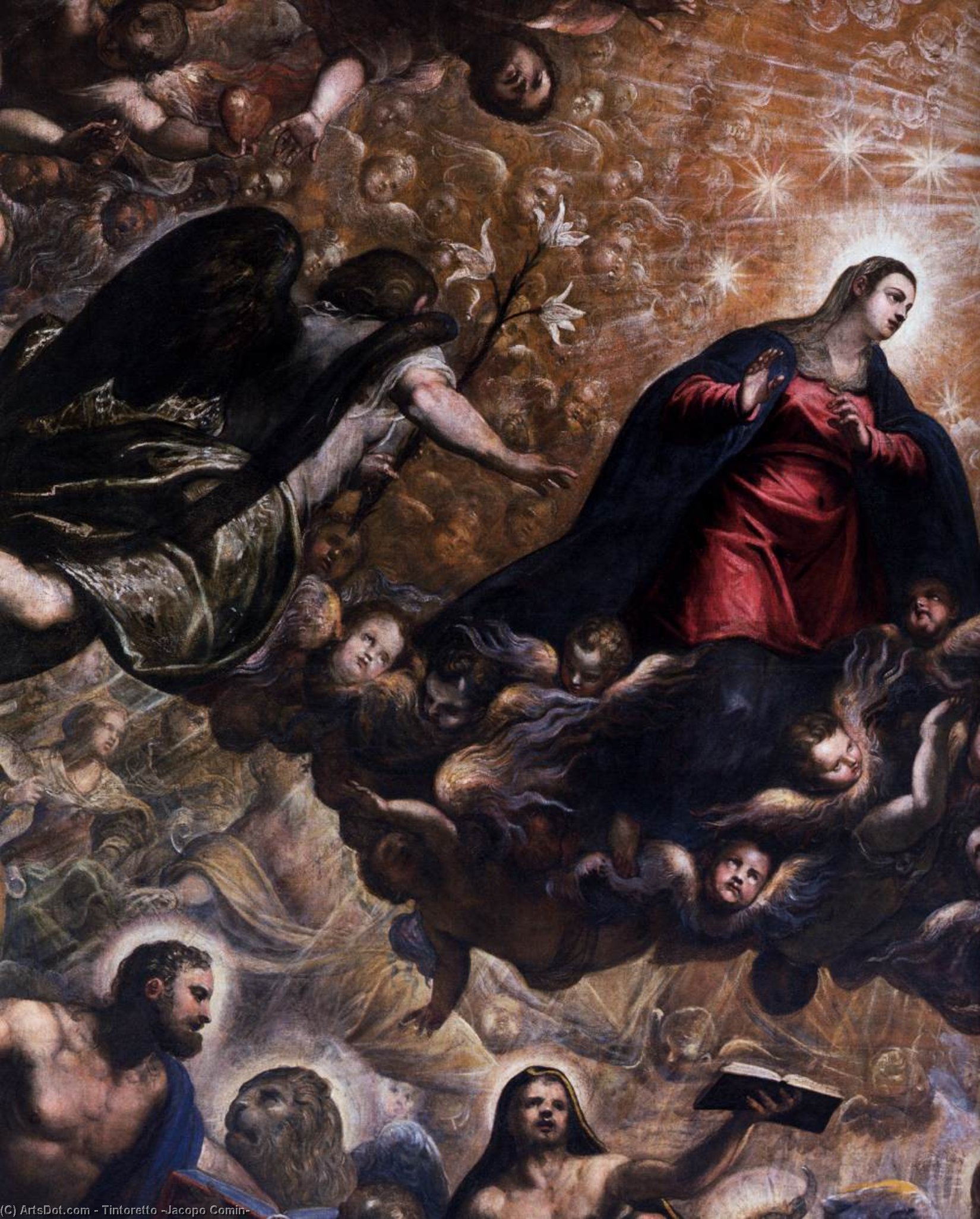
This captivating detail from Jacopo Tintoretto's monumental *Paradise* offers a breathtaking glimpse into a swirling vortex of divine energy and spiritual fervor. Painted during the height of the Baroque period – though foreshadowing its dramatic tendencies within the Venetian Renaissance – this fragment reveals Tintoretto’s mastery of composition, color, and emotional intensity. It is a testament to his unique style, earning him the nickname *Il Furioso* (“the furious”) for his audacious brushwork and swift execution.
Subject & Historical Context
The scene depicts a segment of a larger narrative, likely representing a heavenly visitation or a moment of profound religious significance centered around the Virgin Mary. Tintoretto, active in 16th-century Venice, was deeply embedded within a culture steeped in Catholic faith and artistic patronage. Venice at this time was a vibrant hub of commerce and art, but also increasingly aware of the challenges to the Church brought about by the Reformation. *Paradise* – and works like it commissioned for Venetian churches and confraternities (scuole) – served as powerful visual affirmations of religious belief and spiritual authority. The full composition originally adorned the ceiling of the Scuola Grande di San Rocco, a testament to Tintoretto’s long-standing relationship with this important institution.
Style & Technique
Tintoretto's style is immediately recognizable for its dynamism and dramatic use of light and shadow – *tenebrism*. This detail exemplifies his characteristic approach:
- Dynamic Composition: The composition is deliberately crowded, with figures overlapping and swirling in a complex arrangement. This creates a sense of overwhelming grandeur and spiritual energy.
- Dramatic Lighting: A strong light source focuses attention on the Virgin Mary and surrounding angels, casting deep shadows that heighten the emotional impact and emphasize textures.
- Bold Brushwork: Visible brushstrokes contribute to a sense of movement and immediacy. Tintoretto wasn’t concerned with meticulous detail; instead, he prioritized capturing the essence of emotion and spiritual experience.
- Oil on Canvas: The rich textures and layering of paint are indicative of oil painting techniques, allowing for nuanced color blending and expressive effects.
Symbolism & Iconography
The artwork is replete with symbolic elements:
- Halos: Radiating halos signify the sanctity of Mary and the angels, marking them as divine beings.
- Flowing Drapery: The billowing robes and drapery create a sense of movement and ethereal quality, suggesting a realm beyond earthly constraints.
- Color Palette: The deep reds and blues are traditional colors associated with the Virgin Mary, representing passion and divinity respectively.
- Figures Below: The male figures holding books likely represent scholars or theologians, acknowledging the intellectual and spiritual foundations of faith.
Emotional Impact & Interpretation
*Paradise (detail)* evokes a powerful sense of awe, reverence, and spiritual intensity. The dramatic composition and lighting create an emotional resonance that draws the viewer into the scene. It’s not merely a depiction of a religious event; it's an invitation to contemplate the mysteries of faith and the sublime beauty of the divine realm. The multitude of faces in the background suggests a universal participation in this heavenly vision, hinting at salvation and eternal life. For interior designers, this artwork – or a high-quality reproduction – would serve as a striking focal point, adding depth, drama, and a touch of Renaissance grandeur to any space. It speaks to those who appreciate art that is both visually stunning and profoundly meaningful.