Discover Tintoretto (Jacopo Comin), a Venetian Renaissance master renowned for his dramatic compositions, bold brushwork ('Il Furioso'), and innovative use of light & perspective. Explore iconic works & his lasting legacy!
Explore Vienna's artistic soul at the Kunsthistorisches Museum! Discover masterpieces by Raphael, Rembrandt, Vermeer & ancient treasures from Egypt to Rome.
A Venetian Vision of Saint Nicholas
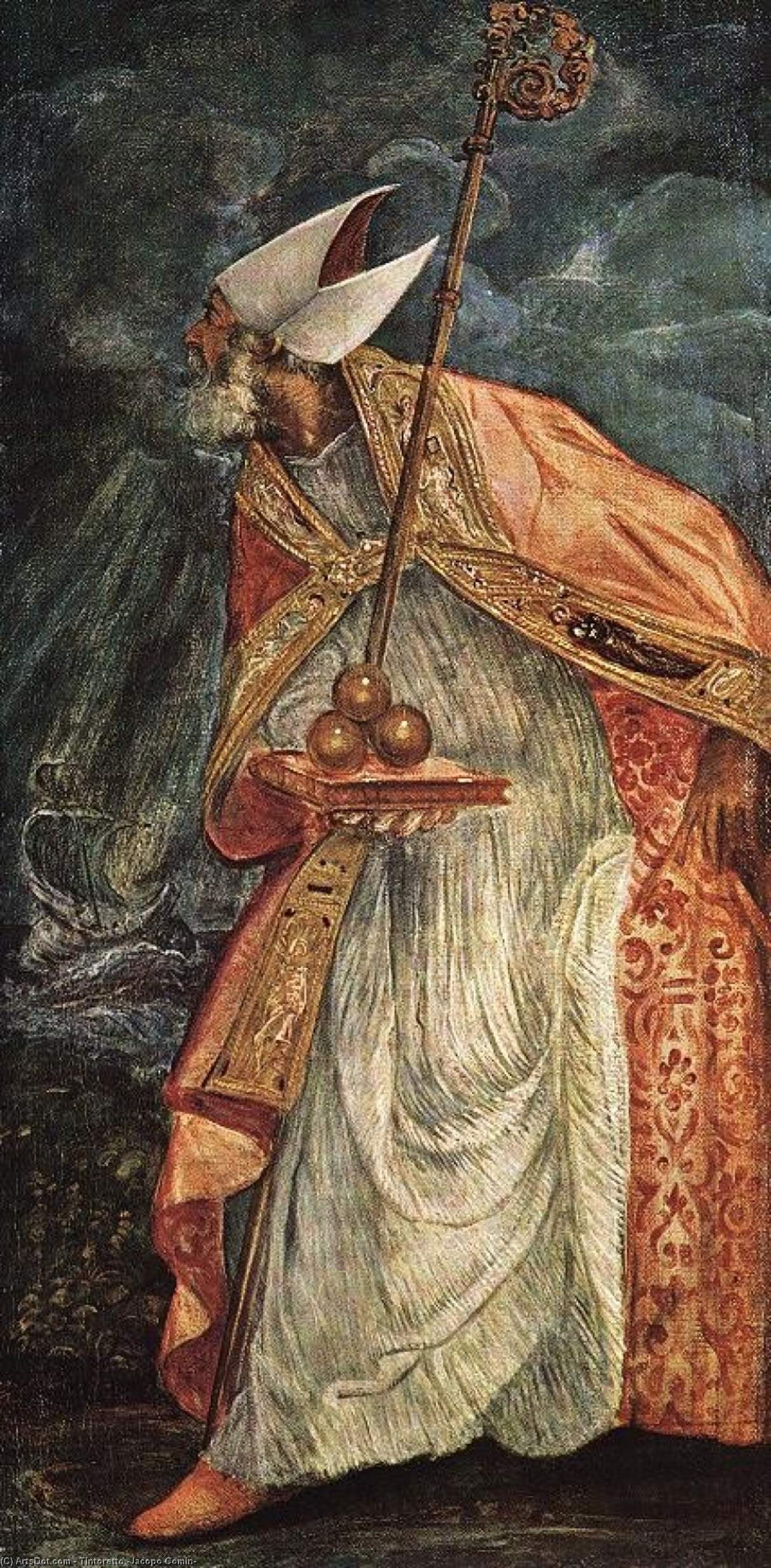
Jacopo Tintoretto’s “St Nicholas” transcends mere portraiture; it embodies the spirit of Renaissance Venice and stands as a testament to Tintoretto's unparalleled command of dramatic lighting and compositional innovation. Painted sometime around 1580, this intimate depiction captures St Nicholas—a figure revered throughout Christendom for his generosity and miraculous gifts—in a pose that speaks volumes about piety and solemn contemplation. The painting’s subdued palette – dominated by earthy browns and ochres – serves as a canvas for Tintoretto's masterful manipulation of chiaroscuro, creating an illusionistic depth that draws the viewer into the scene.
Style and Technique: Venetian Drama Unleashed
Tintoretto’s style is undeniably Venetian Baroque, characterized by its dynamism and theatrical flair. Unlike many artists of his time who favored idealized representations, Tintoretto sought to convey emotion and psychological complexity through meticulous observation and skillful rendering. He employed a technique known as sfumato—a subtle blending of tones—to soften edges and create atmospheric haze, enhancing the sense of realism while simultaneously imbuing the image with an ethereal quality. The artist’s brushstrokes are bold and expressive, conveying movement and texture with remarkable precision. Notice how Tintoretto captures the folds of St Nicholas' robe with astonishing accuracy, demonstrating his mastery of anatomical detail—a pursuit driven by a profound understanding of human form.
Historical Context: Patronage and Religious Iconography
“St Nicholas” was commissioned for the Church of St Nicholas in Cologne Cathedral, Germany, reflecting the significant role of religious iconography within Venetian society during Tintoretto’s lifetime. The cathedral itself represents a magnificent achievement of Gothic architecture, symbolizing faith and devotion—a visual counterpoint to Tintoretto's Baroque style. Saint Nicholas himself held immense symbolic importance; he embodied compassion, charity, and protection for children – virtues deeply valued by the Catholic Church and reflected in countless artistic depictions across Europe. This particular portrait isn’t merely a likeness of a saint but an embodiment of Christian ideals.
Symbolism: Light as Divine Revelation
The pervasive use of light is perhaps the most striking element of “St Nicholas.” Tintoretto deliberately positioned St Nicholas within a darkened interior, illuminated by a single source of light emanating from above—a technique that powerfully conveys the idea of divine illumination and spiritual grace. This dramatic lighting underscores St Nicholas’s solemn demeanor and reinforces his role as a messenger of God's benevolence. The inclusion of two figures in the background – subtly rendered – adds to the painting’s narrative complexity, hinting at the saint’s influence on the wider Christian community.
Emotional Impact: A Moment of Reverence
Ultimately, “St Nicholas” succeeds in capturing a profound sense of reverence and contemplation. Tintoretto's masterful execution invites viewers to pause and consider the sanctity of faith—a timeless theme that resonates across cultures and eras. The painting’s quiet dignity speaks to the enduring power of religious imagery to inspire awe and evoke emotion. It remains an exceptional example of Venetian Baroque art, demonstrating Tintoretto’s unparalleled ability to transform pigment and brushstroke into a vehicle for spiritual expression.