A Dramatic Ascent: Tintoretto’s “The Ascension” – A Venetian Masterpiece
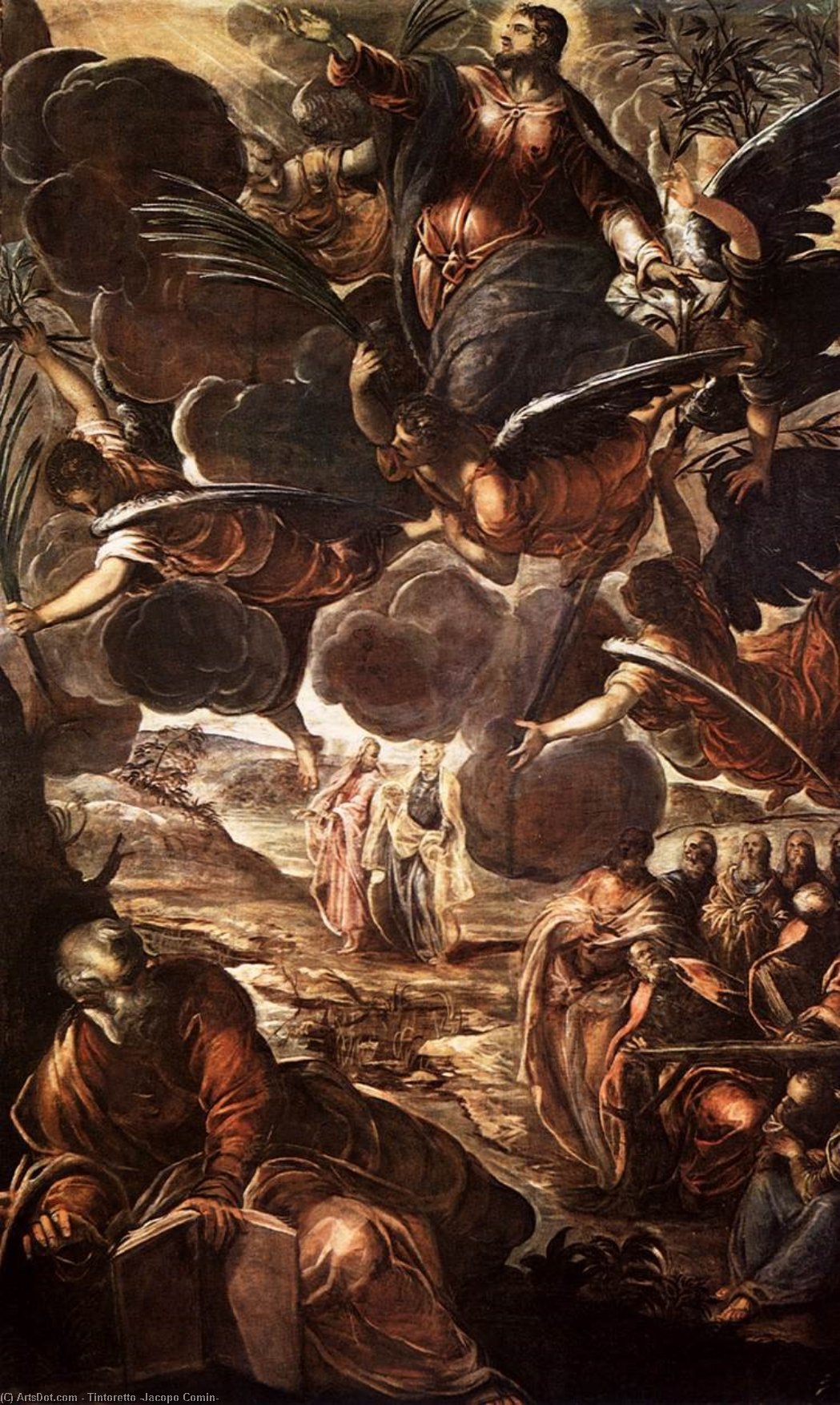
Jacopo Tintoretto's "The Ascension," completed in 1579, is not merely a depiction of a biblical event; it’s a visceral experience. This monumental canvas, measuring an impressive 538 x 325 cm, plunges the viewer directly into the heart of Christ’s divine departure – a moment brimming with both triumphant joy and profound sorrow. Painted during a pivotal period of artistic transition in Venice, this work exemplifies Tintoretto's signature style: a masterful blend of Renaissance precision and Baroque dynamism, fueled by an almost theatrical use of light and shadow.
The scene unfolds with arresting immediacy. At the center, Christ, rendered not as a serene figure but as a powerfully sculpted form, is being lifted heavenward by a multitude of angels. Their wings, vast and feathered, dominate the upper portion of the painting, creating an overwhelming sense of upward movement. The figures are caught in a swirling vortex of motion – hands reaching, bodies straining, faces etched with expressions ranging from ecstatic surrender to anguished farewell. Tintoretto’s genius lies not just in capturing the physical act of ascension but in conveying the emotional weight of it; the palpable grief of those left behind is balanced against the radiant hope offered by Christ's departure.
The Language of Light and Shadow – Tintoretto’s Revolutionary Technique
Tintoretto was a revolutionary painter, constantly experimenting with techniques to achieve his desired effects. “The Ascension” showcases this brilliantly. He employed a technique known as *sfumato*, subtly blurring the edges of forms and creating an atmospheric haze that intensifies the drama. The light source, seemingly originating from above and behind Christ, dramatically illuminates his body and the surrounding angels, while plunging the lower portion of the painting into deep shadow. This stark contrast amplifies the sense of depth and creates a powerful illusion of three-dimensionality – a hallmark of Tintoretto’s approach.
- Color Palette: Dominated by rich reds, blues, and golds, reflecting the opulence of Venetian art and the spiritual significance of the subject.
- Compositional Dynamics: The swirling figures and diagonal lines create a sense of perpetual motion, mirroring the tumultuous nature of faith and the transition between earthly existence and divine realm.
- Layered Brushwork: Tintoretto’s signature technique involved applying paint in multiple layers, building up textures and creating an almost sculptural quality to his figures.
Symbolism and Context – A Venetian Vision
“The Ascension” is deeply rooted in the theological debates of its time. The event depicted—Christ's departure into heaven after his resurrection—was a central theme in Christian art during the late 16th century, reflecting anxieties about mortality and the promise of salvation. Beyond the purely religious, the painting also speaks to Venice itself – a city grappling with political instability and economic challenges. Tintoretto’s dramatic style mirrored the turbulent spirit of the Venetian Republic.
Note the figures surrounding Christ: one holding a book, likely representing scripture and divine law; another reaching out in supplication. These details add layers of meaning to the scene, inviting contemplation on faith, obedience, and the human condition. The overall composition subtly references Old Testament prophecies concerning the Messiah’s return, further enriching the painting's symbolic resonance.
Bringing “The Ascension” Home – A Reproduction for Collectors
ArtsDot offers meticulously crafted hand-painted reproductions of Tintoretto’s "The Ascension," allowing you to experience this monumental masterpiece in your own space. Our skilled artisans replicate Tintoretto’s revolutionary techniques, capturing the drama, light, and emotional intensity of the original with breathtaking accuracy. Whether adorning a grand salon or adding a touch of Venetian grandeur to a contemporary interior, this reproduction provides an authentic connection to one of art history's most compelling figures. Invest in a piece that speaks volumes – a testament to Tintoretto’s genius and a window into the heart of faith and artistic innovation.