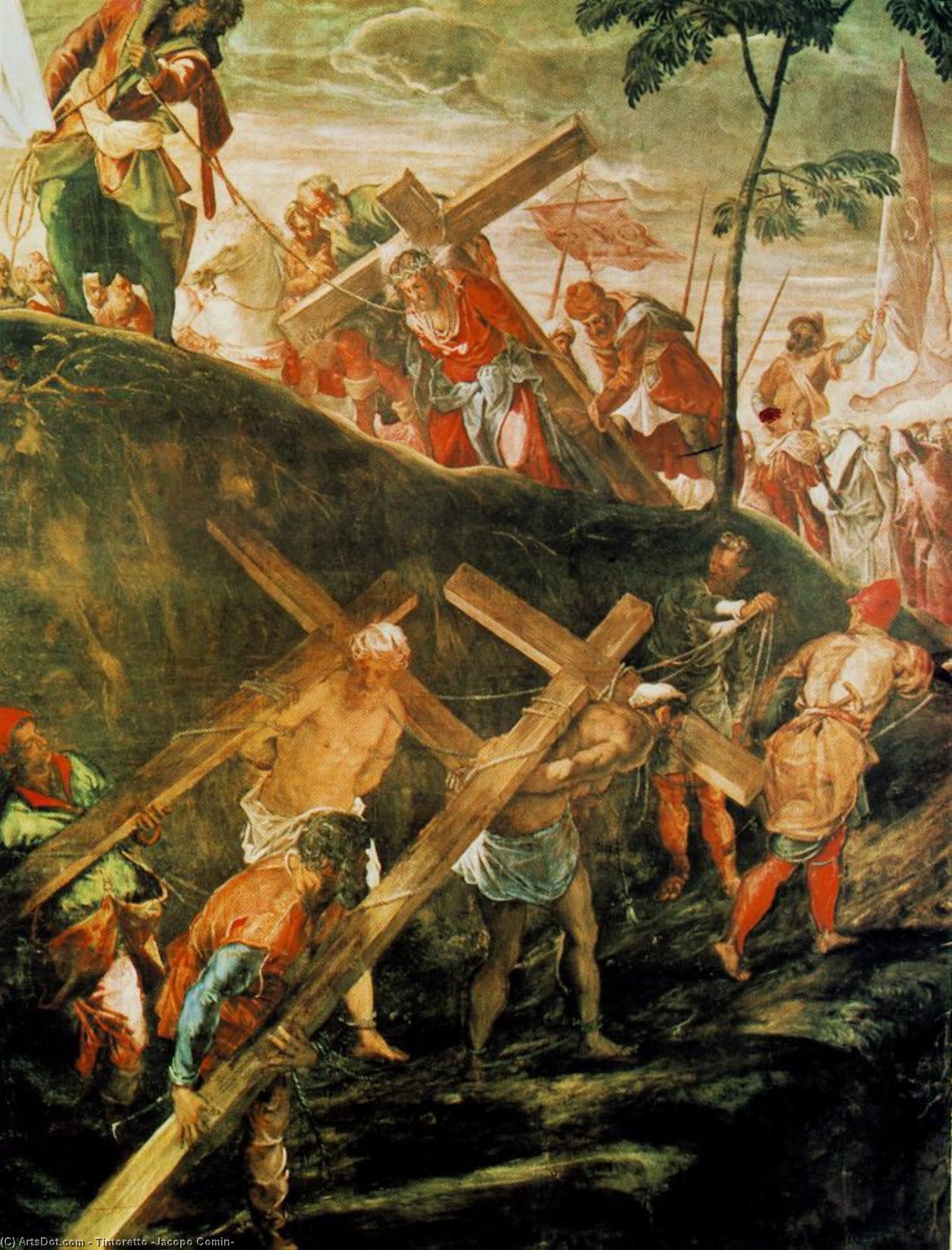
The Ascentto Calvary
Tintoretto’s *The Ascent to Calvary*, completed in 1567, stands as a monumental achievement of Venetian Mannerism—a style characterized by dramatic lighting, stylized figures, and an intense emotional expression that transcends mere representation. This oil on canvas painting captures the pivotal moment of Jesus Christ's crucifixion, transforming it into a theatrical spectacle for the viewer’s eye. More than just depicting an event from Christian scripture, Tintoretto elevates it to a profound meditation on suffering, faith, and redemption—themes central to Renaissance humanist thought.
Composition and Style: A Symphony of Light
The painting’s composition is deliberately unsettling yet undeniably compelling. Tintoretto eschews traditional perspective, opting instead for a compressed space that intensifies the drama unfolding before us. The scene is dominated by a stark contrast between light and shadow—a technique perfected by Tintoretto himself—creating an atmosphere of palpable tension. Figures are rendered with muscular contours and exaggerated poses, conveying both physical strain and spiritual fervor. This stylistic choice reflects the broader Mannerist preoccupation with dynamism and emotional intensity, rejecting the serene idealism of earlier Renaissance art forms. The artist’s masterful brushwork contributes to this effect; thick impasto creates a textured surface that seems to pulsate with energy—a testament to Tintoretto's remarkable speed and precision.
Historical Context: Echoes of Tradition
*The Ascent to Calvary* is firmly rooted in the artistic tradition surrounding depictions of Christ’s crucifixion. Artists throughout history had explored this subject, seeking to convey its theological significance. However, Tintoretto distinguishes himself from his predecessors by prioritizing psychological realism—capturing not just what happened but how it *felt*. He draws inspiration from earlier works such as Peter Paul Rubens' *Raising of the Cross*, which similarly employed dramatic lighting and expressive gestures to heighten emotional impact. The painting’s placement within the Scuola Grande di San Rocco, Venice Italy, underscores its importance as a devotional masterpiece—a space dedicated to fostering contemplation and spiritual reflection.
Symbolism: Layers of Meaning
Beyond its visual grandeur, *The Ascent to Calvary* is laden with symbolic significance. The figures surrounding Jesus—soldiers, mourners, and onlookers—represent the diverse human responses to suffering and death. Tintoretto’s careful arrangement emphasizes the universality of human experience—the confrontation between faith and despair that defines the human condition. The prominent horsemen symbolize power and authority, highlighting the political context of the time—the Holy Roman Empire under Charles V—and subtly questioning notions of divine justice. Furthermore, Tintoretto's use of color—particularly the vibrant reds of the soldiers’ garments—serves to heighten emotional intensity and underscore the gravity of the scene.
Emotional Impact: A Vision of Suffering
Ultimately, *The Ascent to Calvary* succeeds in transporting the viewer into the heart of the crucifixion narrative. Tintoretto achieves this feat through a masterful blend of visual technique and psychological insight—creating an image that is both aesthetically stunning and emotionally resonant. The painting compels us to confront uncomfortable truths about human vulnerability and divine compassion—leaving an indelible impression on anyone who encounters it. It remains a cornerstone of Venetian Mannerist art, demonstrating Tintoretto’s unparalleled ability to transform religious iconography into a profound meditation on the human spirit.
Handmade oil paintings reproductions of
The Ascent to Calvary can be found on
ArtsDot.com, allowing art lovers to own a piece of history.
The painting
The Ascent to Calvary is a testament to the skill and artistry of
Tintoretto (Jacopo Comin), and its beauty and significance continue to inspire and captivate audiences today.