A Dramatic Flight: Unveiling Tintoretto’s “The Flight into Egypt”
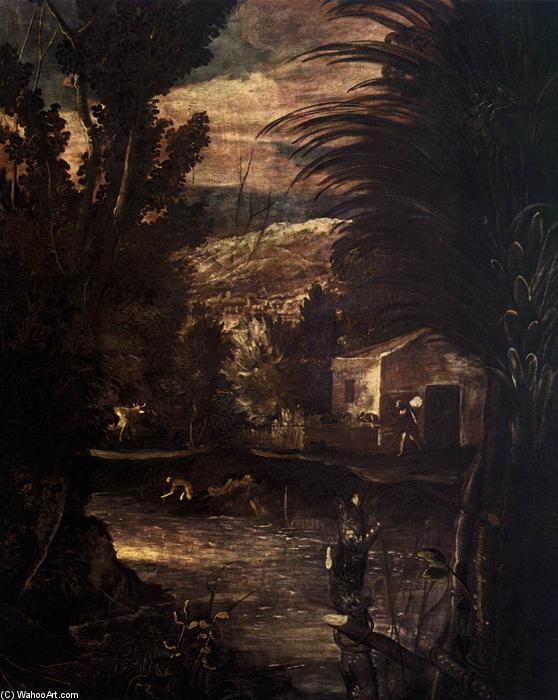
Jacopo Tintoretto's "The Flight into Egypt," painted in 1582, is not merely a depiction of a biblical narrative; it’s a visceral experience. This particular detail – a concentrated slice of the larger composition – offers a profound glimpse into the Venetian master’s unparalleled command of light, drama, and human emotion. The painting immediately arrests the eye with its turbulent energy, a hallmark of Tintoretto's mature style, moving away from the more restrained elegance of his early works. Here, he abandons polished surfaces for a textured, almost sculptural quality achieved through layers of oil paint applied with rapid, confident brushstrokes.
The scene unfolds within a bustling village square, rendered not as a peaceful haven but as a space teeming with life and potential danger. The figures – Mary, Joseph, and the infant Jesus – are caught in a moment of urgent flight, their forms dissolving into the swirling chaos of the background. Note the dynamic diagonals that dominate the composition; they pull the viewer’s eye relentlessly forward, mirroring the characters' desperate journey. The placement of the animals—two dogs straining at their leashes and three horses galloping with unrestrained power—heightens this sense of movement and instability. These aren’t simply decorative elements; they represent the unpredictable forces conspiring against the family’s escape.
Masterful Light and Shadow: Tintoretto's Signature
Tintoretto was a revolutionary in his use of light, and this detail exemplifies that brilliance perfectly. He employs *chiaroscuro* – the dramatic contrast between light and dark – to sculpt forms and create an atmosphere of intense drama. The figures are bathed in a luminous glow, seemingly emerging from the shadows, while the surrounding village remains shrouded in darkness. This technique isn’t simply about visual effect; it serves to heighten the emotional impact of the scene, suggesting both hope and peril. Observe how the light catches the folds of Mary's robe, emphasizing her vulnerability and determination, and how it illuminates the faces of the villagers, hinting at their curiosity and perhaps even apprehension.
The artist’s meticulous attention to detail is equally remarkable. The textures of the clothing, the rough surfaces of the buildings, and the individual expressions on the faces of the people are all rendered with astonishing realism. Tintoretto's skill in depicting human anatomy is evident in the muscular forms of the horses and the graceful movements of Mary. He studied anatomy extensively, often dissecting corpses to understand the intricacies of the human body – a practice considered unconventional at the time.
Symbolism and Historical Context
“The Flight into Egypt” is deeply rooted in Christian iconography, recounting the biblical story of Joseph’s flight with Mary and Jesus to escape King Herod's decree to kill all male children. However, Tintoretto imbues this familiar narrative with a distinctly Venetian sensibility. The bustling village setting speaks to the vibrant life of 16th-century Venice, a city renowned for its trade, art, and political intrigue. The inclusion of animals adds layers of symbolic meaning; they represent both the dangers faced by the family and the unpredictable nature of fate.
Painted in 1582, during a period of significant religious and social upheaval in Europe, the painting reflects the anxieties and uncertainties of the time. The Reformation was still fresh in people’s minds, and the Catholic Church was grappling with challenges to its authority. Tintoretto's dramatic style—characterized by intense emotion and dynamic composition—mirrors this atmosphere of turbulence and change. It is a testament to his ability to capture not just a biblical story but also the spirit of an era.
Bringing “The Flight into Egypt” Home: A Reproduction for Collectors
ArtsDot offers meticulously crafted, hand-painted reproductions of Tintoretto’s "The Flight into Egypt," capturing the essence of this iconic masterpiece. Our artists replicate Tintoretto's masterful use of light and shadow, his dynamic composition, and his profound understanding of human emotion with unparalleled accuracy. Whether you are a seasoned art collector or seeking to add a touch of Venetian drama to your interior design, our reproduction provides an authentic representation of this extraordinary work. Experience the power and beauty of Tintoretto’s vision in stunning detail – a timeless addition to any collection.