Discover Tintoretto (Jacopo Comin), a Venetian Renaissance master renowned for his dramatic compositions, bold brushwork ('Il Furioso'), and innovative use of light & perspective. Explore iconic works & his lasting legacy!
The Madonna dell'Orto in Venice is a Gothic sanctuary housing Tintoretto’s monumental altarpieces and frescoes—a testament to Venetian artistic legacy and spiritual devotion. Explore its architectural grandeur & delve into the history of this unique museum.
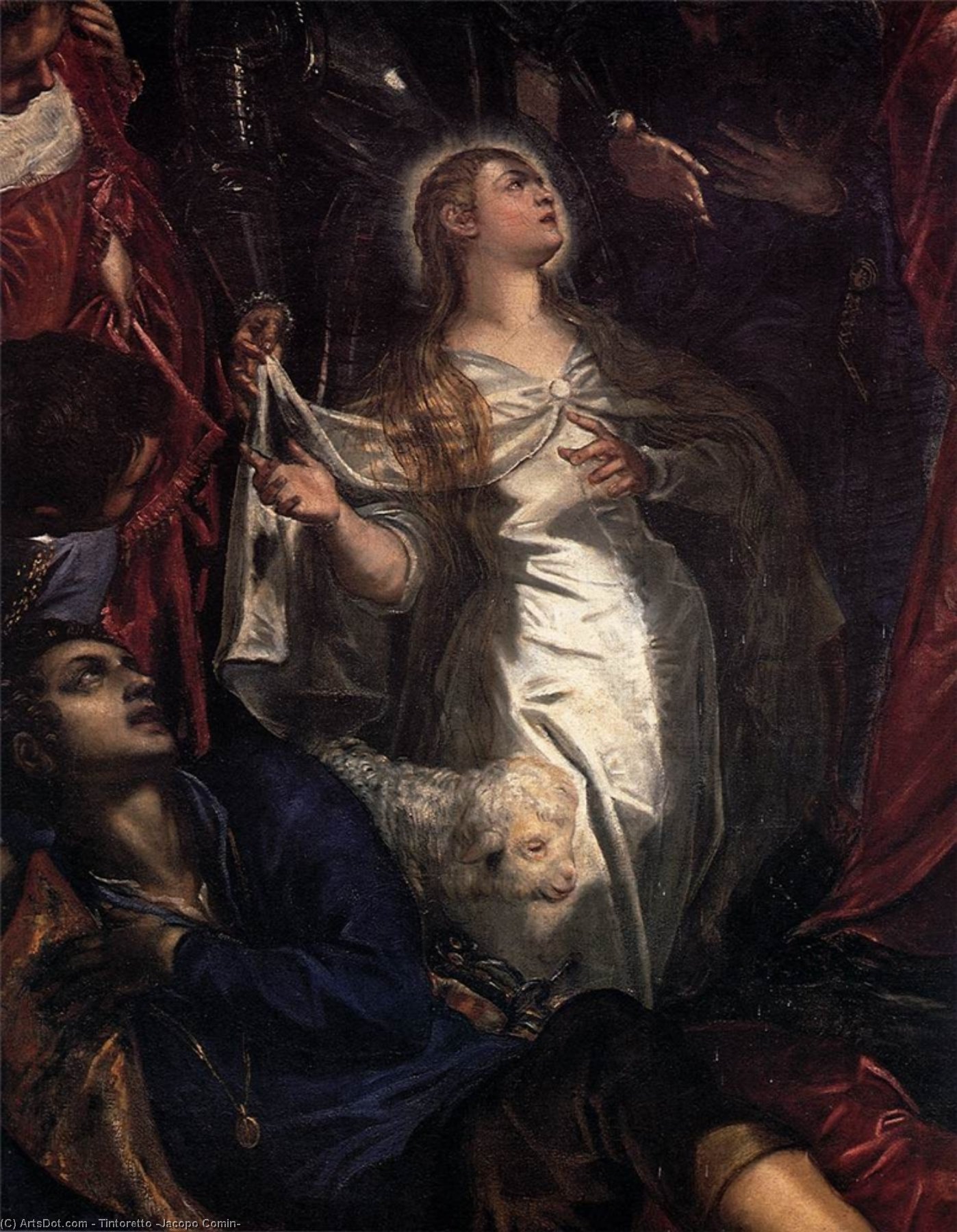
A Dramatic Revelation of Faith: Exploring Tintoretto’s “The Miracle of St Agnes”
Jacopo Tintoretto's "The Miracle of St Agnes," painted in 1577, stands as a cornerstone of Venetian Baroque art—a testament to the artist’s masterful manipulation of light and shadow, and his profound understanding of religious iconography. More than just a depiction of biblical narrative, this monumental canvas embodies the spiritual fervor that gripped Europe during its transformative era. The painting captures a pivotal moment in St Agnes's life: her miraculous conception after praying fervently for divine intervention.
- Subject Matter & Narrative:
- The scene unfolds with breathtaking immediacy, presenting viewers with an arresting portrayal of Saint Agnes kneeling before the Virgin Mary, accompanied by several attendants. The central figure—Agnes herself—holds aloft a lamb, symbolizing purity and innocence – a deliberate reference to the Gospels where lambs are frequently associated with Christ’s sacrifice.
Stylistic Innovation: Tintoretto's Baroque Vision
Tintoretto revolutionized Venetian painting by rejecting the polished surfaces and muted palettes of Mannerism in favor of a dynamic, theatrical style. His technique—characterized by rapid brushstrokes and an obsessive attention to anatomical detail—creates an illusion of movement that defies conventional representation. Unlike many artists of his time who meticulously blended colors, Tintoretto employed a method known as “alla prima,” applying paint directly onto the canvas without underpainting. This approach maximized luminosity and intensified the dramatic impact of the composition. The artist’s masterful use of chiaroscuro—the interplay between light and dark—further enhances this effect, sculpting figures from darkness and highlighting key elements to draw the eye toward the central miracle.
- Composition & Technique:
- The composition is deliberately asymmetrical, guiding the viewer’s gaze across the canvas. Tintoretto skillfully utilizes converging lines to create depth and perspective, immersing the spectator in the sacred space depicted. The artist's meticulous observation of human anatomy—evident in the musculature of Agnes and her attendants—reflects a humanist influence that was gaining prominence during the Baroque period.
Symbolism & Spiritual Significance
Beyond its visual splendor, “The Miracle of St Agnes” is laden with symbolic meaning. The lamb represents Christ’s sacrifice and symbolizes Saint Agnes's unwavering faith—a beacon of hope amidst adversity. The Virgin Mary’s serene countenance exudes compassion and divine grace, emphasizing the sanctity of the event being portrayed. Furthermore, the positioning of the figures around Agnes underscores the importance of communal prayer and devotion in achieving spiritual transcendence.
- Iconographic Elements:
- The painting’s iconography aligns perfectly with prevailing religious beliefs of the time—a period marked by intense piety and a fervent desire for divine intervention. Tintoretto's depiction powerfully communicates the transformative power of faith, capturing not merely an event but its profound spiritual resonance.
Emotional Impact & Legacy
“The Miracle of St Agnes” continues to captivate audiences centuries after its creation. Its dramatic lighting and expressive figures evoke a palpable sense of awe and reverence—a testament to Tintoretto’s ability to convey emotion through visual artistry. Reproductions of this masterpiece offer collectors and interior designers alike the opportunity to experience the sublime beauty and spiritual depth of Venetian Baroque art, transporting viewers back to a time when faith reigned supreme.