A Divine Encounter: The Intersection of Faith and Power
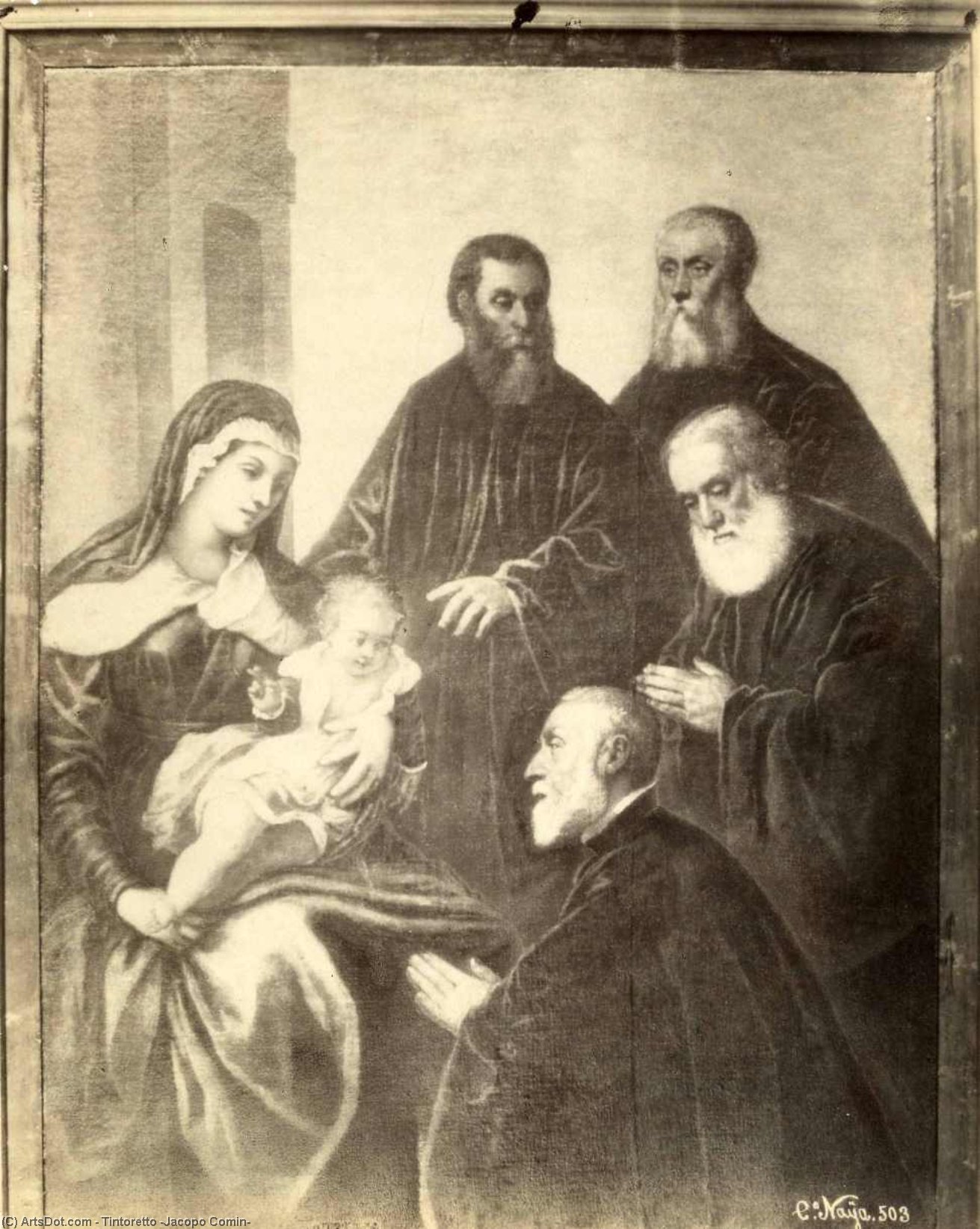
In the swirling shadows and luminous highlights of Jacopo Tintoretto’s The Virgin and Child with Four Senators, we are invited into a world where the celestial and the terrestrial collide. This masterpiece is far more than a mere religious tableau; it is a profound dialogue between spiritual devotion and the weight of earthly governance. At its heart, the painting captures a moment of intense piety, featuring Mary Magdalene kneeling in humble adoration before the Christ Child. Yet, this intimate scene of grace is framed by the presence of four senators, figures who embody Roman authority and the gravity of legal deliberation. The composition creates a breathtaking tension, forcing the viewer to contemplate how the divine light of Christ interacts with the structured, often turbulent, world of human politics.
To gaze upon this work is to witness the very essence of the Venetian Baroque. Tintoretto, often called Il Furioso for his energetic and rapid brushwork, employs a masterful use of chiaroscuro—the dramatic interplay of light and shadow—to sculpt the figures from the darkness. The lighting is theatrical, almost cinematic, casting a radiant glow upon the serene countenance of the Christ Child, which serves as the painting's spiritual anchor. His loose, expressive strokes do not merely represent form; they imbue the canvas with a palpable, restless energy that seems to vibrate within the frame. For the collector or designer, this technique offers an unparalleled sense of movement and depth, making it a commanding centerpiece for any space seeking a touch of historical grandeur.
Symbolism and the Venetian Soul
Beyond the immediate visual drama, every element of Tintoretto’s composition is steeped in symbolic significance. The figure of Mary Magdalene serves as a poignant emblem of repentance and humility, her posture reflecting the soul's yearning for redemption. In stark contrast, the senators represent the enduring presence of justice and moral authority within the human realm. Executed during the mid-16th century, the painting reflects the complex political landscape of Venice, where the influence of the papal court often clashed with local secular ambitions. Through these figures, Tintoretto explores the delicate balance between religious dogma and the exercise of worldly power.
For those looking to bring a piece of history into their interior design, this artwork offers an emotional resonance that transcends time. The painting evokes a profound sense of awe, pulling the observer into its atmospheric depths. The luminous glow emanating from the divine figures provides a sense of peace and spiritual transcendence, while the dramatic positioning of the surrounding figures fosters a deep empathy for the human condition. Whether displayed in a private gallery or as a focal point in a sophisticated living space, a high-quality reproduction of this Tintoretto masterpiece serves as a window into the soul of the Renaissance, offering endless inspiration through its masterful manipulation of color, light, and emotion.