Jacques-Émile Blanche (1861-1942) was a French Impressionist painter renowned for elegant portraits of Parisian & London society, capturing personality with loose brushwork and influenced by Manet & Whistler. Explore his work!
Home to France's largest Impressionist collection outside Paris, the Musée des Beaux-Arts de Rouen offers an unmissable journey through masterpieces by Monet and Pissarro that invites you to explore Normandy's artistic soul.
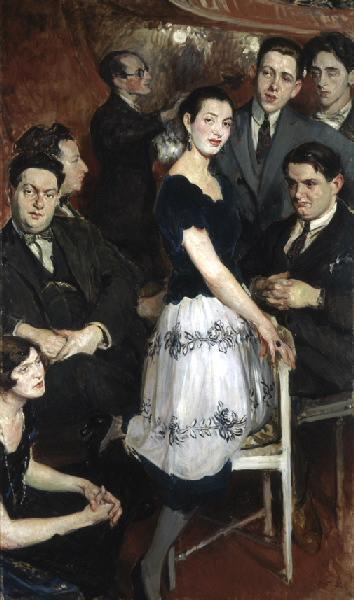
Le Groupe des Six: An Impressionist Portrait of Parisian Elegance
Jacques-Émile Blanche’s “Le Groupe des Six” (The Group of Six) stands as a quintessential emblem of Belle Époque Paris – a snapshot frozen in time, capturing not just the visual appearance of its subjects but also the spirit of intellectual and social engagement that defined the era. Painted in 1886, this portrait transcends mere representation; it’s an exploration of mood, atmosphere, and the subtle nuances of human connection within a refined setting. Blanche, deeply influenced by Impressionist luminaries like Claude Monet and Edgar Degas, eschewed academic conventions for a looser brushstroke technique—a deliberate choice that prioritized capturing fleeting impressions over meticulous detail.
Style and Technique: Embracing Impressionistic Fluidity
Blanche’s artistic approach aligns perfectly with the tenets of Impressionism. Unlike traditional portraiture which aimed for idealized beauty and precise anatomical accuracy, Blanche sought to convey a sense of immediacy and spontaneity. He achieved this through rapid layering of paint—often applying thin washes followed by thicker impasto—creating textured surfaces that shimmer with reflected light. The muted palette – predominantly creams, browns, and pale greens – contributes significantly to the painting’s tranquil ambiance. Notice how Blanche skillfully utilizes chiaroscuro (the interplay of light and shadow) to sculpt the figures' forms and delineate their postures, enhancing the drama of the scene without resorting to dramatic contrasts.
Historical Context: The Parisian Salon and Societal Portraiture
“Le Groupe des Six” emerged during a period marked by significant cultural shifts in Paris. The Impressionist movement challenged established artistic norms, prioritizing subjective experience over objective observation—a revolutionary stance that resonated with artists and intellectuals alike. Portraits commissioned for the Salon des artistes français, the annual exhibition showcasing the most prominent artworks of the time, were particularly popular among Parisian society. Blanche’s depiction reflects this fascination with documenting social life and capturing individual character within a specific context. The group depicted represents a microcosm of intellectual circles—writers, artists, and thinkers—engaged in conversation, symbolizing the pursuit of knowledge and artistic discourse.
Symbolism: Atmosphere and Emotional Resonance
Beyond its technical brilliance, “Le Groupe des Six” possesses subtle symbolic layers that enrich its emotional impact. The room itself – bathed in soft light – evokes a sense of comfort and intimacy, mirroring the camaraderie among the figures. Blanche’s masterful use of color contributes to this atmosphere, creating an illusion of depth and warmth. Furthermore, the posture of the central woman—seated calmly amidst her companions—suggests confidence and poise, embodying ideals of feminine grace prevalent during Belle Époque Paris. The painting isn't merely a record of appearances; it communicates a feeling – one of quiet contemplation and shared intellectual curiosity.
Legacy: An Enduring Impression of Parisian Culture
“Le Groupe des Six” continues to captivate viewers today due to its masterful execution and evocative portrayal of Parisian culture during its formative years. Blanche’s work exemplifies the Impressionist preoccupation with capturing fleeting moments and conveying emotional resonance—a legacy that persists in contemporary art practice. Its reproduction offers a window into a bygone era, allowing collectors and interior designers alike to appreciate the beauty of understated elegance and the power of artistic impressionism.