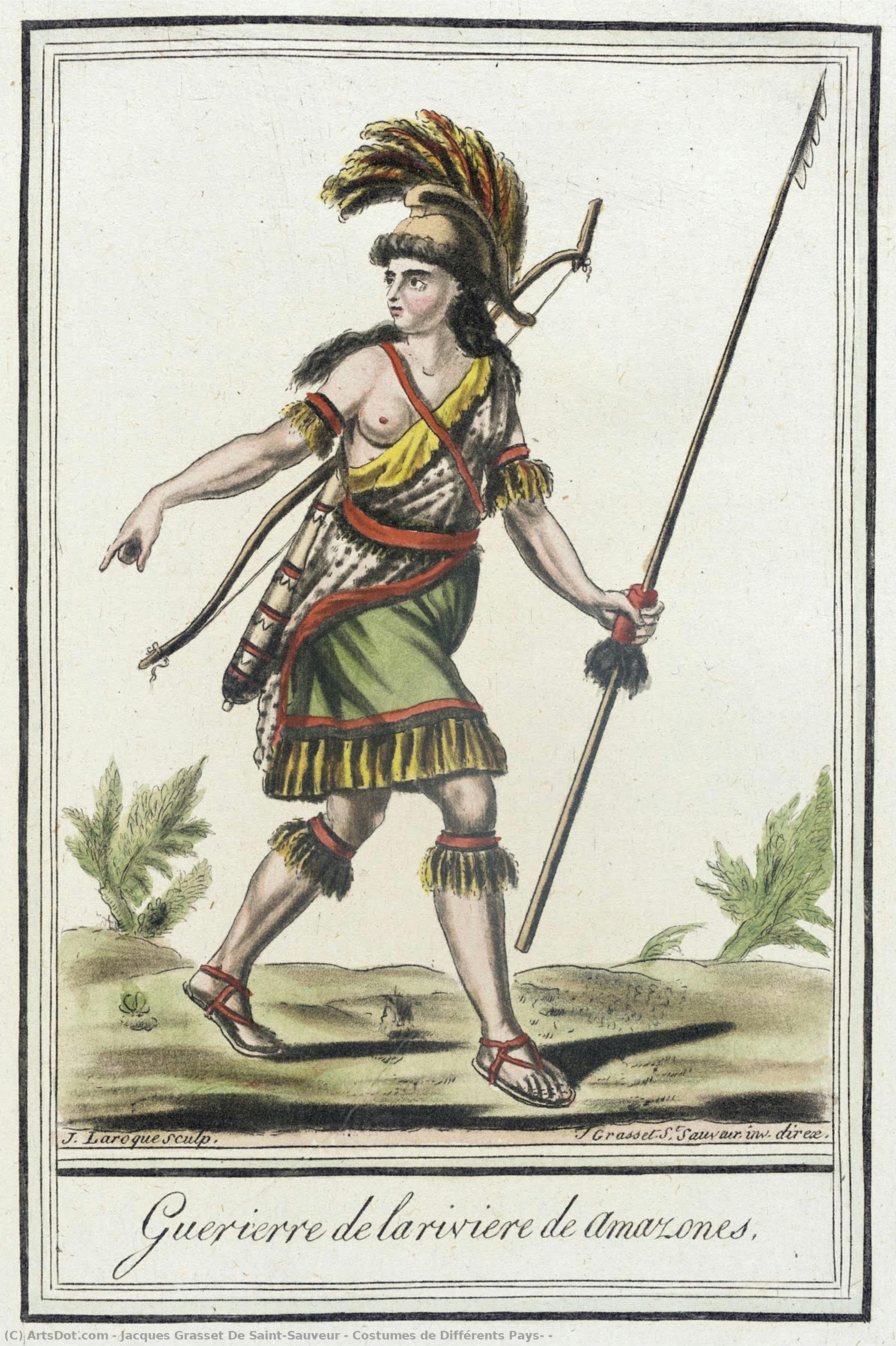
This meticulously crafted engraving showcases Labrousse’s masterful depiction of Tatar costume, reflecting the artistic style and influence prevalent during his time. Published in 1797, it exemplifies attention to detail and captures the essence of diverse cultures through fashion.
Explore Jacques Grasset de Saint-Sauveur's captivating engraving 'Costumes de Différents Pays,' depicting a Tatar wo
Explore the captivating costumes & fashion of 18th-century France by Jacques Grasset de Saint-Sauveur (Labrousse). Admire his detailed engravings & paintings – a window to the past!
Explore LACMA's diverse art collections spanning millennia! From ancient artifacts to modern masterpieces, discover iconic exhibits & engaging exhibitions in Los Angeles.
A Vision of Roman Valor: Jacques Grasset de Saint-Sauveur’s ‘Costumes de Différents Pays’, Femme Tatar Kastchintz
The engraving by Jacques Grasset de Saint-Sauveur, titled ‘Costumes de Différents Pays,’ or ‘Costumes of Different Countries,’ offers a captivating glimpse into the artistic sensibilities of late 18th century France. Published in 1797 during the Napoleonic era—a period marked by fervent interest in classical antiquity and burgeoning nationalist sentiment—this artwork transcends mere depiction; it embodies an ambitious attempt to capture not just appearance but also spirit, conveying the essence of Tatar culture through a meticulously rendered female figure.
Saint-Sauveur’s masterful technique exemplifies the prevailing Neoclassical style prevalent at the time. Utilizing etching and engraving on zinc plate, he achieved remarkable tonal gradations and textural detail—a testament to his skill as a printmaker. The artist skillfully employed hatching and crosshatching to sculpt the form of the Tatar woman, emphasizing her musculature and conveying an aura of strength and determination. Careful attention was paid to anatomical accuracy, reflecting the humanist ideals championed by thinkers like Voltaire and Rousseau, who sought to revive classical learning and celebrate human potential.
The subject matter itself—a Tatar woman dressed in traditional attire—was chosen deliberately to illustrate the diversity of European cultures. The Tatar people inhabited Central Asia, primarily Uzbekistan and Kazakhstan, and Saint-Sauveur’s depiction aims to elevate their costume beyond a simple ethnographic curiosity. Instead, it symbolizes resilience and nobility – qualities considered desirable within the broader context of French intellectual discourse. The woman's stance—firmly planted on the ground, spear held aloft—communicates unwavering resolve and embodies the heroic archetype prevalent in Neoclassical art.
Beyond its technical prowess and symbolic significance, ‘Costumes de Différents Pays’ possesses a palpable emotional impact. The monochrome palette contributes to an atmosphere of solemn grandeur, inviting contemplation about cultural heritage and artistic achievement. The engraving's composition—simple yet powerfully balanced—guides the viewer’s gaze across the image, fostering a sense of immersion in the scene. It speaks to a fascination with history and tradition, reminding us that beauty can be found not only in idealized forms but also in the honest representation of human experience.
The artwork’s enduring appeal lies in its ability to resonate across centuries. Its meticulous detail continues to inspire admiration among art historians and collectors alike. Furthermore, ‘Costumes de Différents Pays,’ like many other engravings by Saint-Sauveur, serves as a valuable resource for interior designers seeking inspiration—particularly those interested in incorporating elements of Eastern European or Central Asian aesthetics into their spaces. ArtsDot offers high quality reproductions to bring this masterpiece into your home.