A Window into Global Heritage: The Art of Jacques Grasset de Saint-Sauveur
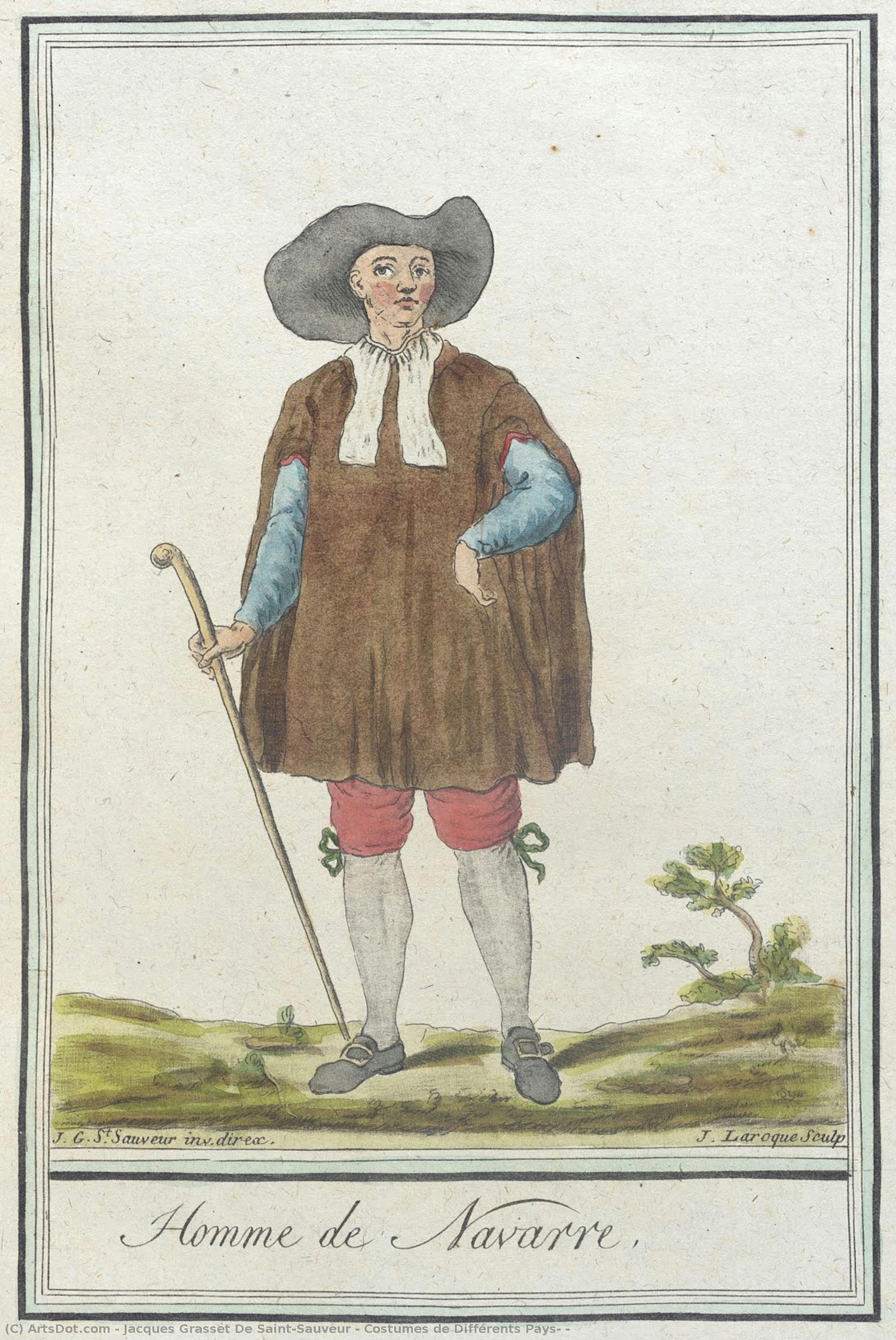
In the late eighteenth century, as the world began to feel both larger and more intimately connected through exploration and trade, there arose a profound fascination with the exotic and the far-flung. Jacques Grasset de Saint-Sauveur, a master of French engraving and painting, captured this era of discovery with unparalleled precision in his seminal work, Costumes de Différents Pays. Created in 1797, this piece serves as more than just a visual record; it is a romanticized journey through the textures, silhouettes, and cultural identities of a bygone era. The artwork presents a gentlemanly figure, poised with an air of quiet dignity, standing amidst a verdant landscape that suggests a moment of stillness in a much larger, bustling world of global fashion.
The technique employed in this work—an exquisite engraving derived from the original painting—demonstrates the artist's extraordinary command over line and light. Every fold of the heavy coat, the subtle tilt of the hat, and the delicate way the hands rest behind the back are rendered with a meticulousness that invites the viewer to lean closer. The interplay of shadow and fine detail creates a sense of three-dimensional presence, making the subject feel as though he has stepped directly out of the annals of history. For the discerning collector, this level of craftsmanship offers a tactile richness that breathes life into any room, providing a sophisticated focal point that rewards prolonged contemplation.
The Elegance of Historical Narrative and Style
Beyond its technical brilliance, the piece carries a deep symbolic weight, representing the Enlightenment-era desire to categorize and celebrate the diversity of human civilization. Through his study of various national attires, Saint-Sauveur does not merely document clothing; he captures the very essence of cultural pride and social standing. The gentleman depicted, with his cane and refined posture, embodies the intersection of European classical elegance and the burgeoning curiosity about global aesthetics. This tension between the familiar and the exotic creates an emotional resonance that is both nostalgic and intellectually stimulating.
For interior designers and lovers of classical decor, integrating a reproduction of such historical significance can transform a space into a curated gallery of worldly sophistication. The muted tones and fine linework of the engraving harmonize beautifully with both traditional period rooms and contemporary minimalist settings, where it can act as a conversation piece that bridges the gap between the past and the present. Owning a piece from this collection is an invitation to celebrate the enduring beauty of human tradition and the timeless allure of the traveler's gaze.