Explore the elegant paintings of James Jacques Joseph Tissot (1836-1902). Known for capturing Victorian & Belle Époque society, fashionable scenes, and biblical art. Discover his unique blend of realism & Impressionism.
Explore The Metropolitan Museum of Art: 5,000 years of art from around the world! Discover masterpieces, ancient artifacts & immersive exhibitions – a global art destination awaits.
A Snapshot of Victorian Elegance: Examining Jacques Joseph Tissot’s “The Rubens Hat”
James Jacques Joseph Tissot (1836-1902) stands as a pivotal figure in the transition between Realism and Impressionism, capturing the spirit of his era with unparalleled sensitivity. His oeuvre encompasses breathtaking depictions of Parisian life—particularly during the Belle Époque—alongside monumental biblical narratives that continue to resonate with audiences today. “The Rubens Hat,” created in 1875, exemplifies this distinctive artistic vision, offering a glimpse into Victorian society and demonstrating Tissot’s masterful command of technique.
Subject Matter & Composition: Capturing Parisian Society
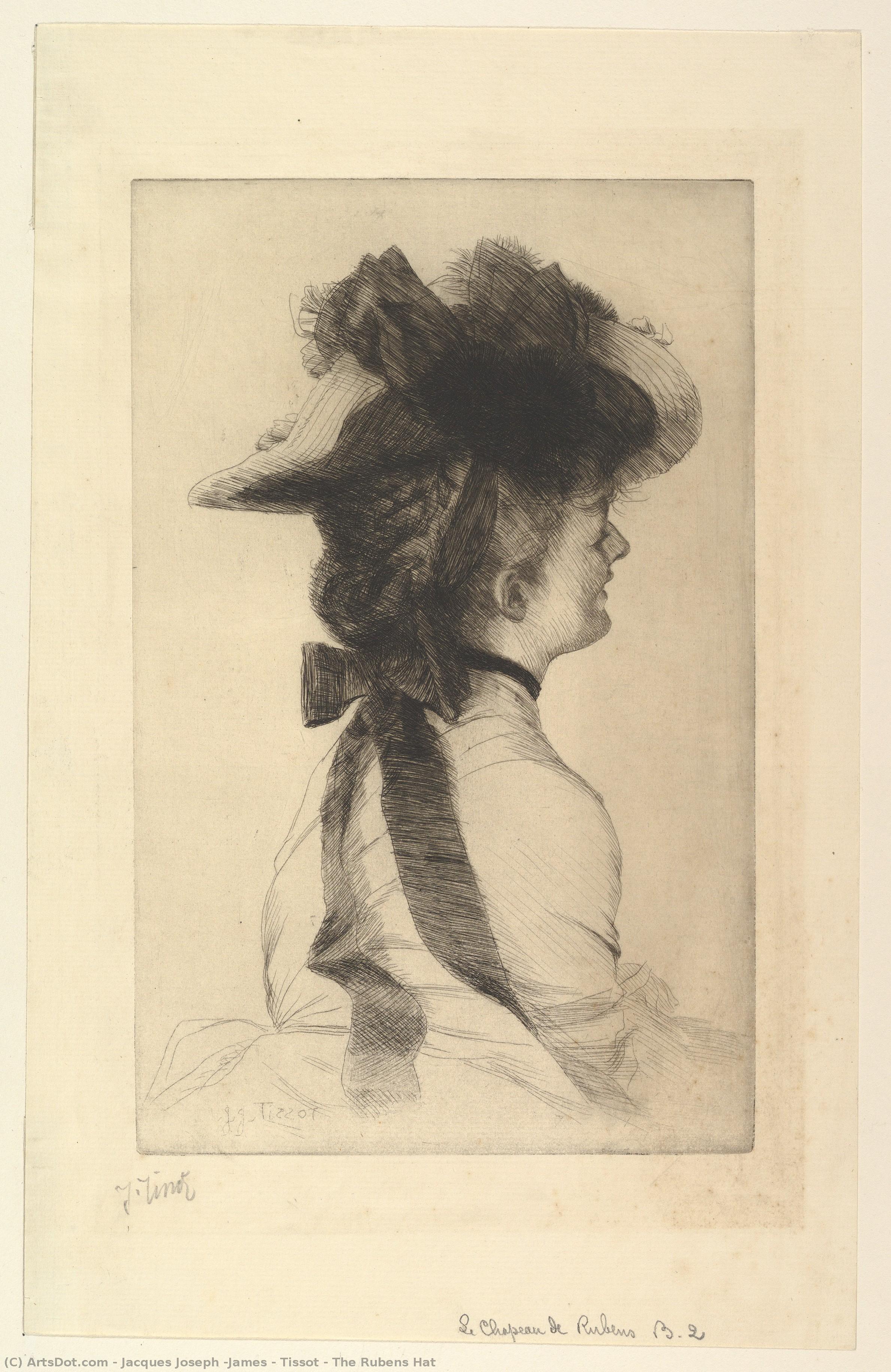
This etching portrays a woman adorned in an opulent hat embellished with a delicate bow—a motif that speaks volumes about the fashions and social conventions of the time. The artist meticulously renders the subject's pose, conveying a quiet confidence as she gazes directly at the viewer. Such direct engagement was characteristic of Tissot’s approach, aiming to immerse the audience within the scene he portrays. The composition prioritizes clarity and detail, reflecting the influence of Academic painting traditions while simultaneously incorporating subtle Impressionistic nuances—particularly in the rendering of light and texture.
Technique & Style: Bridging Realism and Impressionism
Tissot’s technique is remarkable for its precision and subtlety. Employing etching – a process involving transferring ink onto metal plates and then impressing them onto paper – he achieved exceptional tonal range and textural depth. Unlike purely realistic depictions, “The Rubens Hat” subtly incorporates Impressionistic elements, evident in the diffused light illuminating the woman's face and the delicate shading of her attire. This blending of styles underscores Tissot’s artistic ambition: to convey not merely what he saw but also how he felt about it—a hallmark of Impressionism’s burgeoning influence on Victorian art.
Historical Context & Symbolism: Reflecting Victorian Values
“The Rubens Hat” was produced during a period marked by significant social and cultural change in Paris. The Belle Époque, characterized by optimism and artistic innovation, witnessed an explosion of creativity across various disciplines. Hats like the one depicted served as symbols of status and refinement—a visible manifestation of Victorian ideals concerning beauty, propriety, and aristocratic distinction. Furthermore, the woman’s gaze toward the viewer invites contemplation on themes of femininity, observation, and perhaps even unspoken communication – concepts central to Victorian artistic discourse.
Emotional Impact & Legacy: An Enduring Image
The etching's understated elegance contributes to its enduring emotional impact. It captures a moment of quiet dignity amidst the bustle of Parisian life, inviting viewers to consider the subtleties of human expression. Tissot’s work continues to inspire artists and collectors alike, cementing his reputation as one of the most influential painters of his generation. Reproductions of “The Rubens Hat” offer an opportunity to appreciate this masterpiece not only for its technical brilliance but also for its ability to transport us back to a bygone era—a testament to Tissot’s artistic legacy.