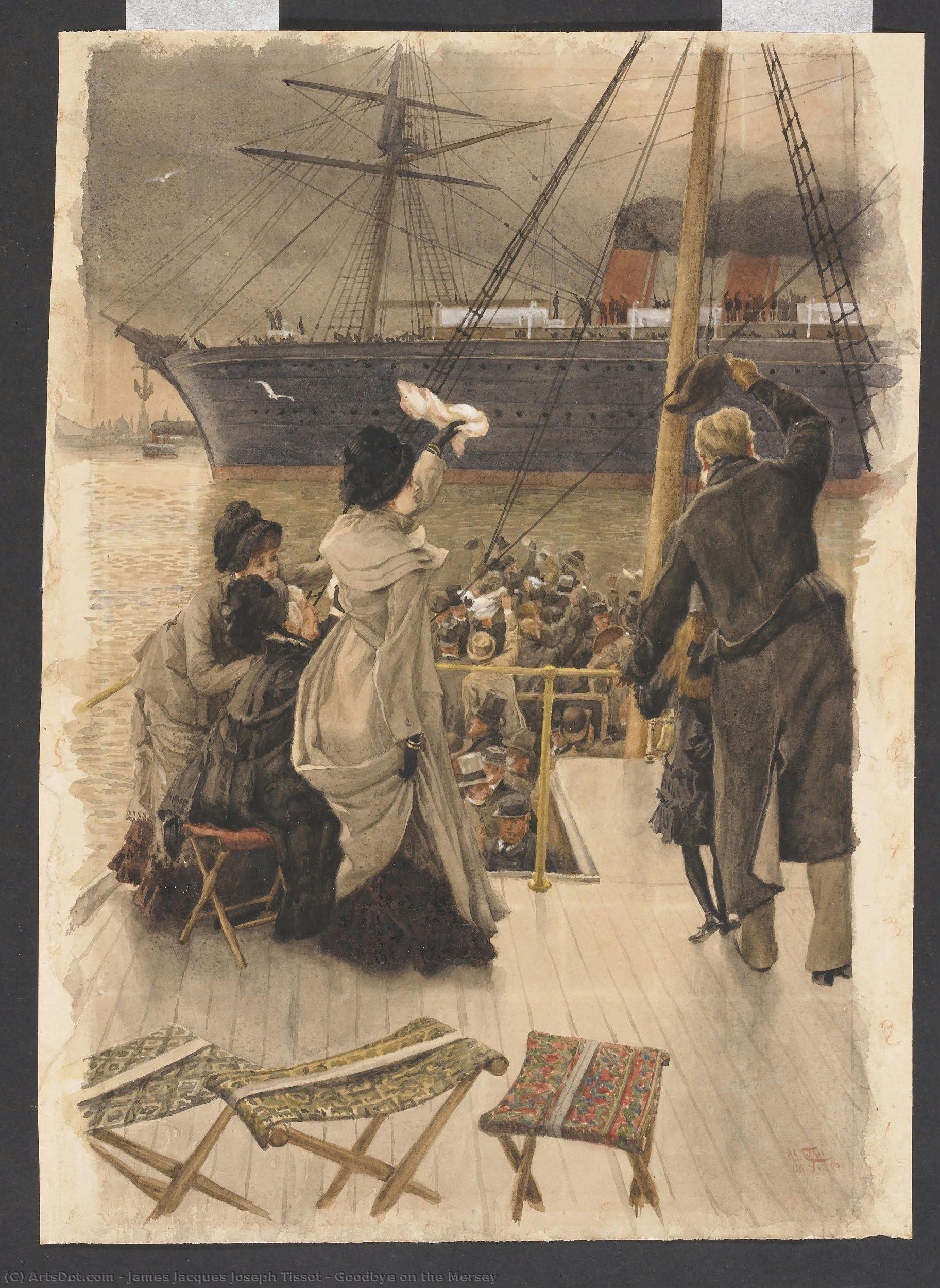
Experience the poignant farewell scene aboard Liverpool's Mersey liner, captured in Jacques Joseph Tissot’s exquisite watercolor study for an oil masterpiece exhibited at the Royal Academy.
Discover Jacques Joseph Tissot (James Tissot), a 19th-century French painter renowned for his genre paintings of Belle Époque society, Victorian fashion & biblical scenes. Explore his realistic style and Japonisme influences.
Explore Liverpool's rich history & diverse collections at National Museums Liverpool! From maritime heritage to art & culture, discover iconic exhibits and engaging experiences.
A Farewell Echoed Across Liverpool’s Skyline
Jacques Joseph Tissot's "Goodbye on the Mersey," painted in 1880, transcends mere depiction; it captures the poignant beauty of a moment frozen in time—a family bidding farewell to loved ones embarking on an ambitious voyage across the Atlantic. This watercolor study, destined for a larger oil canvas and exhibited at both the Royal Academy and the Liverpool Autumn Exhibition (LAE), stands as a testament to Tissot’s meticulous observation of contemporary life and his masterful blending of narrative drama with artistic precision.
The Canvas of Observation: Technique and Style
Tissot's approach is characterized by an unwavering commitment to realism, honed during his formative years at the École des Beaux-Arts. The watercolor itself demonstrates a remarkable level of detail—minute brushstrokes capturing the subtle nuances of light and shadow on the weathered faces of the departing family and the shimmering expanse of Liverpool’s harbor. He employs a squared-up grid technique, meticulously transferring his sketches onto canvas, ensuring accuracy and consistency across the final oil version. This painstaking process reflects Tissot's belief that art should faithfully represent the world around him, prioritizing observation over idealized representation. The resulting image possesses a luminous quality—a hallmark of watercolor’s ability to convey atmospheric perspective and evoke feelings of tranquility amidst bustling activity.
Liverpool’s Maritime Heartbeat: Historical Context
“Goodbye on the Mersey” isn't simply a portrait; it’s deeply rooted in Liverpool’s history as Britain’s premier port city during the Victorian era—a period defined by rapid industrial growth and transatlantic migration. The artist painstakingly researched the cityscape, confirming Ian Murphy’s MMM (Liverpool Museums Management Trust) assertion that the scene accurately portrays Liverpool in 1880. The inclusion of the Mersey estuary, visible against a hazy skyline, underscores the city's vital role as a gateway to America—a destination pursued by countless Britons seeking opportunity and fortune. Furthermore, Tissot’s depiction of Victorian costume reflects the social realities of the time, showcasing the elegance and formality prevalent in upper-class society.
Symbolism Within Sentiment: Narrative Resonance
Beyond its visual fidelity, “Goodbye on the Mersey” resonates with profound symbolic significance. The act of farewell itself embodies universal themes of loss, longing, and remembrance— emotions skillfully conveyed through expressive facial expressions and gestures. The family’s posture conveys both sadness and determination—a poignant acknowledgment of the inevitable separation while simultaneously reaffirming their unwavering faith in reunion. Moreover, the ship symbolizes aspiration and progress—representing not only physical travel but also intellectual and spiritual exploration. The watercolor's muted palette contributes to its emotional impact—creating a contemplative mood that invites viewers to contemplate the complexities of human relationships and the enduring power of memory.
A Legacy of Light and Emotion
“Goodbye on the Mersey” remains an exceptional achievement in Victorian art, admired for its technical brilliance and evocative storytelling. Its influence can be discerned in subsequent landscape paintings—artists striving to capture similar atmospheric qualities and conveying comparable emotional depth. Today, reproductions of this masterpiece continue to inspire interior designers and collectors alike—serving as reminders that true beauty lies not merely in visual splendor but also in the ability to communicate profound human experience.