A Glimpse into Victorian Intimacy
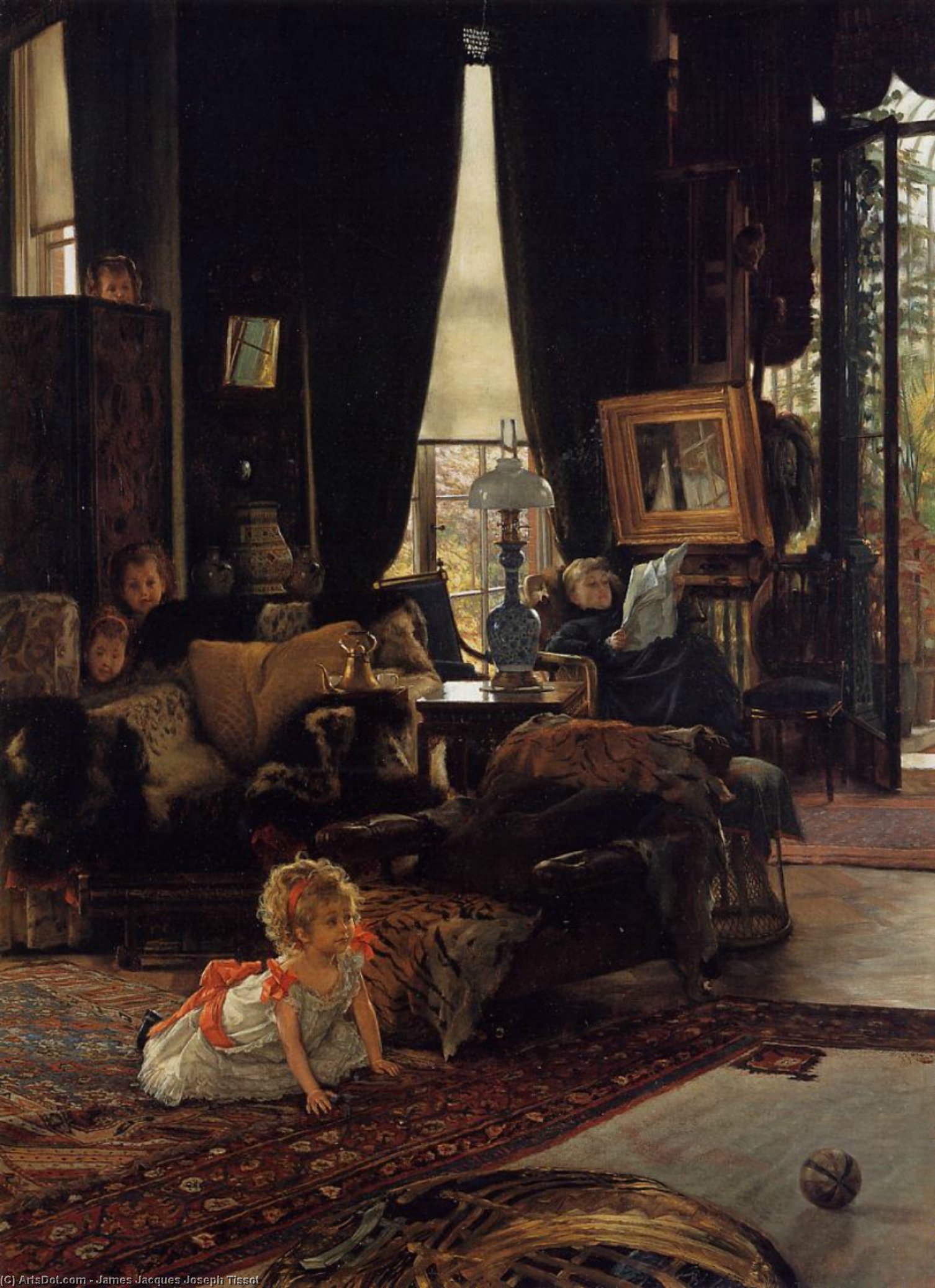
In the quiet, sun-drenched corners of a nineteenth-century parlor, James Jacques Joseph Tissot captures a moment that feels both fleeting and eternal. “Hide and Seek,” painted around 1880, is far more than a mere domestic scene; it is a meticulously crafted window into the heart of Victorian England. As we gaze upon this oil on panel masterpiece, we are transported into the private sanctuary of a prosperous middle-class family, where the air is thick with the warmth of familial affection and the soft glow of afternoon light. Tissot, a master of capturing the nuances of social life, invites us to witness a ritual of play that transcends generations, offering a profound sense of nostalgia and peace.
The composition is a delicate dance of figures and textures. Within the richly furnished living room, family members are scattered across plush couches and elegant chairs, their positions creating a harmonious rhythm that guides the eye through the domestic landscape. The presence of two dogs and a watchful cat adds a layer of lively, organic energy to the scene, mirroring the bustling yet controlled spirit of a well-ordered home. There is a palpable sense of movement—the subtle tension of a child waiting to be found, the relaxed posture of an adult observing the game—that breathes life into the canvas, making the viewer feel less like a distant observer and more like an uninvited guest in a cherished memory.
Mastery of Light and Texture
Tissot’s technical prowess is on full display through his unique ability to blend painstaking realism with the burgeoning influences of Impressionism. He employs soft, diffused brushstrokes to bathe the interior in a comforting, ethereal light that seems to emanate from within the room itself. This luminous quality does more than illuminate; it emphasizes the tactile splendor of the era. One can almost feel the weight of the heavy fabrics, the smoothness of the polished wood, and the intricate patterns of the upholstery. Every fold in a garment and every glint on a porcelain vase is rendered with such precision that the painting achieves a three-dimensional vitality.
This attention to detail serves a deeper purpose than mere decoration. By focusing on the material richness of the setting, Tissot reinforces the stability and prosperity of the Victorian middle class. The meticulous rendering of clothing and furnishings acts as a silent language of social propriety and comfort. For the collector or interior designer, this piece offers an unparalleled depth; it is a work that rewards prolonged study, revealing new layers of texture and light with every glance, making it a sophisticated centerpiece for any curated space.
Symbolism and the Victorian Soul
Beyond its aesthetic beauty, “Hide and Seek” is steeped in the cultural values of the late nineteenth century. During the height of Queen Victoria’s reign, the home was revered as a sacred refuge from the industrial anxieties of urban life. Tissot captures this ethos of domestic tranquility perfectly. The game of hide and seek serves as a powerful symbol of innocence and the preservation of childhood within the structured confines of adult society. It represents a moment of pure, unadulterated joy held within the protective embrace of family unity.
The emotional impact of the work lies in its ability to evoke a sense of belonging and moral virtue. In an era defined by social hierarchy, Tissot focuses on the universal language of love and play. For those seeking to bring a sense of history and emotional resonance into their homes, this reproduction offers more than just art; it offers a connection to a vanished world of elegance and intimacy. It is a timeless invitation to slow down, to find beauty in the quiet moments, and to celebrate the enduring strength of the familial bond.