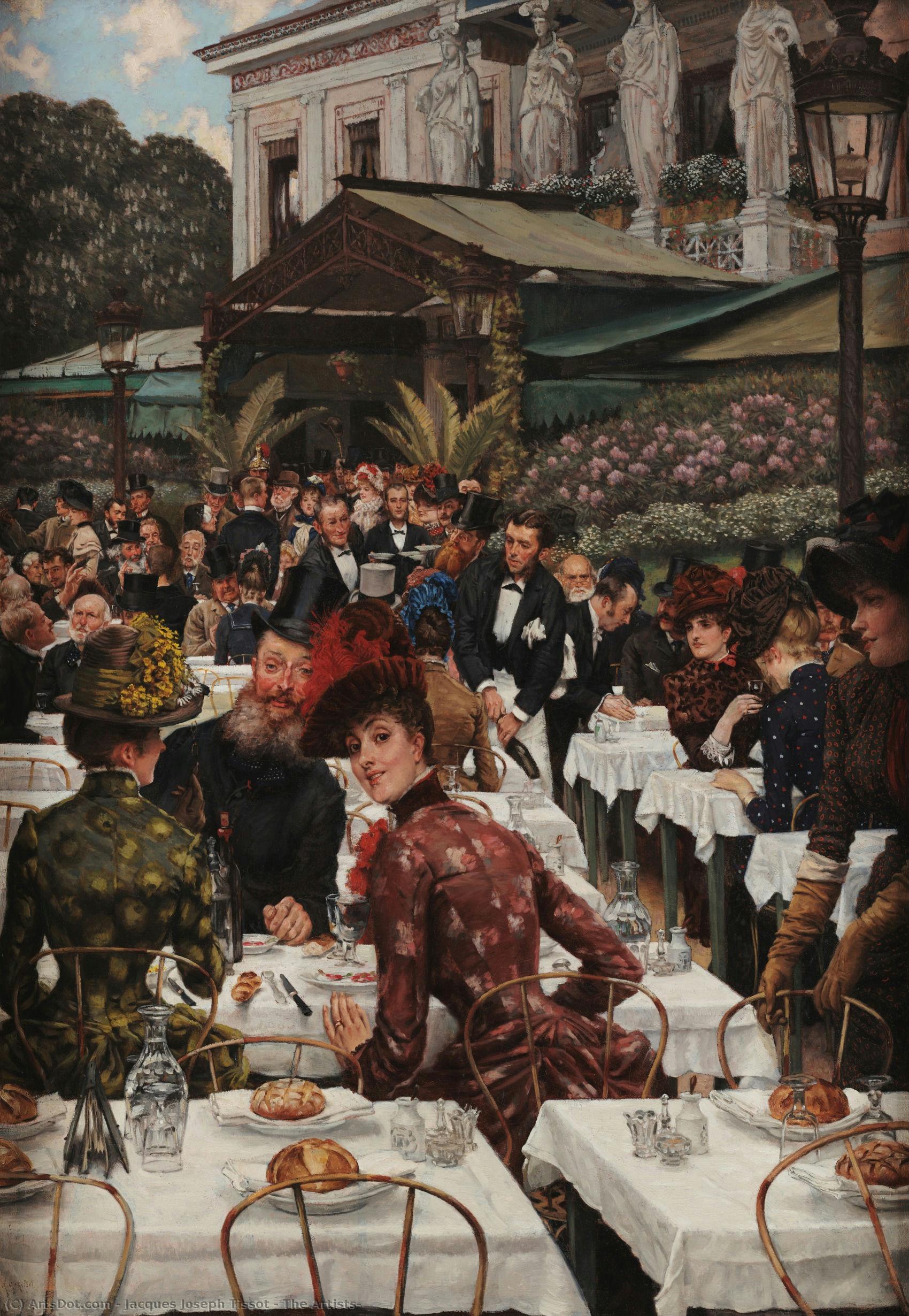
Admire Jacques Joseph Tissot’s masterpiece "The Artists," capturing Parisian elegance and Victorian society with stunning realism and Japonisme influences – a timeless depiction of artistic camaraderie.
Discover Jacques Joseph Tissot (James Tissot), a 19th-century French painter renowned for his genre paintings of Belle Époque society, Victorian fashion & biblical scenes. Explore his realistic style and Japonisme influences.
Explore the Chrysler Museum of Art's stunning collection spanning millennia – from Tiffany glass to European masters and American icons! Free admission & engaging programs await visitors in Norfolk, Virginia.
A Snapshot of Parisian Elegance: Jacques Joseph Tissot’s “The Artists”
James Jacques Joseph Tissot's "The Artists," completed in 1885, transcends mere portraiture; it captures a fleeting moment of bohemian vibrancy—the pre-opening celebration of the Salon exhibition in Paris. More than simply depicting artists and their wives, Tissot’s masterful canvas delves into the social fabric of Belle Époque France, presenting a meticulously observed tableau that speaks volumes about artistic ambition and societal refinement.
The Scene: A Parisian Café Revelation
Painted on a generous 146 x 101 cm canvas using oil paints on linen, Tissot transports us to Ledoyen Restaurant, a landmark establishment still revered for its opulent interiors and convivial atmosphere. The artist skillfully renders the bustling scene with remarkable detail—tables laden with food, animated conversations punctuated by laughter, and figures mingling amongst the candlelight. This wasn’t just about documenting faces; it was about recreating an environment brimming with intellectual curiosity and artistic camaraderie. Tissot's keen eye for composition guides our gaze across the room, emphasizing the interplay of light and shadow that defines the Parisian café culture of the era.
Faces of Artistic Brilliance: Rodin Among Colleagues
Central to the painting’s visual impact is Auguste Rodin’s imposing presence—his sculpted visage dominating the frame near the center. Tissot's meticulous rendering captures Rodin’s weathered face, conveying both strength and contemplation. Alongside him are other prominent artists of the time, including Camille Claudel, whose gaze meets the viewer’s eye with an expression of quiet confidence. These figures aren’t merely subjects; they embody the spirit of artistic innovation and intellectual discourse that characterized the Belle Époque.
Beyond Portraits: The Feminine Influence
However, Tissot's genius lies not solely in capturing male artistry but equally in portraying the women who surrounded these artists—their wives. These figures are presented with grace and sophistication, dressed in fashionable gowns and adorned with jewelry, embodying the ideals of feminine beauty and elegance prevalent during the period. They represent a crucial element of Parisian society, highlighting the importance of patronage and social connections within the artistic world. The artist’s use of color contributes to this effect—pastel hues illuminate the women's faces and attire, emphasizing their allure and reinforcing the painting's overall mood of refined pleasure.
Technique and Style: Impressionistic Realism
Tissot employed a technique that blends Impressionistic brushstrokes with meticulous realism. He skillfully captures textures – from the polished surfaces of silverware to the folds of fabric—creating an illusion of depth and luminosity. The artist’s masterful blending of colors achieves remarkable tonal harmony, mirroring the subtle nuances of light and atmosphere characteristic of Impressionism while maintaining a grounding in observational accuracy. This harmonious fusion elevates “The Artists” beyond mere representation, transforming it into an evocative depiction of a specific moment in time and artistic history.
Symbolic Resonance: Celebration and Artistic Identity
“The Artists” serves as more than just a visual record; it’s imbued with symbolic significance. The gathering represents the culmination of creative effort—a celebratory acknowledgment of accomplishment before embarking on new endeavors. Furthermore, the painting encapsulates the essence of artistic identity—the pursuit of beauty, intellect, and social engagement within the vibrant cultural landscape of Paris at the turn of the century. It remains a testament to Tissot’s ability to capture not only appearances but also the spirit of an era.