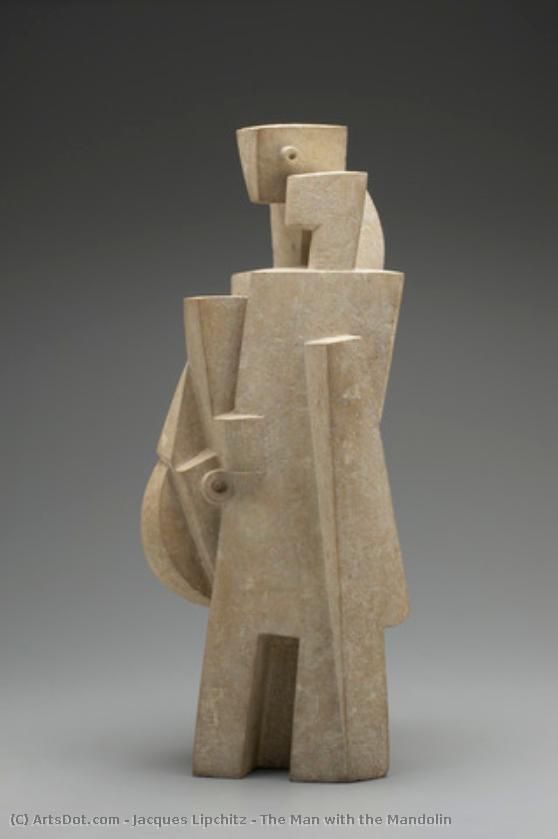
The Man with the Mandolin: A Cubist Exploration of Form and Emotion
Jacques Lipchitz’s “The Man with the Mandolin,” created in 1917, stands as a cornerstone of Cubism – an artistic movement that irrevocably altered the landscape of early 20th-century art. More than just a depiction of a musician, this sculpture embodies the intellectual fervor and stylistic experimentation characteristic of its time, reflecting a profound shift away from traditional representational conventions.
- Subject Matter: The artwork portrays a stylized figure holding a mandolin, capturing a moment of contemplative repose amidst an urban environment. Lipchitz deliberately eschewed realistic anatomy, prioritizing geometric abstraction to convey the essence of human experience rather than a literal portrayal.
- Style: Cubism’s influence is undeniable in “The Man with the Mandolin.” The artist employs fragmented planes and multiple viewpoints simultaneously—a technique pioneered by Picasso and Gris—to dismantle conventional perspective and present a multifaceted representation of reality. This approach challenges viewers to actively engage with the artwork, reconstructing the image mentally as they observe it.
- Technique: Crafted from marble – likely sourced from Carrara – Lipchitz meticulously carved angular forms into the stone, demonstrating exceptional skill in manipulating material to achieve desired aesthetic effects. The surface is polished to a satin sheen, highlighting subtle contours and creating depth without resorting to illusionistic shading. This deliberate choice underscores the sculpture’s materiality and reinforces its connection to the physical world.
- Historical Context: “The Man with the Mandolin” emerged during a period of intense artistic upheaval in Paris—the epicenter of Cubist innovation. The sculpture reflects the broader cultural anxieties surrounding modernity, questioning established norms and embracing new modes of expression. It aligns perfectly with the movement’s rejection of academic art traditions and its pursuit of formal experimentation.
- Symbolism & Emotional Impact: While formally driven by geometric abstraction, “The Man with the Mandolin” evokes a palpable sense of melancholy and introspection. The fractured planes may symbolize the fragmentation of experience—the breakdown of traditional perceptions—while simultaneously conveying a quiet dignity and contemplation. It invites viewers to contemplate themes of solitude, creativity, and the human condition amidst the dynamism of urban life.
This remarkable sculpture exemplifies Lipchitz’s masterful command of Cubist principles, resulting in an artwork that transcends mere visual representation—it communicates profound ideas about perception, form, and emotion. Its enduring appeal lies in its ability to provoke contemplation and inspire appreciation for the transformative power of artistic innovation.