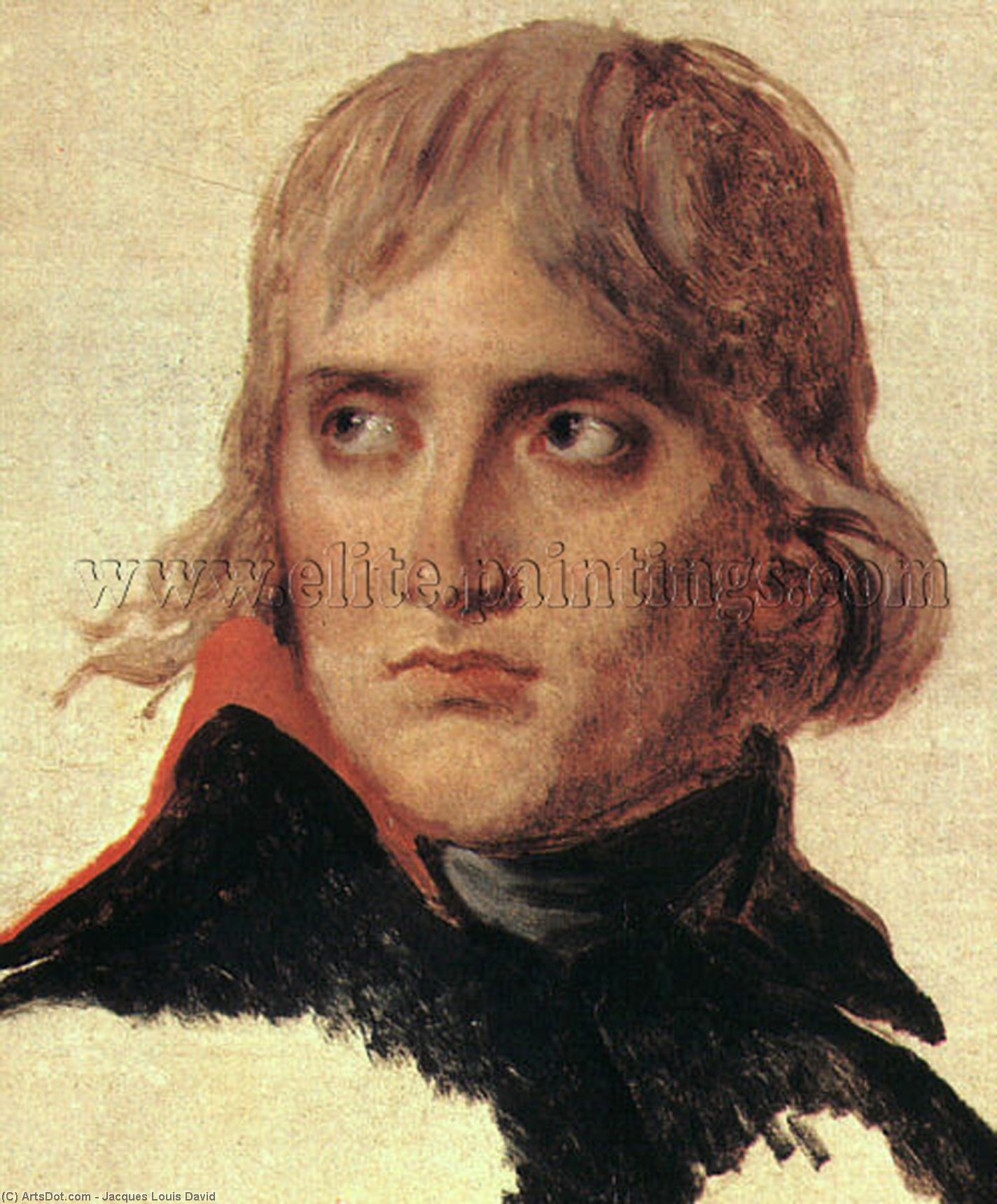
Captured in Neo-Classicism's elegant style, Jacques-Louis David’s ‘Bonaparte’ portrays Napoleon Bonaparte with intense gaze and refined posture—a timeless emblem of imperial ambition and artistic brilliance. Explore this captivating masterpiece and bring history into your home.
The Austere Majesty of Power: An Encounter with Bonaparte
To stand before this portrait of Bonaparte is to confront an image steeped in the dramatic currents of history itself. Jacques-Louis David, the master chronicler of revolutionary fervor and imperial ambition, has captured a moment of profound self-possession. The subject gazes out with an intensity that seems to pierce the veil of time, his expression a masterful blend of seriousness and undeniable authority. Clad in the severe elegance of a black coat offset by a striking red scarf, he embodies the disciplined spirit of a man who fundamentally reshaped the map of Europe. This is not merely a likeness; it is a carefully constructed monument to ambition realized.
Neo-Classical Grandeur and Technical Brilliance
The stylistic hallmarks of Neo-Classicism are unmistakable here. David eschews the frivolous ornamentation of earlier eras, opting instead for a clarity, an almost sculptural sobriety that speaks to Enlightenment ideals tempered by military might. The composition is strikingly clean; the subject dominates against a stark white background, which serves not as mere emptiness but as a deliberate void, forcing the viewer's entire focus onto the figure’s commanding presence. David’s technique, even in reproduction, suggests an unparalleled command over shadow and light. Notice the meticulous rendering of the fabric—the crisp folds of the coat contrasting with the soft texture suggested by his long, pulled-back hair. Every detail, from the drape of the scarf to the set of the jaw, speaks to a highly academic yet emotionally charged execution.
A Reflection on Revolutionary Spirit
Painted in 1798, this work sits at the volatile intersection of revolutionary idealism and burgeoning autocratic power. David was inextricably linked to these seismic shifts; his art became the visual language of an age undergoing radical transformation. The portrait captures that tension perfectly. While the style echoes classical virtue—the ideal citizen-soldier—the subject himself represents a force capable of overturning established orders. Owning or displaying this piece is to invite a dialogue with history’s most transformative, and often contradictory, periods.
Symbolism and Emotional Resonance for the Modern Collector
For the contemporary collector or designer, this artwork offers more than mere decoration; it provides an anchor of gravitas. The symbolism inherent in the portrait—the disciplined uniform suggesting order, the direct gaze implying unwavering conviction—lends an air of intellectual weight to any space. It speaks to themes of leadership, enduring vision, and the cost of great achievement. Reproducing this piece allows one to harness that powerful emotional resonance: a sense of timeless dignity paired with palpable energy. It is art designed not just to be looked at, but to inspire contemplation on the nature of power itself.