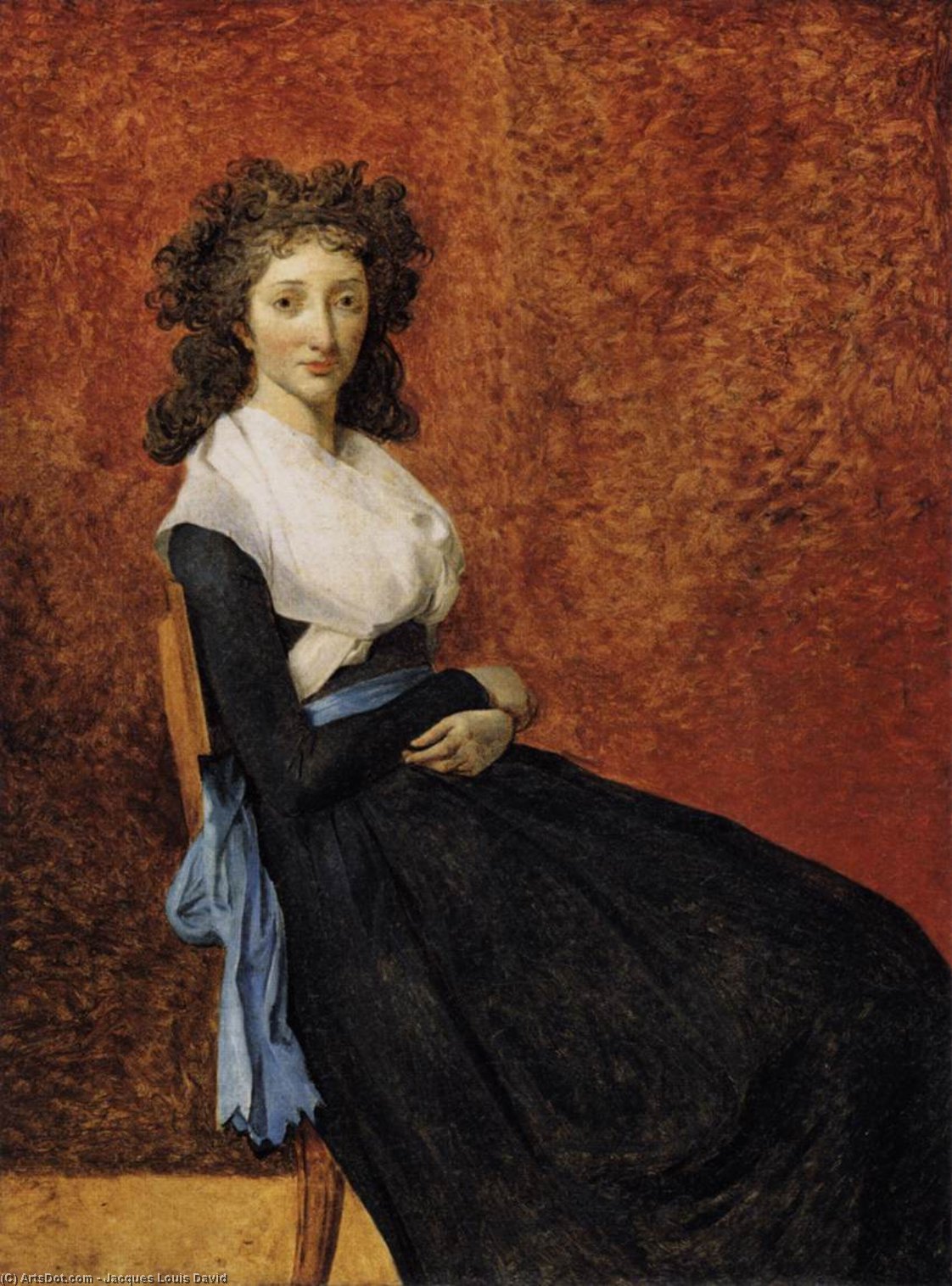
Madame Trudaine: A Portrait Steeped in Revolutionary Ideals
Jacques-Louis David’s “Madame Trudaine,” completed circa 1792, stands as a testament to the artistic fervor of the French Revolution—a moment when neoclassicism wrestled with burgeoning romantic sensibilities. This unfinished portrait captures Marie Louise Trudaine, wife of Charles Louis Trudaine, a prominent figure in Parisian society and David’s close friend, offering a glimpse into the refined tastes and aspirations of the era.
David's stylistic approach firmly rooted itself within the neoclassical tradition championed by Joseph-Marie Vien. The painting adheres to strict geometric principles—a deliberate rejection of Rococo frivolity—emphasizing clarity, balance, and idealized beauty. Notice the careful positioning of Madame Trudaine’s figure on a simple red wall; this minimalist backdrop serves to heighten the impact of her presence and directs the viewer's gaze directly onto her serene countenance.
The composition is notable for its subtle layering of figures—Madame Trudaine dominates the central space, flanked by two smaller individuals positioned on either side. These secondary figures contribute to a sense of grandeur and formality, mirroring the artistic conventions of the time. They represent not merely companions but symbols of social status and intellectual engagement – characteristics highly valued during the revolutionary period.
Technique and Material Considerations
David meticulously executed “Madame Trudaine” using oil paints on canvas—a technique favored by neoclassical artists for its ability to achieve luminous tonal gradations and precise detail. The artist’s brushstrokes are deliberate and controlled, conveying a sense of composure and restraint that aligns perfectly with the painting's overarching aesthetic. Careful attention was paid to capturing Madame Trudaine’s skin tone and drapery folds, demonstrating David’s mastery of anatomical accuracy.
Furthermore, the choice of red as the wall color is significant. Red symbolized power and nobility during the Revolution—a deliberate allusion to the monarchy overthrown by Napoleon Bonaparte. It underscores the painting's connection to the political landscape of its time and elevates it beyond a mere depiction of portraiture into a statement about artistic ideals.
Symbolism and Emotional Resonance
"Madame Trudaine" transcends its formal conventions to convey a profound sense of dignity and inner peace. The woman’s gaze is direct, conveying confidence and composure—qualities considered essential for portraying virtue and moral fortitude within the neoclassical framework. Despite being unfinished, the painting captures an essence of timeless beauty, reflecting David's belief in art as a vehicle for elevating human spirit.
As noted in scholarly research, this portrait exemplifies David’s commitment to capturing emotional truth amidst the turbulent backdrop of revolutionary France. It serves as a poignant reminder that even in times of upheaval, artists strive to embody ideals of harmony and nobility—a legacy that continues to inspire admiration and appreciation today.