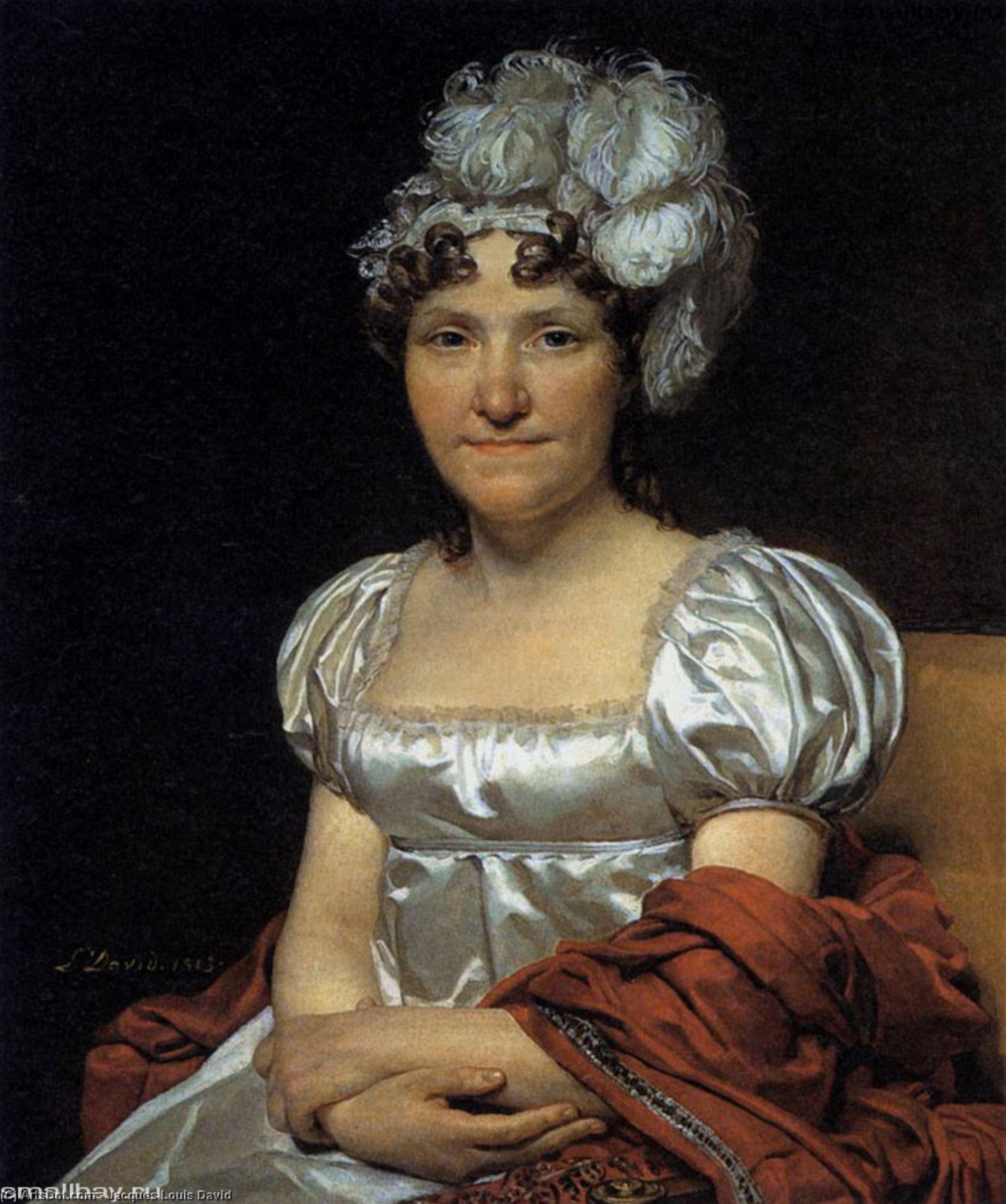
Portrait of Marguerite-Charlotte David by Jacques-Louis David
Jacques-Louis David’s “Portrait of Marguerite-Charlotte David,” painted in 1813, stands as a testament to the enduring influence of Neoclassicism during Napoleon's reign. More than just a depiction of a woman—the wife of the artist himself—this painting embodies the ideals of virtue and dignity championed by David’s artistic vision.
- Subject Matter: The portrait captures Marguerite-Charlotte David, portraying her with serene grace amidst a carefully constructed domestic setting. Her gaze directs towards the viewer, conveying confidence and composure – qualities considered paramount in Neoclassical art.
- Style & Technique: Executed in oil on canvas, David employs meticulous brushwork characteristic of his style. The artist meticulously renders textures and tonal variations to achieve remarkable realism, prioritizing clarity and precision over expressive flourishes typical of earlier Romantic tendencies.
- Historical Context: Created shortly after the Napoleonic Wars concluded, “Portrait of Marguerite-Charlotte David” reflects a desire for stability and moral rectitude following years of upheaval. It aligns perfectly with Napoleon’s ambition to establish France as a beacon of Enlightenment values and classical beauty.
The composition itself is deliberately restrained. A simple chair positioned near the right edge anchors the scene, while a couch provides depth and visual interest in the background. These elements contribute to an atmosphere of quiet elegance—a deliberate contrast to the turbulent political landscape of the time.
Symbolism:
The white dress worn by Marguerite-Charlotte symbolizes purity and virtue – values deeply ingrained within Neoclassical aesthetics. The red ribbon around her neck serves as a subtle emblem of passion and devotion, subtly highlighting the importance of familial bonds. David’s masterful use of color reinforces these symbolic meanings.
“Portrait of Marguerite-Charlotte David” transcends mere representation; it communicates an emotional resonance rooted in humanist ideals. It invites contemplation on beauty, dignity, and the enduring power of domestic tranquility—themes that continue to captivate audiences today. A stunning reproduction offers a glimpse into the artistic spirit of its era.