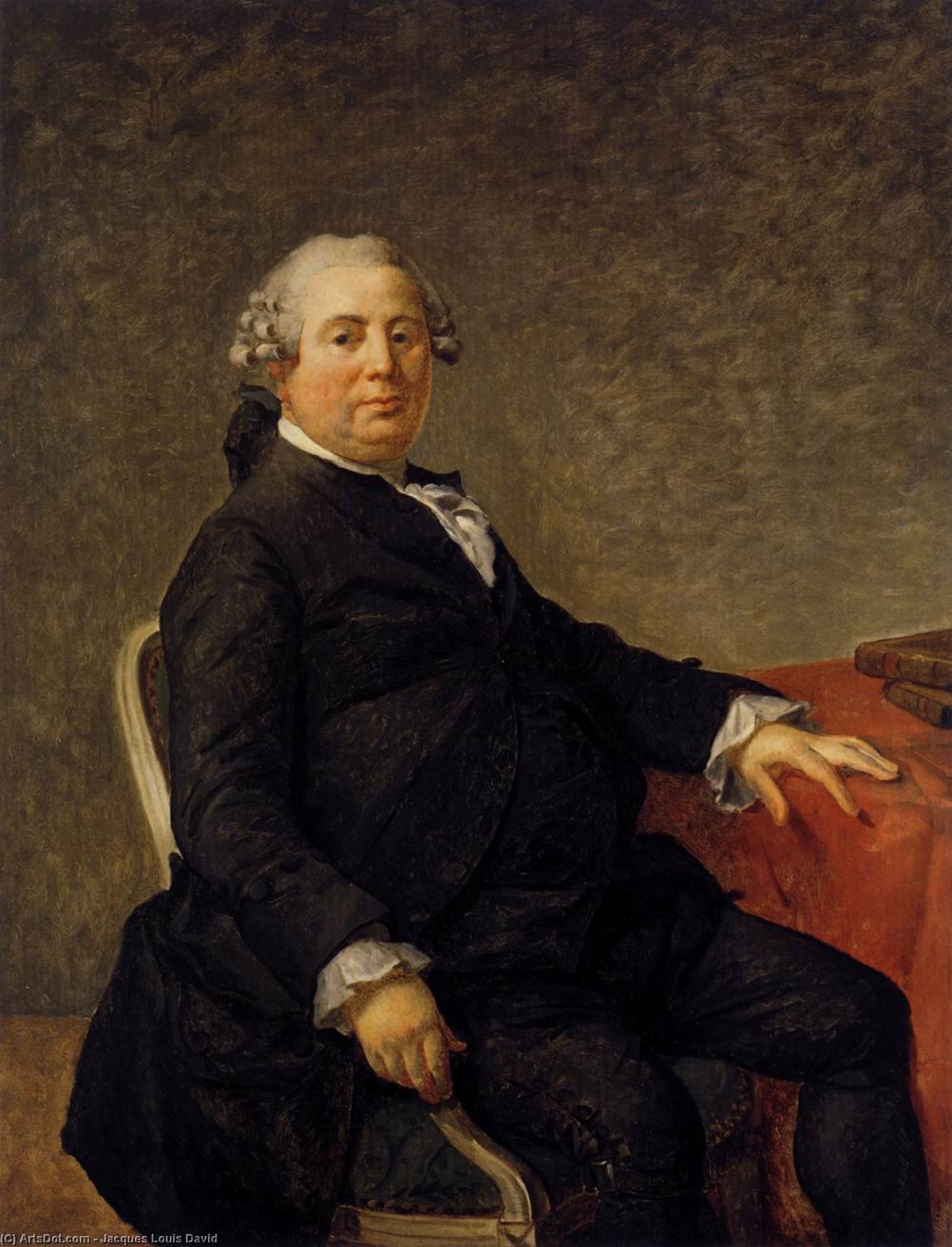
Portrait of Philippe-Laurent de Joubert: A Neoclassical Reflection on Dignity and Virtue
The
Portrait of Philippe-Laurent de Joubert, painted by Jacques Louis David in 1786, stands as a cornerstone of Neoclassical art—a testament to the movement’s unwavering commitment to idealized beauty and moral seriousness. Held within the Musée Fabre in Montpellier, France, this oil on canvas masterpiece transcends mere representation; it embodies an intellectual engagement with classical ideals that continues to resonate today.
The Artist's Vision: David and the Pursuit of Ideal Form
Jacques Louis David (1748-1825) emerged as a pivotal figure during the turbulent years preceding the French Revolution, swiftly establishing himself as the foremost champion of Neoclassicism. Unlike the opulent excesses of Rococo—characterized by frivolous ornamentation and fleeting emotion—David sought to recapture the grandeur and moral clarity of ancient Greece and Rome. Influenced profoundly by Joseph Marie Vien’s teachings at the Royal Academy, David meticulously studied classical sculptures and architectural ruins, striving to emulate their austere elegance and harmonious proportions. This dedication to form is palpable in every brushstroke of the Joubert portrait, reflecting a profound belief that art should elevate the human spirit through contemplation of virtue and reason.
A Detailed Examination: Composition and Technique
Measuring 127 x 96 cm, the painting depicts Philippe-Laurent de Joubert—a prominent Montpellier diplomat and scholar—seated formally before a crimson table. David’s masterful technique employs a pyramidal composition, directing the viewer's gaze upwards towards Joubert’s noble head, emphasizing his dignity and composure. The artist skillfully utilizes chiaroscuro—the dramatic interplay of light and shadow—to sculpt Joubert’s features with remarkable precision, capturing subtle nuances of expression that convey intelligence and serenity. Furthermore, David meticulously renders textures – the velvety sheen of Joubert's wig, the smooth surface of his suit, and the tactile quality of the table – demonstrating an unparalleled level of artistic virtuosity. The inclusion of two books on the table serves as a symbolic gesture, representing knowledge and erudition—values central to Neoclassical ideals.
Historical Context: Reflecting Enlightenment Values
Created during the waning days of Louis XVI’s reign, the Joubert portrait embodies the spirit of the Enlightenment, reflecting its emphasis on rational thought and moral virtue. David's artistic choices align perfectly with the intellectual currents of the time, signaling a rejection of Rococo’s sentimentalism in favor of a more restrained aesthetic rooted in classical principles. The painting speaks to a broader cultural preoccupation with portraying individuals as embodiments of noble character—a desire for art to inspire ethical conduct and uphold humanist values. Its presence within the Musée Fabre underscores Montpellier's legacy as a bastion of intellectual curiosity and artistic patronage.
Beyond Reproduction: Experiencing David’s Masterpiece
ArtsDot offers exceptional reproductions of Jacques Louis David’s artwork, including
Portrait of Philippe-Laurent de Joubert. These meticulously crafted prints capture the essence of David's original vision—allowing you to immerse yourself in the beauty and intellectual depth of this iconic Neoclassical portrait. Visit
Discover the Musée Fabre of Montpellier, France to explore more artworks by David and delve into the rich artistic heritage of Provence.